

Introduction
Cottonized hemp fiber is rising fast as brands and shoppers demand greener fabrics and greater transparency. Consumers expect lower environmental costs and traceable materials, so designers seek alternatives to conventional cotton (cottonised hemp, hemp cotton alternative).
Cottonized hemp is hemp processed to feel and behave like cotton, allowing mills to spin finer yarns and blend the fiber into familiar garments. Processing shortens and refines bast fibers, preserves tensile strength and makes carding and spinning compatible with cotton systems. For a technical overview see the cottonized hemp processing review here.
Scaling production is costly and technically complex. Enzyme degumming, automation and improved carding are lowering costs and improving quality. These processing and supply chain gains will determine how quickly hemp becomes a mainstream cotton alternative; see the hemp industry overview here.
What is cottonized hemp?
Cottonized hemp fiber for textiles is hemp processed to mimic cotton’s softness and spinability, enabling mills to spin finer yarns and make softer fabrics for apparel. See the processing steps in the How is Cottonized Hemp Fiber Made? section for details; technical overviews are available in a hemp fibre processing review here and a cultivation and processing guide here.
Softness
- Refining removes coarse outer fibers, producing a softer hand and improved drape for shirts and underwear.
Breathability & moisture management
- Natural capillary structure wicks moisture and allows airflow, keeping garments cool and comfortable in warm weather.
- Effective moisture wicking improves thermal comfort and quick dry feel for active and summer apparel.
Sustainability
- ~2,820 L/kg hemp vs 4,342–6,902 L/kg cotton (life cycle water footprint comparison).
- Lower irrigation and pesticide needs; hemp regenerates soil and stores carbon (hemp water use review).
Hypoallergenic
- Natural antimicrobial properties and low allergenicity suit sensitive skin and can reduce washing frequency.
Durability
- High tensile strength and abrasion resistance extend garment life, reducing environmental impact per wear.
Best uses
- Ideal for soft apparel, blended denim, underwear and high end shirts where natural hand and longevity matter.
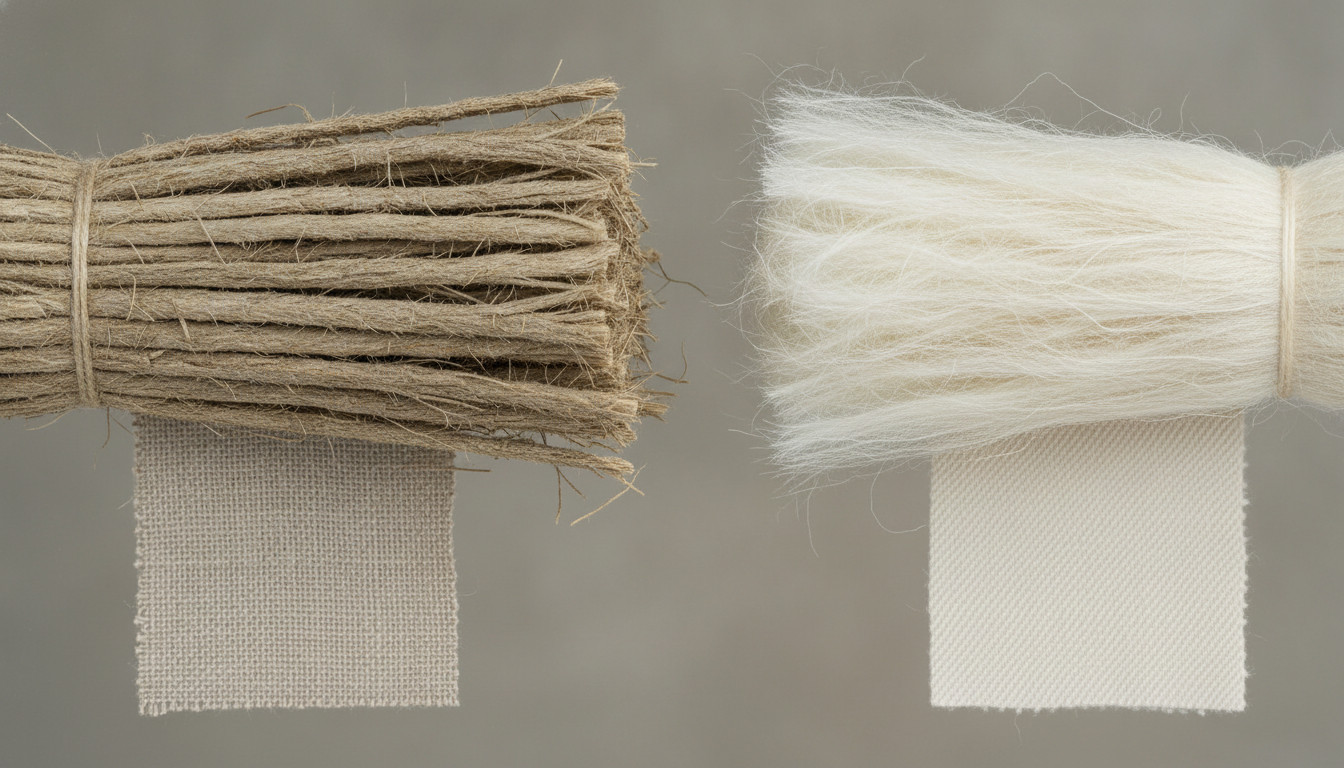
How is Cottonized Hemp Fiber Made?
Expected staple lengths are 25 to 40 millimeters. Typical equipment includes decorticators, scutchers and carding lines.
Process steps
- Retting and moisture control: Retting loosens bast fiber and separates the hurd. Mills must monitor moisture because uneven retting increases cleaning and sorting costs.
- Decortication and breaking: Decortication strips woody hurd to free bast fibers. High decortication capital raises per kilogram processing costs.
- Scutching and hackling: Scutching and hackling remove shives and align strands. These steps improve cleanliness but increase energy use and maintenance.
- Degumming or enzymatic treatment: Degumming (enzymatic degumming) removes pectin, hemicellulose and some lignin. Enzymes cut harsh chemicals but add enzyme cost and processing time.
- Shortening and carding: Shortening reduces fibers to 25 to 40 millimeter staples and carding opens and blends the web. Carding enables short-staple spinning and softer fabric but lowers yield.
- Drafting and roving: Drafting machines form uniform slivers and roving for spinning. Precise drafting improves yarn evenness but requires calibration and energy.
- Spinning into yarn: Short-staple spinning converts roving into fine hemp yarn or blends with cotton. This yields softer fabrics for brands but can lower throughput and raise spinning waste.
The main environmental tradeoff is that enzymatic degumming and improved carding reduce chemical use and preserve fiber quality while mechanical processing and drying increase energy demand. (See textile processing review: textile processing review and growing hemp guide: growing hemp guide).
Fiber comparison table
Cottonized hemp fiber vs other fibers: concise comparison of performance and water footprints. Values include life cycle water footprints where available.
| Factor | Cottonized Hemp Fiber | Cotton | Linen | Polyester |
|---|---|---|---|---|
| Softness and texture | Soft to medium hand; mimics cotton drape | Very soft; familiar smooth finish | Crisp to slightly coarse; softens with washing | Smooth, plush; engineered to mimic natural fibers |
| Durability and wear | High tensile strength; excellent abrasion resistance | Moderate strength; susceptible to wear with washing | Very durable; long lived fibers | Extremely durable; resists abrasion and stretching |
| Sustainability impact | Water footprint about 2,820 L per kg life cycle | Water footprint about 4,342 to 6,902 L per kg life cycle | Low irrigation needs; lower water than cotton | High fossil fuel use; synthetic nonrenewable feedstocks |
| Breathability and moisture | Excellent wicking; good airflow in warm climates | Good breathability; absorbs moisture well | Excellent airflow; fast drying | Poor natural breathability; traps heat unless engineered |
| Hypoallergenic and skin | Low allergenicity; natural antimicrobial properties | Generally hypoallergenic; may irritate sensitive skin | Hypoallergenic; gentle on skin | Can irritate sensitive skin; chemical finishes vary |
| Best uses | Soft apparel, blended denim, underwear, high end shirts | Everyday apparel, towels, casual wear | Summer clothing, linens, upscale garments | Activewear, outerwear, low cost apparel, technical fabrics |
Sources and further reading:
- life cycle water footprint study
- Hemp fibre processing review
Conclusion
Cottonized hemp fiber in hemp textiles offers a practical path to greener apparel and improved comfort. Because it combines softness, breathability and strength, brands can use it in shirts, underwear and blends. Moreover, the fabric keeps hemp’s durability while offering a familiar hand for consumers.
However, processing and cost still limit large scale adoption. Fortunately, enzyme degumming, automation and improved carding are shrinking the quality gap. As a result, pilot lines in Europe and North America may reduce shipping and boost local supply chains. Policy alignment and certified supply chains will accelerate brand adoption worldwide within the next decade.
Choose cottonized hemp fiber for lower environmental impact and lasting garments. At MyCBDAdvisor we track science and industry progress, and we encourage trying hemp blends. Visit MyCBDAdvisor for more research led guides and sourcing notes. Ultimately, better processing and informed buying can help hemp become a mainstream cotton alternative much faster.
Frequently Asked Questions (FAQs)
What is the environmental impact of cottonized hemp fiber in hemp textiles?
Cottonized hemp fiber in hemp textiles uses less water and fewer agrochemicals than conventional cotton. Because hemp regenerates soil and stores carbon, its lifecycle emissions are often lower. However, processing can add energy, so sustainable mills and local supply chains matter for full benefits.
How does cottonized hemp differ from regular hemp fiber?
Cottonized hemp shortens, cleans and softens raw bast fiber to mimic cotton staples. As a result, mills can spin finer yarns and produce smoother hemp fabrics. Importantly, cottonization preserves hemp strength while reducing coarse outer fibers and harsh hand. Therefore it suits garments once reserved for cotton.
Is cottonized hemp fiber durable?
Yes. Cottonized hemp retains high tensile strength and resists abrasion better than many fibers. Therefore garments show longer life and less pilling. Moreover, blending with cotton improves softness without compromising durability. As a result, lifecycle impact per wear often falls versus conventional cotton pieces.
What are common uses for cottonized hemp fiber in hemp textiles?
Designers use cottonized hemp for shirts, underwear, blended denim and soft home textiles. It also suits jackets and lightweight pants when blended. Consequently brands can offer lower impact basics and premium garments with a natural hand. Therefore it appears across casual and upscale collections.
How should I care for garments made with cottonized hemp fiber?
Wash garments gentle cold or lukewarm to protect fibers and color. Avoid high heat drying; instead line dry or tumble low when needed. Because hemp softens with wear, iron on low heat and avoid harsh bleach to extend garment life.
Related on CBD Advisor
- Why Italian hemp sector shifts toward food and fiber
- How Kyrgyzstan hemp cultivation prospects reshape regional textiles
- CBD in Fashion: Discover How Hemp is Dominating the Runway