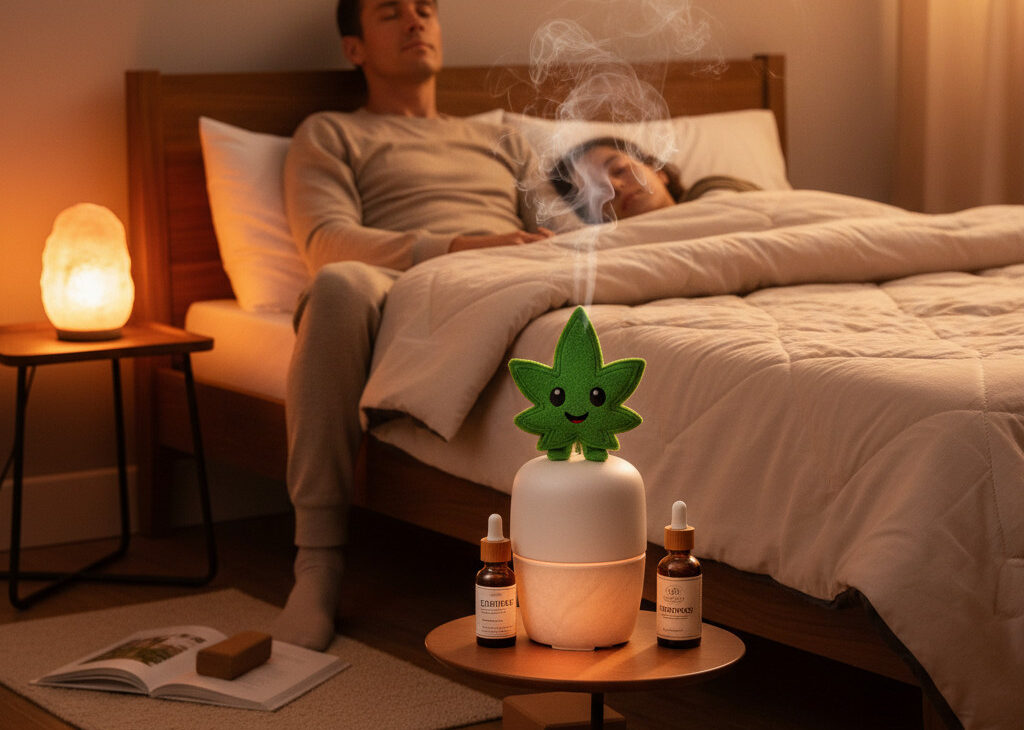
Aromatherapy for Sleep
Aromatherapy for Sleep is gaining attention as more people seek natural sleep aids. Interest has risen because many want fewer medications and gentler nightly routines. Essential oils and inhalation-based approaches now appear promising in clinical studies. Smell links directly to emotion, memory, and autonomic regulation, which matters for rest. As a result, simple scents can nudge the nervous system toward calm. Moreover, aromatherapy often pairs well with other tools like CBD or sleep hygiene.
Because inhaled terpenes travel via the olfactory limbic pathway, they influence mood and stress. Therefore, people report improved sleep quality, reduced anxiety, and less nighttime tossing. This introduction explores aroma science, safe application methods, and evidence-based benefits. It also highlights practical tips for pillow sprays, diffusers, and chest-applied balms. Finally, we caution that aromatherapy is supportive, not a medical treatment or cure. With accessible strategies and modest expectations, scents can help reset bedtime routines.
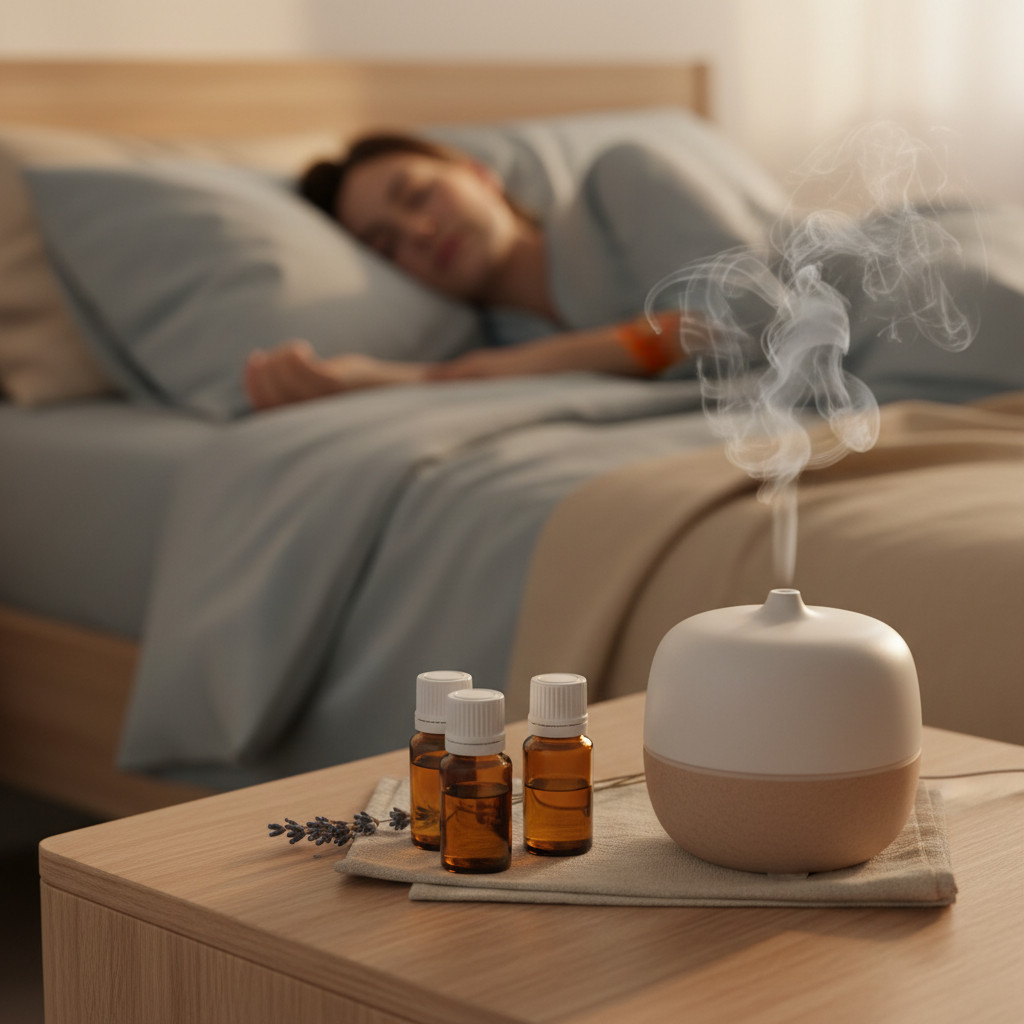
How Aromatherapy for Sleep Works
Aromatherapy for Sleep uses scent to support relaxation and better rest. Smell signals travel quickly to emotion centers in the brain. As a result, essential oils and terpenes can change how you feel at bedtime. Because inhaled aromas connect to the olfactory limbic pathway, they influence autonomic regulation and mood.
Mechanisms that help sleep
- Stress reduction. Scents like lavender calm anxious thoughts, which lowers arousal and prepares the body for sleep. For example, clinical reviews link inhalation aromatherapy to reduced anxiety and improved subjective sleep quality. See one meta analysis at this study for more details.
- Relaxation induction. Fragrant molecules promote parasympathetic activity, so heart rate and breathing slow. Therefore, the body moves from fight or flight toward rest.
- Sleep cycle influence. By improving initial relaxation, aromatherapy can reduce time to fall asleep. It may also support longer deep sleep phases in some people.
- Sensory conditioning. Over time, consistent bedtime scents can become cues that signal bedtime to the nervous system.
Why inhalation matters
Inhalation delivers terpenes and volatile compounds directly to the olfactory system. Consequently, research finds inhalation approaches often show clearer sleep benefits than massage only methods. For an accessible guide to terpenes and mood, check this guide on terpenes and this guide on cannabis flavor.
Evidence and practical notes
Several systematic reviews support aroma inhalation for sleep improvements. For example, read this review at this source. However, study quality varies, and results differ by population and method. If you want practical ideas, try diffuser sessions, pillow sprays, or a chest applied balm. For recipe inspiration and terpene rich bath ideas, see this article.
Aromatherapy complements sleep hygiene and may pair well with CBD for some people. Yet aromatherapy is supportive only. It does not diagnose or replace medical care when needed.
Aromatherapy for Sleep: Quick Comparison of Popular Oils
Use this table to compare common essential oils for bedtime. Because clear comparisons help, each row lists scent profile, sleep benefits, usage tips, and side effects. Keep safety and dilution in mind.
| Oil | Scent profile | Sleep benefits | Usage tips | Potential side effects |
|---|---|---|---|---|
| Lavender | Floral, fresh, slightly sweet | Promotes relaxation, reduces anxiety, may shorten time to fall asleep | Diffuse 15 to 30 minutes before bed or use pillow spray | Mild skin irritation if undiluted; avoid with pregnancy in some cases |
| Roman chamomile | Applelike, sweet, herbaceous | Calming, eases nervous tension, supports sleep onset | Use in a diffuser or dilute for chest application | Possible allergic reaction; may cause drowsiness |
| Bergamot | Citrus, slightly floral, bright | Reduces stress and anxiety; can improve mood before sleep | Dilute before skin use; avoid photosensitivity after sun exposure | Phototoxic in some forms; skin sensitivity if undiluted |
Quick tips:
- Start with low dilution because sensitivity varies.
- Combine scents cautiously, and test a patch on skin first.
- Pair aromatherapy with a consistent sleep routine; consider CBD for baseline calm.
Evidence for Aromatherapy for Sleep
Researchers have tested inhalation-based aromatherapy in clinical trials and reviews. Several systematic reviews and meta-analyses examine sleep outcomes and related measures like anxiety. Because results vary by method and population, conclusions are cautious but promising.
Key studies and institutions
- Journal of Korean Academy of Nursing systematic review and meta-analysis (2019). This analysis pooled multiple trials and found that aromatherapy improved subjective sleep quality in many studies. See more details.
- Medicine (Baltimore) systematic review and meta-analysis (2021). This review focused on aroma inhalation and reported potential benefits for sleep problems, although study heterogeneity remained a limitation. Read the full paper at this link.
- National Center for Complementary and Integrative Health (NCCIH). NCCIH summarizes current evidence and notes that rigorous trials for insomnia are limited. For an agency overview, visit this page.
What the evidence shows
- Inhalation approaches often link to improved subjective sleep quality. Therefore, people report better sleep after diffuser or pillow spray use.
- Secondary benefits include reduced anxiety, decreased stress, and lower fatigue in some trials, which may indirectly help sleep.
- Some reviews find inhalation methods show clearer effects than massage only. However, sample sizes and blinding differ across studies.
Practical takeaways
- Use aromatherapy as a supportive, nonpharmacological tool. For example, pair it with consistent sleep hygiene and calming routines.
- Expect modest improvements rather than guaranteed cures. As a result, consult a clinician for chronic insomnia or medical concerns.
Conclusion
Aromatherapy for Sleep offers a gentle, evidence-informed way to support better rest. Because scents connect directly to emotion and autonomic pathways, they help lower nighttime arousal and ease the transition to sleep. Moreover, when used alongside consistent sleep habits, diffusers, pillow sprays, or chest-applied balms can make bedtime routines more calming.
Research shows modest but meaningful benefits for subjective sleep quality, anxiety, and stress. Therefore, view aromatherapy as a supportive tool rather than a cure. In addition, combining calming scents with products that stabilize baseline relaxation, such as CBD-based options, may help some people feel more ready for sleep.
Finally, try simple, low-risk experiments with scent and expect gradual improvements. If sleep problems persist, consult a healthcare professional for tailored care.
Frequently Asked Questions (FAQs)
Is aromatherapy safe to use for sleep?
Aromatherapy is generally safe when used correctly. Always dilute essential oils for skin use. Because sensitivity varies, test a small skin patch first. Moreover, avoid certain oils during pregnancy and around infants. If you have respiratory or allergy issues, consult a clinician before use.
Which essential oils work best for sleep?
Lavender, Roman chamomile, bergamot, ylang-ylang, and vetiver often help. Lavender reduces anxiety and supports relaxation. Chamomile soothes nervous tension. Bergamot lifts mood while lowering stress. PM+ — CBD Sleep Salve offers a ready-made bedtime blend to try if you prefer a topical option.
How should I use aromatherapy for the best results?
Use a diffuser 15 to 30 minutes before bed, or spray a diluted pillow mist. Apply a diluted balm to the upper chest or collarbone for close inhalation. In addition, create a consistent bedtime scent so your brain learns the cue. Avoid strong concentrations that disturb sleep.
When will I notice improvements in sleep?
Some people feel immediate relaxation after one session. However, consistent use over days or weeks creates the strongest conditioned effect. Therefore, expect gradual benefits rather than overnight cures.
Can I combine aromatherapy with CBD or other sleep aids?
Yes. Aromatherapy complements CBD and good sleep hygiene. Because they act through different pathways, combining them may help. However, check interactions, and consult a healthcare professional for persistent insomnia.