Brazilian medicinal cannabis regulation: ANVISA’s 2026 framework explained
Brazilian medicinal cannabis regulation is entering a new phase with ANVISA’s 2026 framework. This update clarifies cultivation rules, product standards, and pathways for patients and researchers. It aims to balance patient access with strict public health safeguards.
However, the framework remains conservative and incremental rather than broadly commercial. For example, ANVISA sets a core THC threshold at 0.3 percent while allowing exceptions for research. The rules create controlled production pathways, traceability across the supply chain, and formal roles for patient groups. At the same time, judicial channels remain available as an alternative for excluded patients.
This article explains the main provisions, likely impacts, and steps patients should consider. Therefore, we focus on health system effects, research opportunities, and compliance requirements. As a result, readers will gain clear, practical guidance to navigate Brazil’s evolving rules. MyCBDAdvisor aims to help patients and clinicians interpret this policy with reliable, evidence based advice.
Brazilian medicinal cannabis regulation: legal foundations and agencies
Brazilian medicinal cannabis regulation rests on recent regulatory updates and longstanding RDCs. ANVISA leads sanitary oversight and sets production standards. However, other agencies also play roles, including MAPA for agricultural aspects and state health secretariats for local implementation. For official summaries and technical reports, see ANVISA’s 2024 report for context: ANVISA 2024 Report. Meanwhile, journalism and sector analysis help explain policy shifts, such as this overview: High Times Overview.
Brazilian medicinal cannabis regulation: how rules affect patients and businesses
The framework remains conservative but structured. It sets a core THC threshold at 0.3 percent, with research exceptions. Therefore, cultivation on Brazilian soil is allowed only for approved entities under strict traceability. As a result, full chain tracking covers genetics to finished product. Key points include:
- THC threshold set at 0.3 percent with research sandboxes allowed
- Administrative authorization coupled with judicialization as a parallel path
- Patient associations recognized but must show two years of legal existence and administrative capacity
- Traceability requirements across genetics, seeds, inputs, labs and distribution
- Artisanal production reframed as small scale, health compatible care
These rules shape market entry costs and research opportunities. Consequently, businesses face higher compliance burdens. Patients gain clearer access paths but may still use courts when excluded.
Brazilian medicinal cannabis regulation: quick comparison table
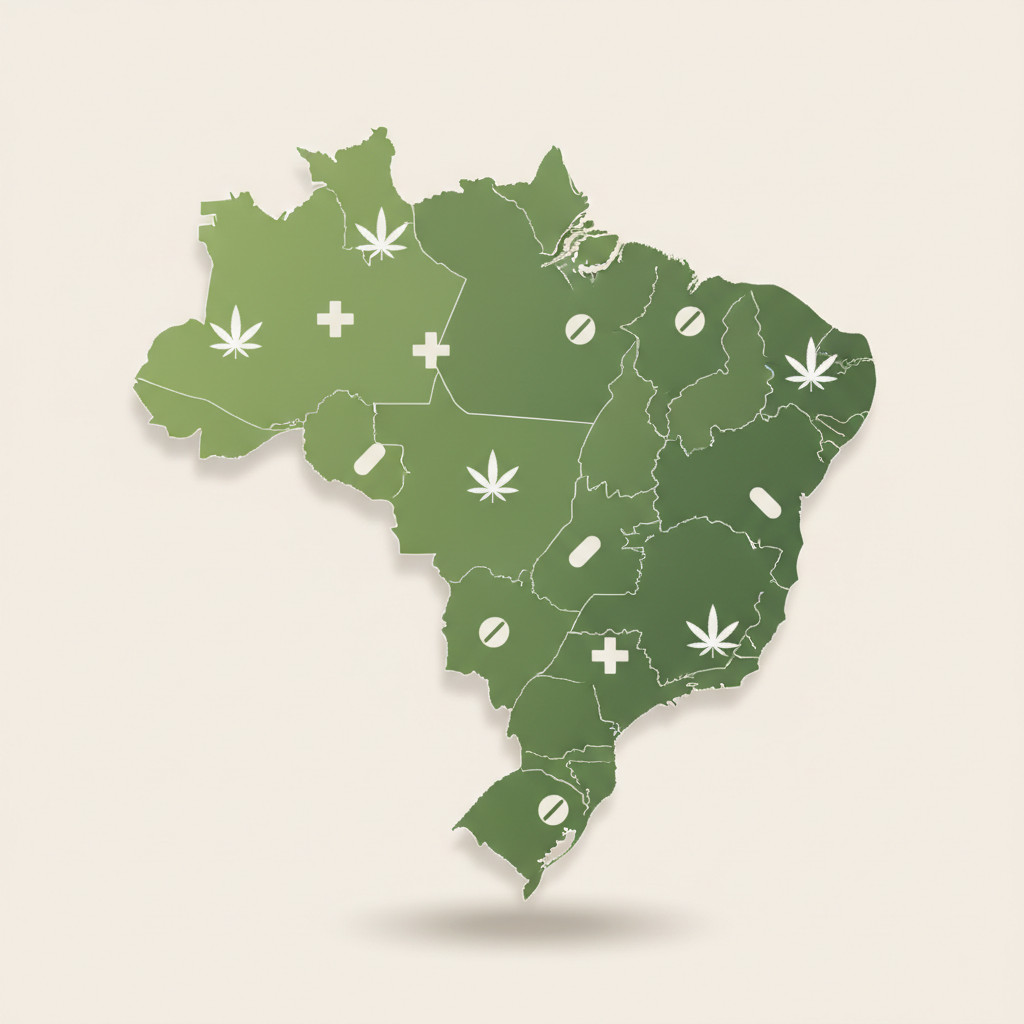
Use this table to see differences in legal status, patient access, licensing and challenges.
| Aspect | Current status | Impact on patients | Impact on businesses | Common challenges |
|---|---|---|---|---|
| Legal status | Conservative regulatory model; cultivation allowed for approved entities under strict limits | Controlled, prescription based access; not broad commercial availability | High compliance costs; restricted market scale and investment | Unclear long term market signals and policy conservatism |
| Patient access | Medical prescription, regulated supply, and judicialization as alternate route | Better clarity for some patients but unequal regional access | Demand uncertainty and legal risk for suppliers | Administrative barriers and varied state implementation |
| Licensing and authorization | ANVISA leads sanitary approvals; MAPA covers agricultural authorization | Patient groups may participate if they meet criteria | Multi agency approvals increase complexity and timelines | Long review times and strict administrative requirements |
| THC threshold and research exceptions | Core THC threshold at 0.3 percent; exceptions for research sandboxes | THC therapies confined to controlled settings or trials | R&D routes available within experimental regulatory environments | Limited THC commercial pathways and strict monitoring |
| Traceability and supply chain | Full traceability across genetics, inputs, labs and distribution | Improved product safety and consistent quality | Heavy recordkeeping, testing and certification obligations | Seed control, standardization and lab capacity constraints |
| Artisanal production | Reframed as small scale care centered production under health standards | Potential local alternatives for some therapeutic needs | Niche models tolerated, but standards must be met | Standardization, oversight and scaling limits |
| Enforcement and judicialization | Hybrid system of administrative regulation plus judicial decisions | Courts remain a fallback for excluded patients | Legal unpredictability can deter investment | Conflicting rulings and uneven enforcement across states |
| Research and sandboxes | Regulatory sandboxes allow controlled experiments before scaling | Improves evidence generation and possible trial access | Opportunity to test products with temporary regulatory relief | Limited scope and timeline for experimental approvals |
Challenges and Opportunities in Brazilian medicinal cannabis regulation
Challenges under Brazilian medicinal cannabis regulation
The new framework introduces clearer rules but creates practical hurdles for patients and providers. Administrative requirements raise entry costs for small producers. Traceability obligations demand recordkeeping, certified labs, and standardized seeds. As a result, artisanal and community projects may struggle to comply.
Key challenges include
- Complex multiagency approvals involving ANVISA and MAPA
- High compliance costs for testing, certification, and tracking
- Uneven regional implementation and access disparities
- Ongoing judicialization that creates legal uncertainty
Opportunities within Brazilian medicinal cannabis regulation
Despite constraints, the framework creates new openings for research and care. Regulatory sandboxes let researchers test therapies under controlled conditions. Patient associations can now participate formally if they meet criteria. Therefore, evidence generation and local production models can develop responsibly.
Notable opportunities include
- Expanded clinical research paths and controlled THC exceptions
- Safer, traceable supply chains that improve patient safety
- Niche artisanal models reframed as care centered production
- Potential growth in plant biotechnology, labs, and clinical services
Overall, the policy balances public health caution with incremental innovation. Healthcare providers, patients, and compliant businesses can benefit if they plan for compliance and use research pathways to build evidence.
Conclusion
Brazil’s 2026 framework makes Brazilian medicinal cannabis regulation clearer but complex. It creates controlled cultivation pathways, strict traceability, and a 0.3 percent THC baseline. However, the rules remain conservative and rely on regulatory sandboxes and judicialization. Therefore, patients may see improved safety yet face uneven access across regions.
For researchers and businesses, the framework offers research lanes and cautious market openings. However, compliance burdens and multiagency approvals will raise costs and timelines. As a result, small producers and artisanal groups must plan for certification and lab capacity. Moreover, regulators can use sandboxes to learn before scaling.
Frequently asked questions about Brazilian medicinal cannabis regulation
What are the main changes introduced by ANVISA’s 2026 framework?
The framework formally authorizes regulated cultivation in Brazil for approved entities. It sets a core THC threshold at 0.3 percent and creates regulatory sandboxes for research. As a result, rules increase traceability and clarify roles for patient associations. For the official technical text see ANVISA’s report.
How can patients access medicinal cannabis under the new rules?
Patients generally need a medical prescription and must use regulated supply channels. Judicialization remains an alternate route for those excluded. Access varies by region and provider. Patient associations can help navigate administrative steps if they meet participation criteria.
What should businesses expect when seeking licenses?
Companies face approvals from ANVISA plus agricultural oversight. Expect full traceability, certified lab testing, and extended review timelines. Key actions include
- Apply for sanitary authorization and agricultural permissions
- Implement lab testing and robust recordkeeping systems
- Budget for higher compliance costs and longer approval periods
Do the rules allow high THC products for therapy?
The baseline is conservative at 0.3 percent THC. Exceptions exist for clinical trials and regulatory sandboxes. Consequently THC based therapies may appear in controlled research settings while commercial pathways remain limited.
Where can I find balanced analysis and updates?
For sector coverage see High Times. For ongoing, evidence based guidance visit MyCBDAdvisor which explains policy, offers compliance tips, and tracks implementation changes.
How can patients stay informed about regulatory changes?
Stay updated with practical steps and reliable sources. Try the following
- Subscribe to MyCBDAdvisor updates for policy summaries, practical guides and webinar notices
- Monitor ANVISA bulletins and official notices for rule changes and public consultations
- Join accredited patient associations to receive alerts and administrative support
- Set Google alerts for terms such as Brazilian medicinal cannabis, ANVISA regulation and regulatory sandboxes
- Attend online briefings hosted by clinics, research groups and MyCBDAdvisor to ask questions directly
Using these channels helps patients track rule changes, evidence based guidance and local implementation progress.