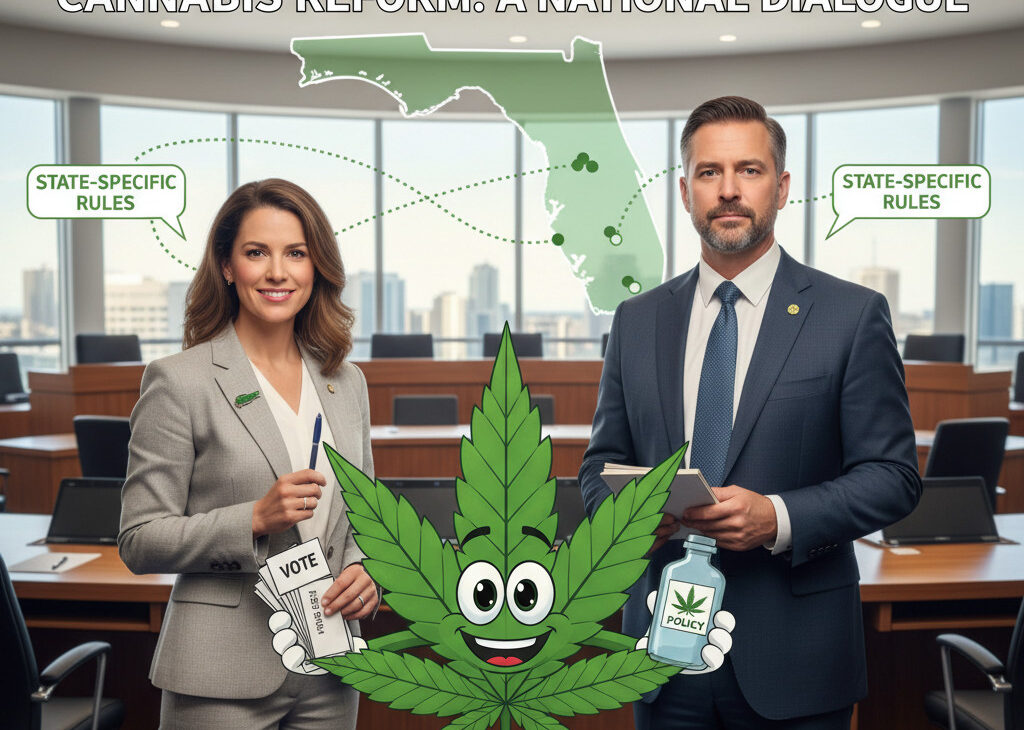
Cannabis policy and regulatory challenges in Florida and Nebraska
Florida and Nebraska face high stakes as they shape cannabis markets. This article examines Cannabis policy and regulatory challenges in Florida and Nebraska and why they matter now. Rapid market growth meets complex law. Therefore, regulators, businesses, and voters watch closely.
Florida’s 2024 ballot fight and a recent failed signature drive show electoral hurdles. Because campaigns must meet strict signature thresholds, ballot qualification remains fragile. Moreover, voters and officials differ on policy and enforcement. These tensions affect licensing, compliance, and investment.
In Nebraska, regulatory shakeups have followed turnover on the Medical Cannabis Commission. Dr Monica Oldenburg’s resignation highlighted governance strains. As a result, lawmakers propose new rules and oversight this year. Consequently, providers and patients face uncertainty about program rules.
This article reviews legal challenges, signature-gathering issues, and regulatory responses. It will compare state approaches and forecast likely changes. Therefore, readers will gain practical insight into compliance risks and market strategy. Finally, we suggest what stakeholders should watch next.
Overview: Cannabis policy and regulatory challenges in Florida and Nebraska
Florida Cannabis Policy Landscape
- Legal status: Medical cannabis is legal under state law, while recreational use remains unapproved.
- Ballot and signature hurdles: Campaigns must gather 880,062 valid signatures to qualify a constitutional amendment. However, the Smart & Safe Florida effort fell short, and state officials said the campaign was roughly 100,000 signatures short. For more details, see the Associated Press coverage.
- Signature validation and litigation: Because courts and election officials scrutinize petitions, campaigns face legal risk. A judge upheld the invalidation of over 200,000 signatures, which complicated qualification efforts. See CBS Miami reporting.
- Policy impact: Consequently, investors and businesses must plan for a cautious regulatory timeline. Related issues include ballot qualification, petition verification, and enforcement guidelines.
Nebraska Cannabis Policy Landscape
- Legal status: Nebraska allows medical cannabis under a new program. Recreational use remains illegal.
- Regulatory authority: The Nebraska Medical Cannabis Commission writes program rules and issues licenses. The commission operates through the Nebraska Liquor Control Commission portal.
- Recent shakeups: Dr Monica Oldenburg resigned as commission chair, and Lorelle Mueting became interim chair. As a result, lawmakers and advocates pushed for clearer rulemaking and potential statutory changes. Nebraska Public Media covers licensing deadlines and delays: Nebraska Public Media.
- Practical effects: Therefore providers face uncertainty about licensing, product rules, and compliance timelines.
These state summaries highlight differences in legalization pathways, ballot mechanics, and regulator stability. Moreover, stakeholders should track signature-gathering rules, commission meetings, and pending legislation.
Image credit: MyCBDAdvisor
Regulatory challenges faced by Florida and Nebraska
Both states confront complex cannabis regulations challenges that slow program progress and add cost. Regulators balance public safety, market access, and political pressure. As a result, businesses and patients must adapt to shifting rules.
Licensing hurdles
- Florida: The state faces ballot-based uncertainty and stalled initiatives. Because constitutional amendments require 880,062 valid signatures, campaigns and regulators deal with legal disputes. This uncertainty delays potential licensing and large-scale market entry.
- Nebraska: The Medical Cannabis Commission experienced leadership turnover. Dr Monica Oldenburg resigned, which disrupted rulemaking and licensing timelines. Consequently, cultivator and dispensary applicants face missed deadlines and shifting criteria.
Banking and financial barriers
- Federal conflict: State cannabis policies clash with federal law. Therefore many banks avoid cannabis clients, creating cash-heavy operations and higher compliance costs. See FinCEN guidance for banks.
- Practical effects: Because access to banking is limited, operators face higher security, insurance, and accounting expenses.
Legal and enforcement conflicts
- Signature verification fights in Florida illustrate legal cannabis hurdles. Courts and election officials may toss signatures, which affects ballot choices and policy timelines. For context, read the Associated Press report.
- Nebraska lawmakers are proposing bills to clarify commission powers. Therefore regulatory uncertainty remains until statutes or rules change.
Social equity and public policy
- Equity goals: Both states must reconcile licensing fairness with strict eligibility rules. Advocates push for programs that help communities harmed by prohibition. However, complex application rules can disadvantage small or disadvantaged applicants.
- Case study: Nebraska’s public comments and advocacy around the commission’s draft rules show advocates raising equity concerns. As a result, lawmakers may expand rulemaking authority to address disparities.
State cannabis policies will continue to evolve. Therefore stakeholders should monitor commission meetings, ballot updates, and federal guidance closely.
Quick comparison of key cannabis policy and regulatory features in Florida and Nebraska
| Aspect | Florida | Nebraska |
|---|---|---|
| Legal status | Medical cannabis legal; recreational use prohibited | Medical cannabis legal; recreational use prohibited |
| Permitted uses | Medical only under qualifying conditions | Medical only under qualifying conditions |
| Possession limits | Varies by product; patient limits set by state rules | Limits set by program rules; specifics under commission guidance |
| Home cultivation | Generally prohibited for recreational; limited for medical depending on rules | Typically prohibited; under review by regulators |
| Licensing procedures | Subject to constitutional and statutory timelines; ballot uncertainty affects rollout | Commission-driven licensing with rulemaking; leadership turnover has delayed schedules |
| Application fees and caps | Fees can be high; political limits may apply | Fees set by commission; some fee flexibility pending rule changes |
| Social equity programs | Proposed in initiatives; implementation remains uncertain | Advocates press for equity; commission and lawmakers consider measures |
| Banking and finance | Federal prohibition limits bank access; cash operations common | Similar federal constraints; state guidance and insurers adapt slowly |
| Enforcement and penalties | Strict enforcement in some jurisdictions; petition litigation has legal impact | Enforcement guided by state statutes; rules may change with new legislation |
| Recent developments | Failed signature drive in 2026 effort; 2024 amendment failed at 56% | Chair resignation and proposed bills expanding commission powers |
Therefore track rule changes and commission meetings for updates.
CONCLUSION
Florida and Nebraska illustrate how uneven state policy can slow market development. Florida’s 2024 amendment fell short of the 60 percent threshold, and signature fights delayed later efforts. As a result, ballot qualification and petition verification remain major legal hurdles for reformers. Nebraska shows a different strain because commission turnover has disrupted rulemaking and licensing timelines.
Licensing, banking, and federal conflict create practical barriers for operators in both states. Therefore businesses face higher costs and uncertain timelines for compliance. Social equity goals add policy complexity, and advocates press regulators for fair access. Meanwhile lawmakers consider bills to clarify commission authority in Nebraska.
Frequently Asked Questions (FAQs)
What is the current legal status of cannabis in Florida and Nebraska?
Medical cannabis is legal in both states. Recreational use remains prohibited. However, Florida has active ballot efforts and litigation that could change that path. Nebraska continues program rulemaking through its Medical Cannabis Commission.
Why did Florida’s recent ballot effort fail to qualify?
Campaigns must collect 880,062 valid signatures to propose a constitutional amendment. In 2026 the Smart & Safe Florida drive came up about 100,000 signatures short. Moreover, courts invalidated hundreds of thousands of petitions in prior reviews. As a result, ballot qualification remains difficult.
How does Nebraska’s commission turnover affect patients and businesses?
Leadership changes slowed rulemaking and delayed licensing timelines. Dr Monica Oldenburg resigned and Lorelle Mueting became interim chair. Therefore applicants faced missed deadlines and shifting criteria. Lawmakers may introduce bills to clarify authority.
What are the main regulatory hurdles for operators?
Licensing complexity, limited banking access, and federal-state legal conflicts create major obstacles. In addition, strict application rules and high fees can disadvantage small operators. Social equity goals add further regulatory layers.
How can stakeholders stay informed and prepare?
Track commission meetings, public comment periods, and state agency updates. Consult legal counsel and compliance experts. Also, monitor court rulings and legislative sessions because rules can change quickly.