
Home Grow 101 Minneapolis 8-Plant Rule
If you want to grow at home in Minnesota, start here. Home Grow 101 Minneapolis 8-Plant Rule lays out the limits and practical steps you must follow. Because local law matters, understanding the 8-plant limit keeps you legal and safe. This guide helps new growers learn compliance and avoid common pitfalls.
Local laws shape every decision about home cultivation. For example, Minnesota restricts adults to eight plants per residence and limits mature plants to four at once. Therefore, planning a staggered grow becomes essential to maximize harvests. Also, rules affect where you grow, how you secure plants, and what equipment you can use.
What this guide covers
- The 8-plant rule explained and key definitions
- Compliance tips and safety best practices
- Practical growing advice including staggered grow, autoflowers, and feminized seeds
- Indoor setup basics like a 4×4 grow tent and organic potting mix
Read on because this article will walk you step-by-step. As a result, you will gain confidence to start your first home grow while staying compliant.
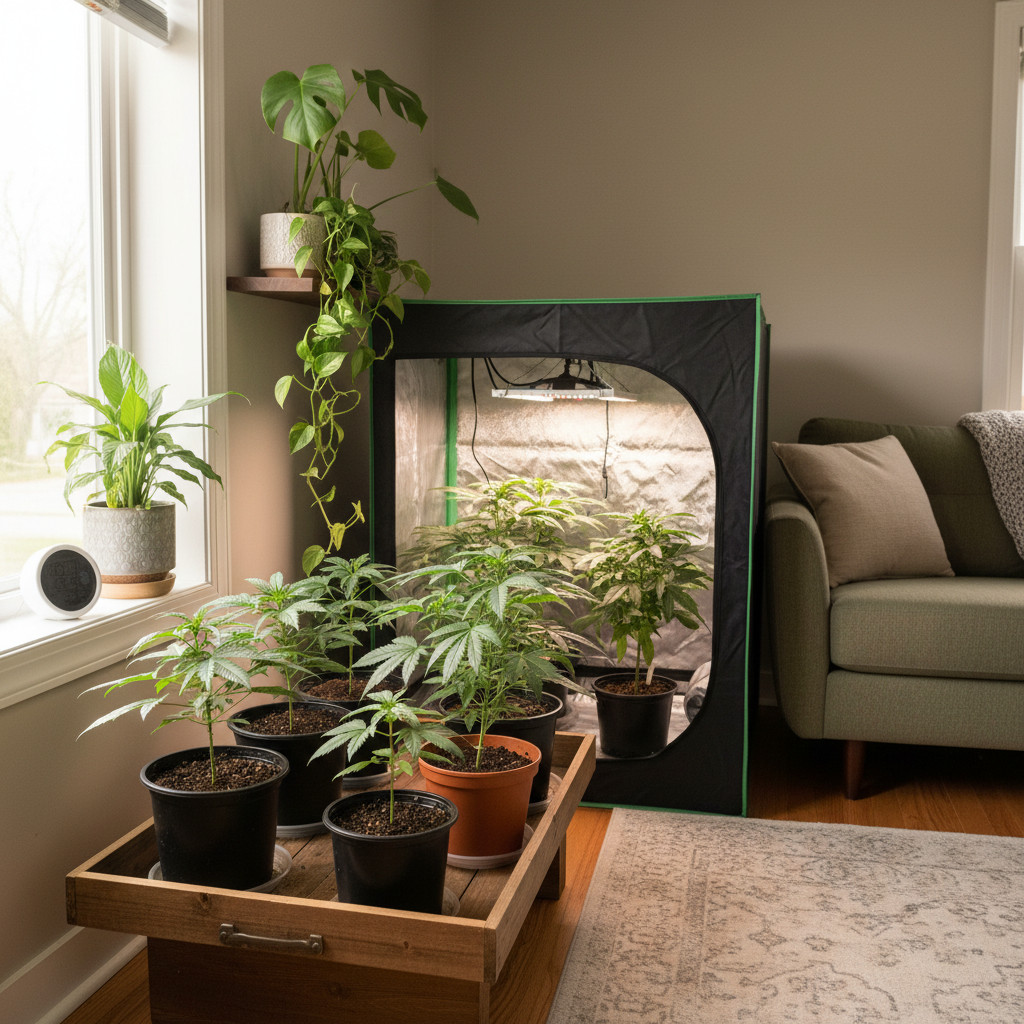
Home Grow 101 Minneapolis 8-Plant Rule — what it means
Minnesota allows adults 21 and older to grow cannabis at home, but limits matter. Home Grow 101 Minneapolis 8-Plant Rule sets clear numeric and safety limits. Because local law affects your choices, you must know what counts as a plant and where you can grow.
Legal limits and core definitions
- Adults per residence: You may cultivate up to eight cannabis plants per primary residence. However, no more than four plants may be mature and flowering at any time. For official statute language see Minnesota Statute 342.09.
- Age requirement: You must be at least 21 years old to grow for adult use. Therefore, keep cultivation restricted to eligible adults.
- What counts as a plant: A plant counts from seedling through harvest. In practice, growers count every living cannabis plant on the property toward the eight plant limit.
- Mature versus immature plants: Mature plants actively flower or show visible buds. Conversely, immature plants remain in seedling or vegetative stages and do not count as mature. As a result, you can stagger your harvests by keeping four immature plants while four others flower.
Residence, security, and visibility rules
- Location rule: Plants must stay at your primary residence in an enclosed, locked space that is not visible to the public. This includes a 4×4 grow tent indoors or a locked fenced area outdoors. For state guidance visit Minnesota Office of Cannabis Management.
- Outdoor screening: If you grow outside, screen plants from the street and lock the area. Otherwise, you risk violating local ordinances.
City-level regulations and odor control
- Minneapolis may add rules on odor control, ventilation, and building codes. Therefore, check local guidance and mitigation policies. See Minneapolis odor mitigation guidance at Minneapolis Cannabis Odor Mitigation Policy.
Practical notes and compliance tips
- Staggered grow: Use staggered planting to keep four immature plants while four mature. This maximizes yield under the 8-plant rule. Also consider autoflowers and feminized seeds to simplify timing.
- Documentation: Keep seeds and COAs from reputable suppliers for traceability. Because laws evolve, stay updated with the Office of Cannabis Management and city codes.
Follow these rules, and you will grow responsibly while staying compliant with Minnesota and Minneapolis requirements.
Home Grow 101 Minneapolis 8-Plant Rule — quick city comparison
Below is a concise comparison of home grow rules. Home Grow 101 Minneapolis 8-Plant Rule appears alongside Denver, Los Angeles, and Portland for context.
| City | Plant limit (per residence or person) | Mature or flowering limit | Legal age | Location restrictions | Source |
|---|---|---|---|---|---|
| Minneapolis, MN | Up to eight plants per primary residence | No more than four mature/flowering plants at once | 21 years old | Must be at primary residence, in an enclosed locked space and not visible to the public | Statute and MN.gov |
| Denver, CO | Up to six plants per adult; household cap typically 12 plants | Usually up to three flowering plants per adult (state guidance) | 21 years old | Grow in an enclosed locked area not visible to the public; local rules may apply | Colorado Laws |
| Los Angeles, CA | Up to six living plants per private residence | Counts toward the six living plants limit | 21 years old | Plants and products must be kept within private residence or locked space and not visible from public areas | California Code |
| Portland, OR | Up to four plants per residence for recreational users | Four total plants per residence; medical rules differ | 21 years old | Grows should be in a secured area and follow OLCC guidance; medical cultivation has separate limits | OLCC FAQs |
Use this table to compare limits quickly. Because local ordinances change, always verify city rules before you start.
Home Grow 101 Minneapolis 8-Plant Rule: benefits and common challenges
Following the Home Grow 101 Minneapolis 8-Plant Rule gives clear legal protection and better garden results. Because you stay inside the law, you reduce risk of fines or criminal exposure. Also, disciplined limits encourage sustainable, lower-waste growing habits.
Benefits
- Legal safety and peace of mind: Adhering to the eight plant limit avoids penalties under Minnesota law. For details, check the statute at Minnesota Statutes.
- Predictable harvests and scheduling: Therefore, staggered grows let you keep four immature plants while four flower. As a result, you gain regular harvest cycles and steady personal use supply.
- Better security and community relations: Keeping plants in an enclosed locked space reduces theft risk and neighbor complaints. Also, odor mitigation helps maintain good relations; see Minneapolis guidance at Minneapolis Cannabis Odor Mitigation Policy.
- Sustainable practices: Smaller grows use fewer inputs. Consequently, you can focus on organic potting mix, filtered water, and lower energy lighting to cut waste.
Common challenges and how to address them
- Counting plants accurately: New growers sometimes miscount clones, seedlings, and mother plants. Therefore, label pots and keep a simple inventory to avoid accidental overage.
- Space constraints: Limited square footage makes eight plants crowded indoors. As a result, consider a 4×4 grow tent, training techniques, or smaller autoflower varieties to save space.
- Managing mature versus immature limits: Misunderstanding flowering status can lead to violations. To prevent mistakes, track growth stages with photos and dates.
- Compliance and inspections: State or local inspectors may ask questions. For current regulations consult the Office of Cannabis Management at Minnesota Office of Cannabis Management.
- Odor and neighborhood concerns: Poor ventilation creates complaints. To reduce odor, use carbon filters and proper ventilation, and be proactive with neighbors.
Follow these steps and you will enjoy a lawful, efficient, and sustainable home grow that fits Minneapolis rules.
Home Grow 101 Minneapolis 8-Plant Rule
In summary, Home Grow 101 Minneapolis 8-Plant Rule gives clear limits for safe home cultivation.
Adults 21 and older may grow up to eight plants per residence.
However, no more than four plants can be mature and flowering at once.
Therefore, staggered planting and careful record keeping help you stay compliant.
Following the rule reduces legal risk and promotes responsible, sustainable growing.
Also, it encourages better security, lower waste, and predictable harvests.
Common challenges include space limits, accurate plant counting, and odor control.
Yet simple fixes—like a 4×4 grow tent, labels, and carbon filters—solve most issues.
For trustworthy educational content and practical guides, consult MyCBDAdvisor.
Start small, follow the rules, and grow responsibly.
Frequently Asked Questions (FAQs)
Below are five common questions about Home Grow 101 Minneapolis 8-Plant Rule. Each answer covers legal, practical, and compliance concerns. Read them to build confidence and avoid mistakes.
Can I legally grow eight cannabis plants at my Minneapolis home?
Yes. Minnesota allows adults 21 and older to cultivate up to eight cannabis plants per primary residence. However, no more than four plants may be mature and flowering at one time. Therefore, plan a staggered schedule to stay legal. For the statute, see Minnesota Statute 342.09. Also, for statewide guidance visit Minnesota Adult Use Guidance.
What exactly counts as a plant under the 8-Plant Rule?
A plant counts from seedling through harvest. This rule includes clones, rooted cuttings, and mother plants if they live on the property. Mature plants show flowers or visible buds. Conversely, immature plants remain in seedling or vegetative stages. As a result, you must count all living cannabis plants on the property toward your total.
Where may I grow on my property and what visibility rules apply?
You must grow at your primary residence in an enclosed, locked space. For example, many growers use a 4×4 grow tent indoors. Outdoor grows must be screened from public view and locked behind a fence. Otherwise, you risk violating local ordinances. See Minnesota adult use guidance at Minnesota Adult Use Guidance for details.
What happens if a neighbor complains or an inspector asks questions?
First, remain cooperative and provide clear information. Keep records of seeds and COAs from your supplier. Because odor complaints can trigger enforcement, use carbon filters and good ventilation. Also, Minneapolis offers odor mitigation advice at Minneapolis Cannabis Odor Mitigation Policy. Finally, know that intentional violations may cause fines or criminal charges.
How can I manage space and stay compliant with the 8-Plant Rule?
Use staggered planting to balance mature and immature plants. Also, consider autoflower seeds to shorten cycles. Train plants and use smart containers to save room. Label pots and log dates to prevent overcounting. Because laws can change, check the Office of Cannabis Management site regularly at Minnesota Office of Cannabis Management. As a result, you will reduce risk and enjoy steadier harvests.