Japan bans cannabinol (CBN): Why the move matters
Japan bans cannabinol (CBN), a move that reshapes the global cannabinoid market. That decision arrived after Japan’s Ministry of Health designated CBN a controlled substance. CBN is a minor cannabinoid formed as THC degrades, and companies now sell it for sleep and relaxation. Because the ban covers production, import, sale, and possession, retailers face sudden product removals. Therefore, consumers and manufacturers must act fast to comply.
However, this ban does more than affect local sales. It closes a regulatory loophole for hemp-derived cannabinoids. Consequently, international suppliers, investors, and researchers will watch Japan closely. Moreover, the policy signals a broader regulatory crackdown on cannabinoids worldwide.
This article explains what the ban means. It gives key dates, legal risks, and market fallout. Additionally, we examine medical exceptions and the practical steps businesses should take. We also outline compliance tips for retailers and patients. Expect ripple effects in research funding and product development. Read on to understand why Japan’s choice could change the future of cannabinoids.
Japan bans cannabinol (CBN): Legal background and regulatory context
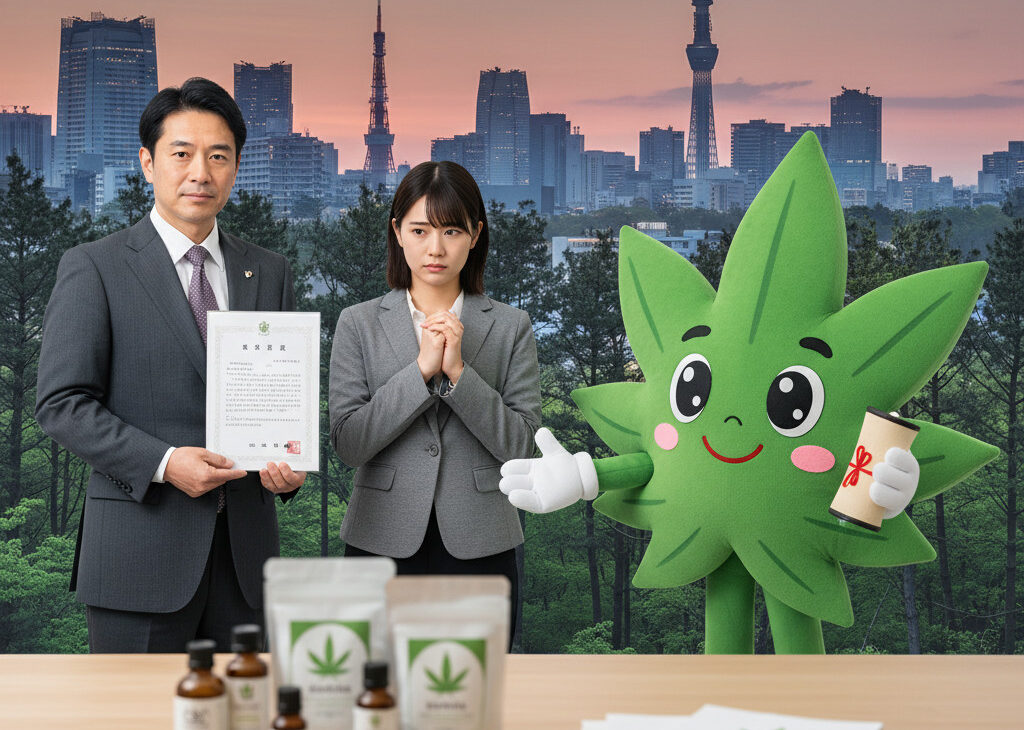
Japan bans cannabinol (CBN) under a revised classification by the Ministry of Health, Labour and Welfare. The ministry designated CBN as a “designated drug” and a “controlled substance” on March 18, 2026. As a result, the new rules take effect June 1, 2026 and prohibit production, import, sale, possession, and consumption, with very limited medical exceptions. For details, see the ministry announcement: Ministry Announcement.
Why the ban was enacted
- Public safety concerns prompted the ministry to act because reports linked CBN products to adverse events in Japan. For example, investigators cited incidents of acute behavioral changes after consuming CBN-infused edibles. Consequently, regulators moved to close a regulatory gap that allowed hemp-derived cannabinoids to be sold freely.
- The ministry argues that CBN behaves like regulated cannabinoids chemically and pharmacologically. Therefore, including it among controlled substances prevents unregulated use and protects patients and consumers.
Key legal details
- Effective date June 1, 2026 covers production, import, sale, distribution, possession, and use.
- Very limited medical exception exists for patients with specific intractable conditions who can apply for continued access under strict oversight.
- Penalties for unauthorized handling can include fines and prison terms up to seven years.
How this compares with other countries
- United States: The regulatory landscape remains fragmented. The Food and Drug Administration treats many cannabinoids as unapproved drugs when marketed for therapeutic use, while some states allow broader access. For context see the FDA guidance: FDA Guidance.
- European Union: Member states vary. Some permit low-THC hemp products, while others restrict novel cannabinoids pending safety data. This patchwork creates market uncertainty for ingredients like CBN.
- Canada: Canada tightly regulates cannabis and its derivatives under the Cannabis Act, which generally restricts nonprescription sales of novel cannabinoids unless authorized.
Global impact
- Because Japan is a major consumer market, the ban closes an important export destination for CBN products. As a result, manufacturers and supply chains face sudden regulatory friction.
- The move may prompt other regulators to reassess hemp-derived cannabinoids and close similar loopholes. For real-time reporting and analysis, see coverage from Nippon.com: Nippon.com Coverage.
This legal shift marks a clear policy decision to prioritize consumer safety and regulatory clarity over rapid market expansion of minor cannabinoids.
| Country | Legal Status of CBN | Year of Regulation or Guidance | Notes |
|---|---|---|---|
| Japan | Banned; designated drug and controlled substance | 2026 (effective June 1, 2026) | Production, import, sale, possession prohibited. Very limited medical exception. Penalties can reach seven years in prison. |
| United States | Mixed; federal ambiguity and state variation | 2018 present | The 2018 Farm Bill created a hemp loophole, however the FDA treats therapeutic claims as unapproved drugs. States set varied rules. |
| Canada | Regulated as a cannabis derivative under national law | 2018 | The Cannabis Act governs cannabinoids; nonprescription sale of novel cannabinoids is generally restricted. |
| United Kingdom | Restricted; novel food and medicines frameworks apply | 2019 2021 | Novel food authorizations are often required; medicinal uses need MHRA approval. |
| Germany | Restricted under national drug law and EU frameworks | Ongoing | Authorization is needed for cannabis derivatives. Regulators require safety data before approvals. |
| Australia | Largely prescription-only for cannabinoid medicines | 2016 2020 | Therapeutic Goods Administration controls approvals. Over-the-counter hemp products remain limited. |
| New Zealand | Medicinally regulated; recreational use remains illegal | 2018 2020 | Medical cannabis is available by prescription. Novel cannabinoids are assessed case-by-case. |
This table simplifies complex national rules. Therefore check local law or official guidance before acting.
Impacts after Japan bans cannabinol (CBN)
Japan bans cannabinol (CBN) will ripple through consumers and industry. For consumers, the immediate effect is loss of product access. Retail shelves and online stores will lose gummies, oils, and vapes that contain CBN. As a result, people who used CBN for sleep or relaxation must find alternatives quickly.
Economic effects
- Retailers face inventory losses and must destroy unsold stock before June 1, according to the ministry guidance: Ministry Guidance
- Manufacturers will lose a major export market and may see revenue drops. Consequently, supply chains for hemp extracts will contract regionally.
- Investors could pull funding from small cannabinoid startups, which raises consolidation risks.
Health and consumer safety
- The ban aims to reduce unregulated consumption and adverse events. However, patients using CBN under informal care may lose perceived benefits. Therefore, doctors and pharmacists must advise on safe alternatives.
- Moreover, some patients with rare conditions might access CBN only through narrow medical exceptions. Regulators created this pathway for exceptional cases.
Industry innovation and research
- Because regulators tightened rules, companies will pivot to other cannabinoids and noncannabinoid sleep aids. As a result, product innovation may shift toward CBD derivatives and botanicals.
- Meanwhile, researchers may face funding and sample access limits. Consequently, clinical studies on CBN could slow, which will delay rigorous safety data.
Global market consequences
- Other regulators now watch Japan’s example. For instance, agencies like the U.S. FDA show ongoing concern about novel cannabinoids: U.S. FDA Regulation
- Additionally, coverage in international outlets highlights supply disruptions and policy shifts: International Outlets Coverage
In short, the ban prioritizes safety but raises short-term economic and research costs. Therefore stakeholders should act now to manage compliance and pivot product strategies.
CONCLUSION
Japan bans cannabinol (CBN) represents a clear regulatory pivot. The Ministry of Health reclassified CBN as a designated drug and controlled substance. As a result, production, import, sale, possession, and use are banned with a narrow medical exception. Consumers will lose access to many sleep and relaxation products. Retailers must remove stock and may face financial losses.
Economically, manufacturers and exporters lose an important market. Consequently, supply chains and investment plans require rapid adjustment. In research, tighter rules could slow clinical trials and delay safety data. However, regulators likely intended greater consumer protection and clearer rules.
Globally, this decision may influence other regulators to reassess hemp-derived cannabinoids. Therefore companies should review compliance strategies and pivot product development to permitted ingredients. For patients, healthcare providers should advise safe alternatives and explain medical exception procedures.
For clear, reliable guidance on cannabinoids, turn to MyCBDAdvisor. MyCBDAdvisor is a U.S. full-spectrum, research-driven CBD knowledge source focused on education about safety, benefits, and trends. Visit MyCBDAdvisor for expert summaries and up-to-date resources.
Frequently Asked Questions (FAQs)
What does it mean that Japan bans cannabinol (CBN)?
Japan designated CBN a controlled substance. As a result, production, import, sale, possession, and use are illegal from June 1, 2026. Penalties can include fines and prison up to seven years.
Can I keep CBN products I already own?
The ministry instructs consumers to dispose of CBN items before the June 1 deadline. However patients with approved medical exceptions may retain access under strict oversight.
Are there medical exceptions to the ban?
Yes. Limited exceptions apply for patients with specific intractable conditions. Therefore doctors must follow application procedures and regulators will review cases individually.
How does the ban affect manufacturers and retailers?
Exports to Japan stop and retailers must remove CBN items. Consequently companies will redirect product lines and inventory, and investors may reassess funding for novel cannabinoid ventures.
Will this decision change global research and products?
Likely yes. Because regulators tighten access, clinical studies may slow. As a result developers will shift toward CBD, noncannabinoid botanicals, or compliant formulations.