

Massachusetts THC potency audits explained
Massachusetts cannabis THC potency audits inspect retail cannabis to confirm labeled THC matches laboratory measurements. These audits protect consumers by enabling safer dosing and reducing accidental overconsumption.
This article explains how audits operate, the 75 to 125 percent tolerance for label accuracy, and the effects on brands, labs, and consumers. See the CCC bulletin on labeled potency and an independent audit reporting for examples.
What you’ll learn
- Purpose of audits and the 75 to 125 percent compliance standard
- Consumer impact including safer dosing, clearer labels, and stronger market confidence
What are Massachusetts cannabis THC potency audits?
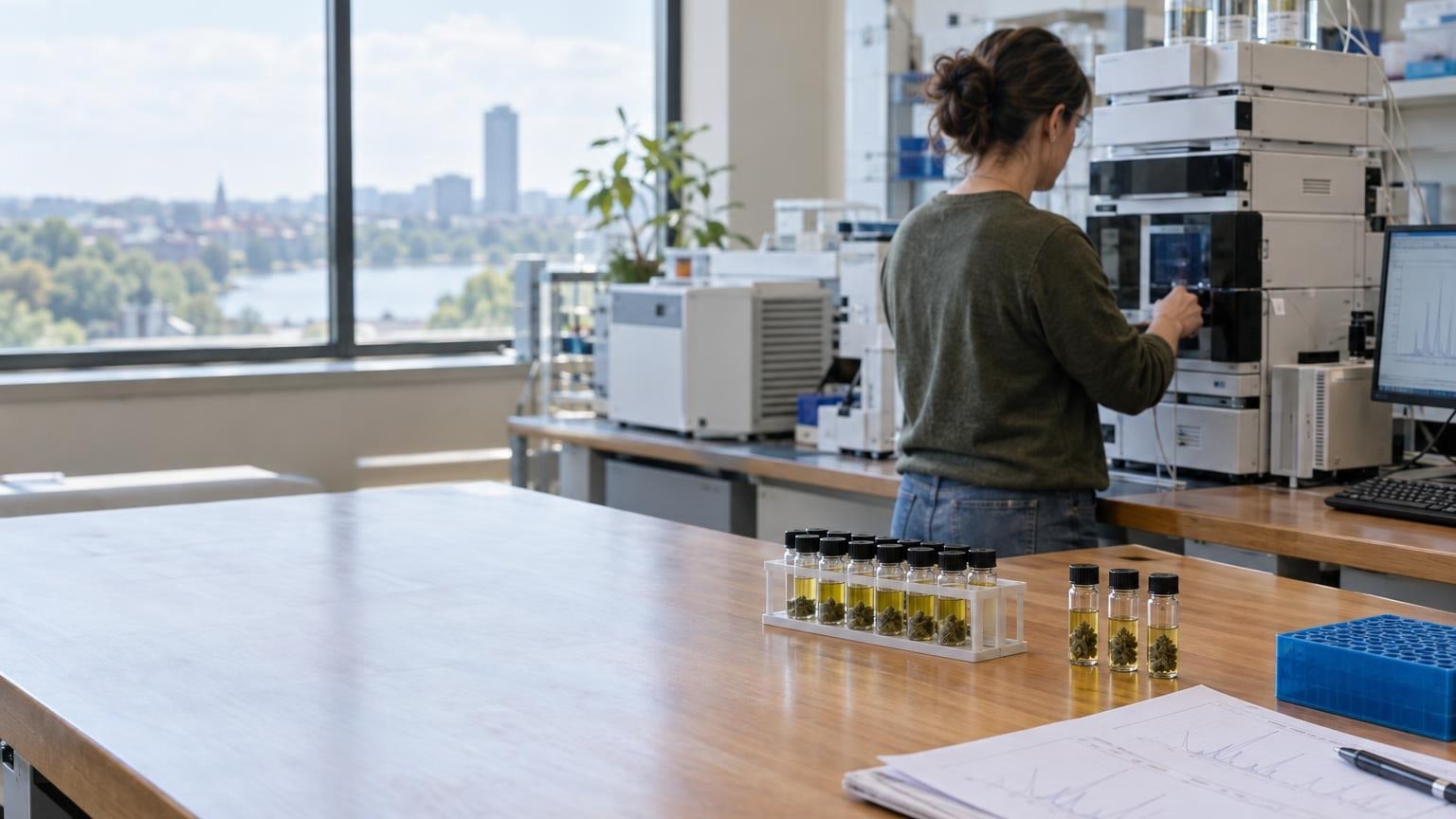
Massachusetts cannabis THC potency audits are agency-run spot checks that sample retail cannabis to confirm that measured THC aligns with the label. Key components: sampling, lab testing via chromatography, tolerance threshold set at 75% to 125% (see CCC bulletin on auditing labeled potency); the Commission publishes audit findings and enforcement notices on its potency audit results page.
Why THC Potency Audits Matter
Massachusetts cannabis THC potency audits protect public safety and build consumer trust by verifying label accuracy. Audits reduce the risk of accidental overconsumption because they confirm actual THC potency. Therefore, patients and recreational users can dose more predictably, and clinicians can give clearer guidance.
Audits also enforce regulatory compliance in the regulated market and push brands to strengthen quality control. The Cannabis Control Commission set a 75 percent to 125 percent accuracy range to account for natural variability and degradation over time, and it outlined this policy in an official bulletin CCC bulletin on auditing of labeled potency. As a result, labs face closer scrutiny and producers must improve testing, storage stability, and traceability. Independent reporting has shown audits can reveal significant potency discrepancies, and that transparency helps restore confidence in retail cannabis products Boston Globe report on audit findings. Ultimately, potency spot testing protects consumers and elevates industry standards.
Massachusetts Cannabis THC Potency Audits Process
Audits involve a standardized, step-by-step procedure to ensure transparency and regulatory compliance.
1. Selection
Auditors identify products for testing based on risk assessments or through random selection. Emphasis is placed on vulnerable marijuana flower products that might degrade quickly.
2. Sample Collection
Inspectors collect sealed retail units from specified lots. Sub-samples may be taken to best represent a larger batch. Documentation ensures accurate recording of sample details.
3. Chain of Custody
Audit teams securely seal the collected samples and document every transfer. This process maintains sample integrity from point of collection to the laboratory.
4. Lab Testing
Samples are sent to accredited labs for analysis using High-Performance Liquid Chromatography (HPLC). Labs must include quality assurance measures and provide Certificates of Analysis (COA).
5. Result Comparison
Lab results are compared to the labeled THC content, ensuring they fall within the 75–125% tolerance range. It’s recommended to refer to the CCC bulletin for specific timelines and turnaround times.
6. Reporting and Enforcement
If a product fails compliance, the findings will be reported to the Massachusetts Cannabis Control Commission. Actions may include recalls, relabeling, or destruction of the product. For detailed outcomes, see published audit results.
Massachusetts cannabis THC potency audits comparison table
| State | Audit frequency | Testing methods | Regulator body | Source |
|---|---|---|---|---|
| Massachusetts | Regulator led spot audits and targeted compliance sampling announced May 2026; samples drawn from retail lots as needed | Independent laboratory chromatography (HPLC), replicate assays, Certificates of Analysis and quality controls | Massachusetts Cannabis Control Commission (CCC) | Source |
| Colorado | Random compliance testing and investigatory sampling; MED may mandate tests for investigations or data collection | Potency testing under MED rules, chromatography methods with permitted variance (commonly +/-15% for certain claims) | Colorado Marijuana Enforcement Division (MED) | Source |
| California | Batch by batch mandatory pre sale testing; continuous Certificate of Analysis reporting before retail sale | ISO/IEC 17025 accredited labs using chromatography (HPLC or GC) for cannabinoids plus full panel contaminant analysis | California Department of Cannabis Control (DCC) | Source |
| Washington | Compliance testing and retesting on request; LCB may require retests after failed results | Potency and contaminant testing with COA submission to the Cannabis Central Reporting System using validated chromatography methods | Washington State Liquor and Cannabis Board (LCB) | Source |
Notes: This table offers high level comparison to provide context for Massachusetts cannabis THC potency audits; check each regulator site for the latest rules and technical guidance.
Cannabis Testing Standards and Metrology
Massachusetts cannabis THC potency audits align with national metrology guidance that helps ensure lab comparability and accuracy. The National Institute of Standards and Technology runs the Cannabis Laboratory Quality Assurance Program, which supplies reference materials, interlaboratory comparisons, and method guidance for THC and other cannabinoid testing. Therefore, accredited labs use NIST reference materials and participate in proficiency testing to reduce measurement uncertainty and improve chain of custody.
For technical details and program reports, see NIST’s resources on cannabis laboratory quality assurance: NIST’s resources on cannabis laboratory quality assurance.
CONCLUSION
Massachusetts cannabis THC potency audits strengthen consumer safety and restore trust in the regulated market. They verify THC potency and enforce label accuracy within the 75 to 125 percent tolerance. As a result, regulators can remove mislabelled products and push brands to improve testing, storage stability, and traceability.
Ultimately, Massachusetts cannabis THC potency audits promote market integrity, support public safety, encourage industry growth through higher quality control and compliance, provide consumers and patients clearer dosing information, and signal to investors and medical providers that the legal supply chain offers consistent potency, reduces black market demand, and supports rigorous research, while protecting consumers, patients, and communities across Massachusetts; for ongoing coverage and resources see My CBD Advisor.
Frequently Asked Questions (FAQs)
What are Massachusetts cannabis THC potency audits?
Massachusetts cannabis THC potency audits are regulator led reviews that sample retail cannabis and run potency testing to confirm labeled THC levels. Results are compared to the 75 to 125 percent tolerance and can trigger recall or removal when labels misrepresent potency.
How do audits protect consumers?
Audits improve label accuracy so consumers can dose more predictably and avoid accidental overconsumption. By detecting degradation related to storage/shelf life and verifying THC testing results, audits strengthen patient and public safety.
Who conducts testing and what methods do they use?
Independent, accredited testing laboratories perform potency testing using chromatography such as high performance liquid chromatography with replicate assays and quality controls. Massachusetts requires ISO/IEC 17025 accreditation and digital COA uploads under the testing methods order requiring digital COAs Massachusetts testing methods.
What happens if a product fails an audit?
Regulators notify the producer and may require relabeling, retesting, recall, or destruction to protect consumers. Enforcement also prompts corrective actions that improve laboratory and production processes.
How should brands and consumers respond to potency audits?
Brands should strengthen potency testing, improve storage stability and traceability, and document a Certificate of Analysis (COA) for each batch. Consumers should check batch numbers, prefer products with accessible COAs, and store items properly to limit THC degradation and extend storage/shelf life.
How can consumers verify a product’s Certificate of Analysis (COA)?
– Match the batch number on the retail label to the COA to confirm it is the same lot.
– Use the producer or lab COA link on the label or website and confirm the test date, lab accreditation, and THC testing results Massachusetts testing FAQ.
– Request the COA from the retailer if no link is available and review potency testing fields such as total THC and testing date.
Related on CBD Advisor
- What is Cannabis CBD product launch and legalization debate
- Why Older adults prefer CBD or CBD-THC products over THC-only
- What is Foundry R&D and Formulation Science (THC-Only) SimplyCrafted