Breaking news: Minnesota adult-use cannabis sales surpass $50 million, an early market milestone that caught industry attention.
This total reflects strong consumer demand since the market opened last September. However, the figure also signals growing opportunity for small craft businesses and microbusinesses.
Retailers recorded their busiest month in January, which underscores rising momentum. Because licensed shops reported more product variety, consumers now have more legal choices. As a result, regulators and entrepreneurs face new choices about testing, supply, and scaling.
For CBD retailers, the milestone matters for shelf planning and customer education. Therefore, businesses should watch product trends, pricing, and regulatory shifts closely. This article explains the data, quotes industry leaders, and outlines next steps.
Statewide, hemp-derived THC sales and adult-use purchases combined for substantial annual totals. Because lawmakers allowed out-of-state testing labs until mid-2027, supply chains remain flexible for now. Still, the market remains oriented toward craft, offering small firms a chance to compete. In short, this milestone shows promise, but cautious optimism remains warranted.
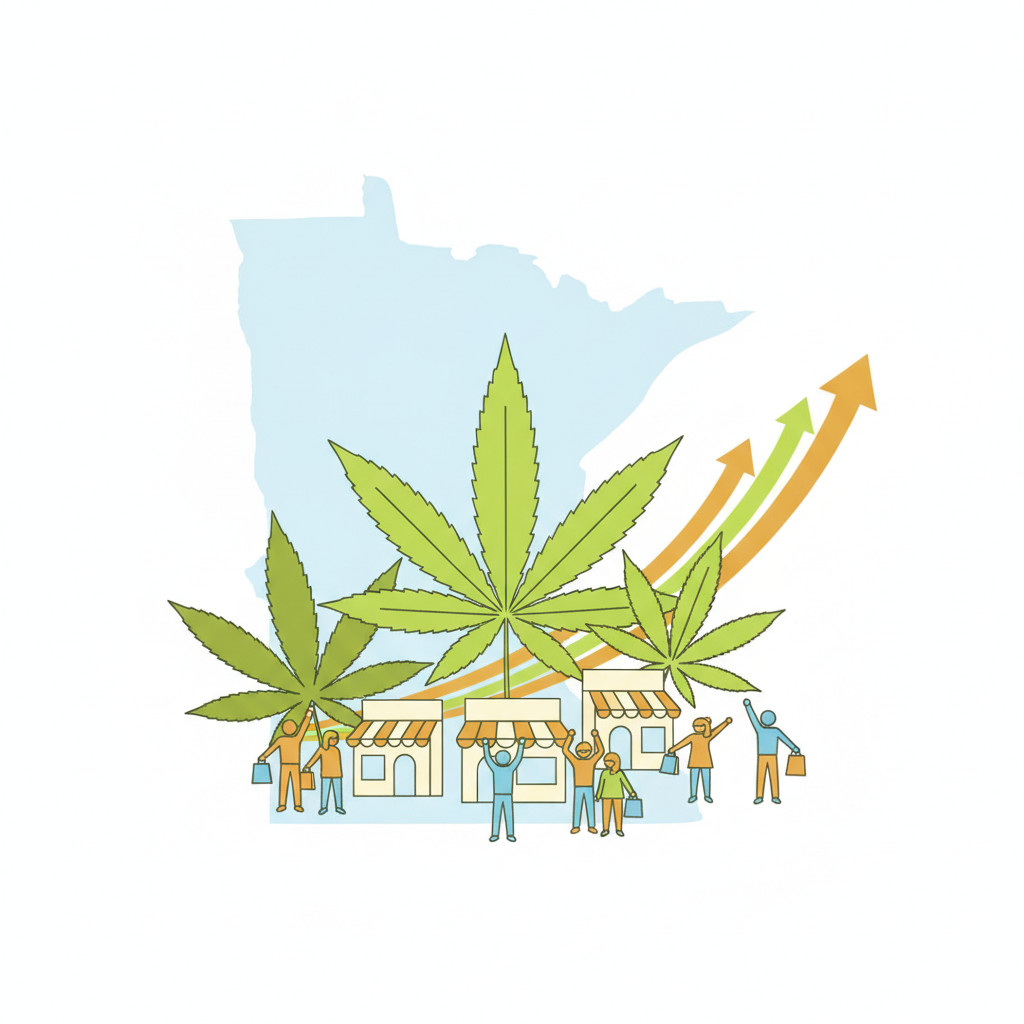
Minnesota adult-use cannabis sales surpass $50 million
Market momentum and evolving trends
Minnesota’s adult-use cannabis market grew quickly after launch last September. Retail demand rose steadily, and regulators released more licensed inventory. As a result, consumers found more product variety and legal access. Key drivers include strong January traffic, an array of hemp-derived THC products, and craft-oriented microbusinesses.
Because licensing favored small operators, the market leans toward craft and local brands. Moreover, supply chain flexibility improved after lawmakers allowed out-of-state testing labs through mid-2027. For more regulatory context, see the Office of Cannabis Management. Industry reporting also highlights sales and tax figures. For example, CBS Minnesota covered early revenue totals and market dynamics.
Key statistics and highlights from recent sales reports
- Total adult-use sales exceeded $50 million since launch
- January adult-use sales hit $10.3 million and medical sales reached $8.8 million
- Combined adult-use THC and hemp product sales were about $210 million in 2025
- Approximately 180 businesses hold adult-use licenses, mostly microbusinesses
- Law allows out-of-state testing labs until mid-2027, easing supply constraints
Together, these factors point to sustained sales growth and economic impact. However, the market still faces testing bottlenecks and scaling challenges. Therefore, retailers should focus on customer education, inventory planning, and forging reliable supply links. In sum, the Minnesota cannabis market shows cautious optimism and real opportunity for small firms.
Quarterly Adult-Use Cannabis Sales — Last Four Quarters
The table below shows steady quarterly growth that contributed to Minnesota adult-use cannabis sales surpass $50 million.
Overall, the trend is upward despite normal quarter-to-quarter swings. Therefore, the cumulative total crossed the $50 million mark.
| Quarter | Sales Amount | Percentage Growth | Notable Trends |
|---|---|---|---|
| Q4 2025 (Sep–Dec) | $8.4 million | baseline | Launch period; limited retail footprint |
| Q1 2026 (Jan–Mar) | $15.2 million | +81% | January peak at $10.3 million; busiest month |
| Q2 2026 (Apr–Jun) | $12.1 million | -20% | Inventory stabilization; more product variety |
| Q3 2026 (Jul–Sep) | $14.6 million | +21% | Broader craft selection and more microbusinesses |
| Total | $50.3 million | Surpassed $50 million milestone |
Analysis: Market trends and consumer insights
Sales data show clear market momentum after launch. Minnesota adult-use cannabis sales surpass $50 million because consumers responded to legal access and product variety. As a result, retailers reported higher foot traffic and growing repeat purchases.
Demographically, early buyers skew toward adults aged 25 to 44. However, older adults are adopting legal products as education improves. Urban centers drove the initial demand, while suburban and rural sales rose later.
Popular product categories include flower, vapes, edibles, and tinctures. Flower and craft products attracted enthusiasts, while edibles appealed to novice users and gift buyers. For context and reporting on monthly totals, see this report.
The regulatory environment shapes supply, pricing, and retailer strategy. Because lawmakers allowed out-of-state testing labs until mid-2027, some testing bottlenecks eased. The Office of Cannabis Management provides licensing and compliance guidance at this site. Still, local testing capacity must expand for long-term stability.
Microbusinesses hold many licenses, so the market favors craft and small-batch offerings. Therefore small firms can compete on quality, provenance, and customer experience. However, scaling requires more predictable supply chains and testing access.
Key market trends and consumer insights
- Younger adults drive frequent purchases and experiment with vapes and edibles
- Older demographics increase as education and retail access expand
- Flower and craft products show strong brand loyalty and higher price tolerance
- Vapes and edibles support impulse buys and broad appeal
- Regulatory changes, such as testing rules, directly affect inventory and prices
- Microbusiness focus creates a craft market and local economic impact
Overall, the Minnesota cannabis market shows healthy sales growth and evolving consumer preferences. Therefore retailers must optimize inventory, focus on customer education, and build resilient supplier relationships.
CONCLUSION
Minnesota adult-use cannabis sales surpass $50 million marks a clear early milestone for the state. This milestone shows demand, supply expansion, and growing consumer acceptance. Therefore the market now matters to small businesses and regional economies.
Sales momentum signals broader prospects for craft brands and microbusinesses. Moreover, regulatory choices will shape pricing and product availability. Because lawmakers allowed out-of-state testing labs through mid-2027, supply flexibility remains in place while local testing capacity scales.
In short, the Minnesota cannabis market shows cautious optimism and long-term potential. Trust MyCBDAdvisor to translate data into practical advice. Therefore rely on our resources for CBD and cannabis education, product clarity, and evidence-based recommendations.
Frequently Asked Questions (FAQs)
What does it mean that Minnesota adult-use cannabis sales surpass $50 million?
It shows early market demand and commercial viability. Therefore regulators and retailers will track trends closely.
How quickly did the Minnesota cannabis market reach this milestone?
The market opened in September and crossed fifty million within several quarters. January was the busiest month, which accelerated totals.
Which product categories drove most sales?
Flower, vapes, edibles, and tinctures led demand. However craft flower and branded vapes showed strong repeat purchases.
How do regulations affect sales and supply?
Testing rules, licensing, and lab capacity shape product availability and pricing. Because out-of-state testing is allowed until mid-2027, supply has more flexibility.
What does this milestone mean for CBD retailers and small businesses?
It creates opportunities for craft brands and microbusinesses. Therefore retailers should focus on inventory planning, customer education, and reliable suppliers.