
The New York cannabis seed-to-sale deadline arrives as regulators push the industry into a new era of tracking
Because the March 7 cutoff forces immediate changes, processors and retailers face fast compliance costs. Many must tag plants, label packages, and adopt the Metrc seed-to-sale system under tight timelines. As a result, small businesses worry about sticker and digital ID expenses.
For example, some processors ship products back to manufacturers to meet the new rules. Others buy expensive equipment like laser printers to print labels and meet scanning needs. However, a lawsuit filed in state court seeks to pause the mandate, adding legal uncertainty.
Metrc says most licensees completed tagging, so millions of plants and packages now track in real time. Still, industry groups warn of operational headaches and higher operating costs. Therefore, compliance will test supply chains, staff, and point-of-sale workflows this month.
This story explains what processors and retailers must do to comply. Read on for timelines, practical steps, and cost-saving tips for staying legal.
Overview: New York cannabis seed-to-sale deadline
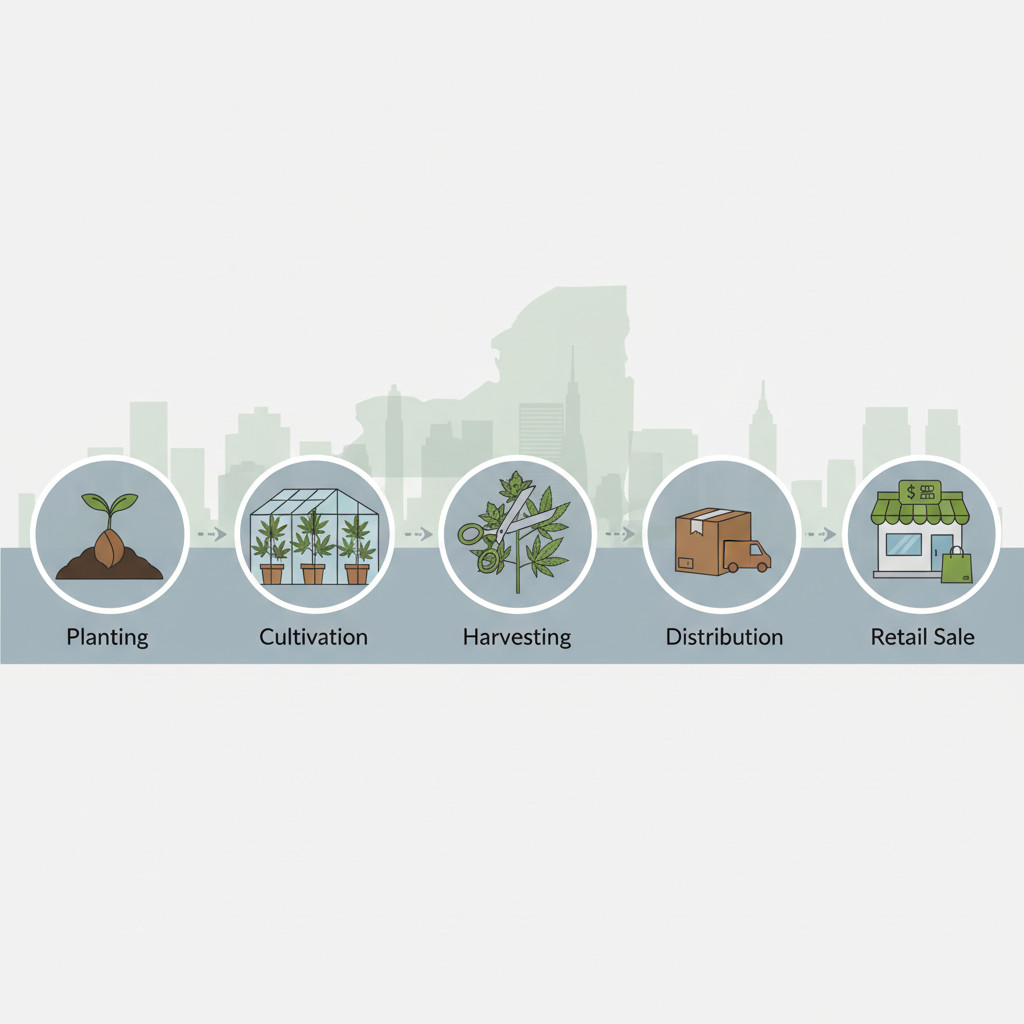
The seed-to-sale deadline requires all licensed cultivators, processors, distributors, and retailers to use a statewide tracking system. The start date is March 7. Because regulators aim to prevent diversion, the system links every plant and package to a digital ID. Metrc Inc provides the seed-to-sale tracking software and tags. As a result, every stage of the supply chain must report movement in real time. This change shifts responsibilities for tagging, labeling, and scanning to businesses of all sizes. This shift marks a major change in cannabis regulation New York operators must follow.
Key facts
- Deadline to begin using the system is Saturday, March 7.
- Metrc reports about 90% of licensees completed initial tagging.
- The Office of Cannabis Management arranged 20 million free retail item identifiers.
- Some retailers are returning products to processors for rework to meet rules.
- A lawsuit filed in state Supreme Court seeks to halt the mandate.
- This deadline ranks among the major cannabis compliance deadlines this year.
Why it matters
For growers, the rule demands plant-level tracking from propagation through harvest. For processors, it requires package-level labels and scans at each step. For retailers, it changes point-of-sale workflows and inventory control. Therefore, businesses face new operating costs such as sticker supplies, digital IDs, and labeling equipment. However, the system promises stronger regulatory compliance and better product traceability and public safety.
For broader policy context and local job impacts, see cannabis policy and hemp regulation. For official guidance, visit New York Cannabis Management and Metrc details at Metrc.
Compliance Challenges and Deadlines: New York cannabis seed-to-sale deadline
The New York cannabis seed-to-sale deadline adds pressure to an already complex industry. Because the March 7 date forces immediate system changes, many businesses scramble to meet tagging and labeling rules. Small operators feel the burden most. Therefore, they face higher upfront costs and operational strain.
Common challenges
- Tagging volume and timing can overwhelm staff. As a result, businesses run out of time to tag plants and packages.
- Labeling and scanning equipment costs rise fast. For example, processors buy commercial laser printers and supplies.
- Point-of-sale disruptions happen when retailers cannot scan items. Consequently, sales may stop at the counter.
- Supply chain rework occurs because some retail outlets return items to processors for corrections.
- Legal uncertainty persists due to an ongoing lawsuit challenging the mandate.
Consequences of missing the deadline
- Regulators may issue fines or administrative actions.
- Licensees could face inventory holds or suspension of sales.
- Retail revenue can drop sharply if products cannot be processed.
- Operational costs rise because businesses scramble to fix tagging and labels.
Best practices to meet the deadline
- Start early and assign clear staff responsibilities.
- Use batch tagging and prioritize high turnover products.
- Invest in reliable printers and scanners for package labeling.
- Test Metrc integrations and workflows before launch. For vendor details see Metrc.
- Follow official guidance on compliance at New York Cannabis Compliance to reduce risk.
In short, the New York cannabis seed-to-sale deadline matters now. However, careful planning can reduce cost and disruption.
| State | Deadline date | Key compliance requirements | Penalties for missing deadlines |
|---|---|---|---|
| New York | March 7, 2026 | Statewide Metrc deployment. Plant and package tagging. Retail item unique identifiers provided to processors. Real-time reporting required. | Fines, inventory holds, sales suspension, administrative actions. Lawsuit seeks to pause the mandate. |
| California | Ongoing requirement (no single deadline) | Approved traceability system required. Package-level IDs, laboratory testing, and labeling rules. Regular inventory reporting. | Civil fines, license suspension, product destruction, enforcement actions. |
| Colorado | Ongoing requirement (no single deadline) | METRC required. Tagging at plant and package level. Transfer manifests and inventory reconciliations. | Fines, license suspension, and potential criminal referrals for diversion. |
| Oregon | Ongoing requirement (no single deadline) | State tracking system required. Tagging, transfers, and point-of-sale reporting. Product testing and labeling compliance. | Administrative fines, license actions, product holds or destruction. |
| Michigan | Ongoing requirement (no single deadline) | METRC required. Tagging, transfer manifests, and POS reporting. Strict inventory reconciliation. | Fines, administrative sanctions, inventory holds, and license discipline. |
Conclusion
Adhering to the New York cannabis seed-to-sale deadline matters for the whole industry. Failure to comply can halt sales, trigger fines, and damage supply chains. Therefore, businesses must treat tagging and reporting as essential daily tasks. Careful planning reduces the chance of disruption.
The deadline pushes operators to modernize workflows. As a result, traceability improves and public safety rises. However, small firms face real cost pressures from tags, labels, and printers. Best practices include early testing, staff training, and staging batches for rapid tagging and scanning.
In short, meeting the New York cannabis seed-to-sale deadline protects businesses and consumers. With the right resources and planning, operators can meet regulations while minimizing cost and downtime.
Frequently Asked Questions (FAQs)
What is the New York cannabis seed-to-sale deadline?
The deadline is the date when all licensed operators must begin using the statewide seed-to-sale tracking system. The initial start date was March 7, 2026. Because the rule uses Metrc, businesses must tag plants and packages and record movements in real time. The goal is to improve traceability and prevent diversion.
Who must comply and what activities must they track?
Licensed cultivators, processors, distributors, and retailers must comply. They must tag plants at the plant level. They must tag packaged products with retail item unique identifiers. In addition, operators must record transfers, sales, and inventory reconciliations in the system.
What are the consequences of missing the deadline?
Regulators can issue fines and administrative sanctions. In addition, authorities may place inventory holds or suspend sales. As a result, retailers could lose revenue if products cannot be scanned at the point of sale. Therefore, missing the deadline brings both legal and operational risk.
How can businesses meet the deadline quickly and reduce disruption?
Start by assigning clear staff roles and creating a tagging schedule. Use batch tagging for high turnover items. Invest in reliable printers and barcode scanners. Test Metrc integrations and point-of-sale workflows before full rollout. Also use available resources such as the Office of Cannabis Management and Metrc support to troubleshoot issues.
Is there legal relief or ongoing litigation about the rule?
Yes. A lawsuit filed in state Supreme Court seeks to halt the seed-to-sale requirement. However, until a court orders a pause, regulators expect compliance. Therefore, operators should prepare to comply while monitoring legal developments.