
The New York seed-to-sale deadline for cannabis
The New York seed-to-sale deadline for cannabis looms this March, and the stakes are high for operators. Because state regulators require full seed-to-sale tracking, processors and retailers face urgent setup tasks. This compliance deadline will change labeling, tagging, and inventory workflows across the state. Under new cannabis regulation, stores cannot legally sell untagged items after the cutoff.
Small processors worry about costs, however, because printers, labels, and labor add up fast. Retailers also fear lost sales when products arrive but cannot be scanned. As a result, some shipments are already returning to processors for rework.
Regulators say the seed-to-sale system will improve transparency and safety for consumers. Many licensees must adopt Metrc tools and unique retail item identifiers swiftly. Therefore, understanding technical steps and timelines matters to every business, large and small.
This introduction explains why the deadline matters. It also previews the risks and solutions that follow. Read on to learn how operators can meet the compliance deadline without crippling costs.
What the New York seed-to-sale deadline for cannabis means
New York’s seed-to-sale deadline requires licensed operators to fully use the state-mandated tracking system by the cutoff date. In practice, that means every plant, package, and retail item must carry a digital identifier and be entered into the seed-to-sale system from cultivation through sale. The rule covers cultivators, processors, distributors, and retailers. Failing to comply risks fines, product returns, halted sales, and potential license actions.
Background on seed-to-sale tracking
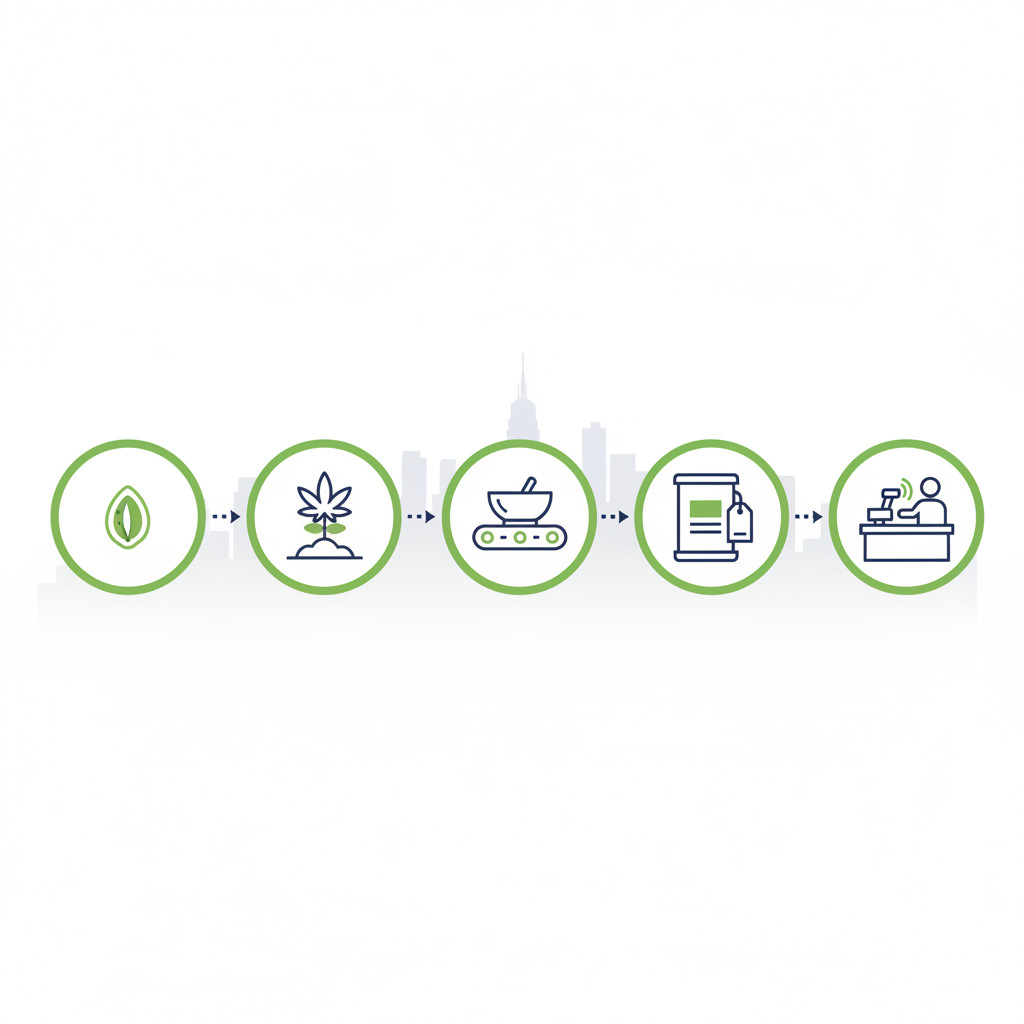
Seed-to-sale tracking is an end-to-end inventory and compliance system. It ties a specific plant or product to a digital record that logs movements, testing, and ownership. Systems like Metrc provide digital IDs, tags, and reporting tools that regulators use to monitor safety and prevent diversion. Seed-to-sale systems also create audit trails that simplify recalls and inspections.
Key features include:
- Unique retail item identifiers and tags for each product
- Real-time inventory updates and transfer records
- Traceability from seed or clone through processing and final sale
- Reporting dashboards for regulators and licensees
Why the compliance deadline is critical
The compliance deadline matters for several reasons. First, it enforces consistent data standards across the industry, which improves public safety and regulatory oversight. Second, the deadline forces businesses to adapt operations quickly, because untagged products cannot legally move or be sold. Third, it creates an immediate cost and logistics burden that disproportionately affects small processors and retailers.
Consequences include:
- Returned shipments and rework when labels or tags are missing
- Blocked point-of-sale transactions if items are not scannable
- Increased labor and equipment expenses for labeling and tagging
- Potential legal exposure or administrative penalties for noncompliance
What this means for New York cannabis businesses
For businesses, the seed-to-sale rule changes daily operations. Processors must integrate tagging into packaging lines and may need new hardware such as barcode printers. Retailers must verify digital IDs at intake and adjust store workflows to prevent sales interruptions. Cultivators must ensure plants are tracked from planting and through transfers.
Practical impacts:
- Small operators may face upfront costs for printers, labels, and staffing
- Some processors are investing heavily, for example buying industrial laser printers for labeling
- The Office of Cannabis Management and vendors like Metrc are supplying resources, including 20 million free tags, to ease the transition
Because the deadline intersects with New York cannabis laws and regulation, operators should prioritize software training, hardware checks, and inventory audits now. For further context on broader policy and job impacts, see this related analysis: Cannabis Policy and Hemp Regulation Analysis.
Comparison of Seed-to-Sale Deadlines in New York and Other States
Compare New York’s seed-to-sale deadline with other states to see how NY fits national trends. Because states vary, this comparison highlights differences in timing and penalties. The table below lists deadlines, core compliance steps, and common penalties. Links point to official sources for each state.
| State | Deadline Date | Compliance Requirements | Penalties for Non-Compliance |
|---|---|---|---|
| New York | March 7, 2026 | State-mandated Metrc seed-to-sale system: digital IDs, tagging of plants and packages, real-time reporting. See New York Cannabis Official Site. | Penalties include fines, halted sales, product returns, and possible license actions |
| California | January 1, 2018 (track-and-trace launch) | METRC-based California Cannabis Track-and-Trace: item-level IDs, batch and package tracking; required reporting. See California Cannabis Official Site and METRC California. | Penalties include fines, license discipline, and mandatory corrective actions |
| Colorado | METRC implemented 2014 (ongoing) | METRC requires daily inventory updates, plant-level tagging, and transfer logging. See Colorado Marijuana Enforcement Division Report. | Penalties vary by violation and can include fines, suspension, or revocation |
| Washington | CCRS traceability online December 3, 2021 | Licensees must report inventory and sales to the CCRS; tag and trace requirements enforced. See Washington CCRS Requirements. | Penalties include administrative violations, fines, and possible suspension or revocation |
Implications of Meeting the New York seed-to-sale deadline for cannabis
Meeting the New York seed-to-sale deadline for cannabis ensures legal compliance. Because regulators require full tracking, operators who comply reduce risk of fines and enforcement. Additionally, compliance protects license standing and keeps products moving through the supply chain.
Business benefits of timely cannabis seed-to-sale compliance
Complying brings clear operational advantages. First, it builds consumer trust through transparent product histories. Second, it simplifies recalls and quality checks because every item links to a recorded origin. Third, it improves inventory accuracy and reduces shrinkage. Moreover, retailers gain smoother point-of-sale operations when items scan and register correctly.
Consequences of missing the compliance deadline
Missing the compliance deadline carries real costs. Regulators can issue fines, require corrective actions, or suspend licenses. Retailers may face halted sales when packages arrive without tags. Processors could absorb return shipping and relabeling costs. As a result, small operators may see cash flow and staffing stress.
Practical outcomes under New York cannabis laws
Under New York cannabis laws, seed-to-sale tracking supports public safety and market integrity. Therefore, businesses should prioritize training, auditing, and hardware validation now. For example, test scanners, confirm digital IDs, and run mock transfers. Finally, document processes to show regulators you followed good-faith compliance steps.
CONCLUSION
The New York seed-to-sale deadline for cannabis marks a major shift in industry operations. Because regulators now require end-to-end tracking, businesses must meet new tagging and reporting standards. Therefore, the deadline brings immediate compliance pressures for cultivators, processors, and retailers. However, it also creates a clearer framework for safety and accountability.
Meeting the deadline delivers tangible benefits for operators and consumers. First, compliance reduces legal risk and protects license standing. Second, it builds consumer trust by offering transparent product histories. Moreover, seed-to-sale tracking speeds recalls and improves supply chain accuracy. As a result, compliant businesses can avoid costly rework and blocked sales at the point-of-sale.
Stay proactive, document your processes, and seek expert help when needed. With proper planning, businesses can turn this compliance deadline into a competitive advantage.
Frequently Asked Questions (FAQs)
What is the New York seed-to-sale deadline for cannabis?
The deadline requires licensed operators to use the state-mandated seed-to-sale system by March 7, 2026. After that date, products must carry digital IDs and be entered into the tracking system to move or be sold.
Who must comply with the seed-to-sale tracking rules?
Cultivators, processors, distributors, and retailers holding New York cannabis licenses must comply. Any licensed transfer or sale must be recorded in the system.
What steps should small processors take to meet the compliance deadline?
Prioritize these actions: obtain required tags and digital IDs, test scanners and printers, train staff on Metrc workflows, run inventory audits, and document processes. Vendors and regulators have provided resources, including free tags from Metrc.
What happens if a retail product arrives without a tag?
Retailers should reject or return untagged products until processors tag them correctly. Unsellable products may cause halted sales, rework costs, and potential regulatory scrutiny.
Are there resources to help offset tagging costs?
Yes. The Office of Cannabis Management and Metrc announced support measures, such as supplying 20 million free retail item unique identifier tags to licensed processors. Also consider shared labeling services or co-op purchasing to reduce costs.
For more on related policy and industry impacts, see this analysis: Cannabis Policy Analysis.