Psychedelicatessen: Jewish culture meets cannabis art
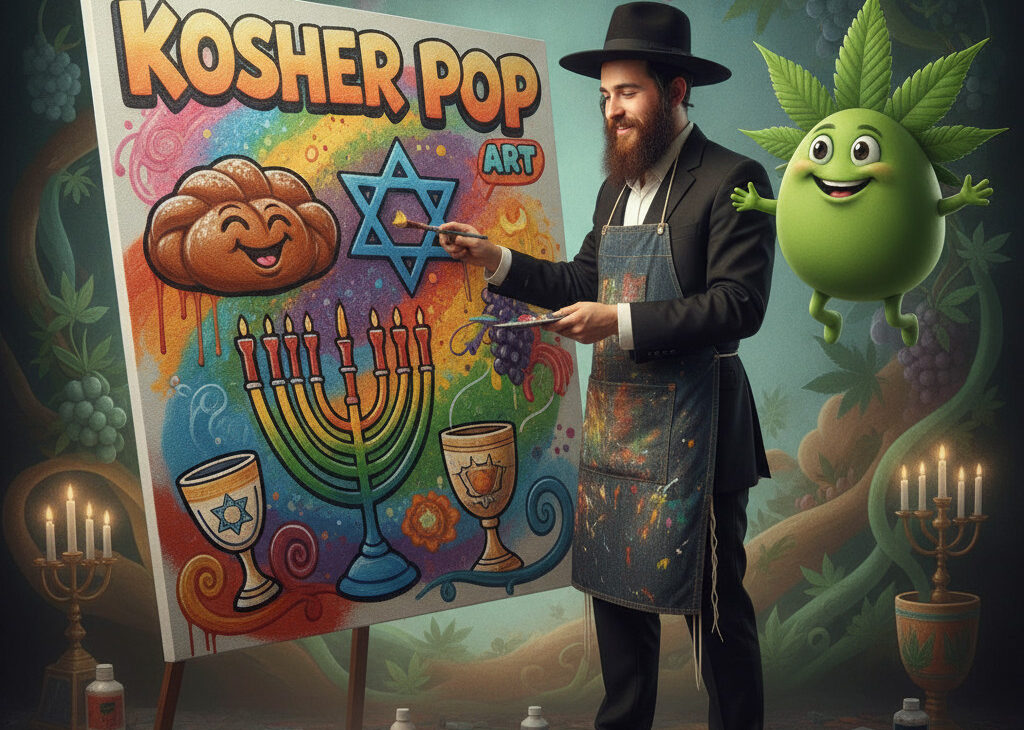
Step into Steve Marcus’s world and you find shimmering mezuzot beside Zig-Zag motifs and kaleidoscopic Stars of David. Psychedelicatessen: Jewish culture meets cannabis art announces itself as a playful, serious, and surprising conversation. This exhibition blends pop Judaica, counterculture iconography, and cannabis aesthetics into vivid visual sermons. Because it fuses devotion with satire, the work questions identity and ritual. However, Marcus does more than shock or amuse. Moreover, he translates centuries of Jewish story and law into bright, approachable forms. Therefore the show invites both insiders and newcomers to reconsider tradition. Imagine Shabbat candle holders wearing tie-dye, or a mezuzah reimagined as a sly pop sculpture. The contrast feels joyous, and at times, uncanny. In that tension lies deep cultural and artistic significance. It connects diasporic memory and contemporary subculture, and it sparks conversation about belonging. Read on to explore Marcus’s journey, his aesthetic choices, and why Psychedelicatessen matters now.
Psychedelicatessen: Jewish culture meets cannabis art (historical roots)
Jewish visual and ritual art has deep roots that stretch millennia. Because Jewish communities survived diaspora, their symbols adapted. However, modern pop culture added new layers to those motifs. Steve Marcus draws from underground comics, psychedelic posters, and Judaic objects. For example, he repurposes mezuzot and Shabbat candle holders as playful sculptures. Moreover, his work reflects influences from the 1960s counterculture. It includes tie-dye aesthetics and references to the Grateful Dead and Zig-Zag rolling papers. The Oregon Jewish Museum exhibition presents this fusion in full color. See the museum event page: Oregon Jewish Museum Event.
Key historical touchpoints
- Jewish folk art and liturgical objects provided recurring motifs and textures
- The late 20th century Jewish revival encouraged artists to reclaim and remix identity
- 1960s psychedelic art and underground comics supplied bold color palettes and surreal layouts
- Cannabis culture and activism opened new public venues for art, including festivals and competitions
Psychedelicatessen: Jewish culture meets cannabis art (cultural crossroads)
Because counterculture prizes subversion, it linked naturally with Jewish satire and irony. Marcus trained in museum settings and worked around underground cartoonists. He later combined Torah study with pop references so his pieces speak on multiple levels. Also, Marcus designed posters for cannabis events, which tied his pop Judaica to cannabis communities. A representative archive article highlights the Cannabis Cup context: High Times Cannabis Cup.
Why this intersection matters
- It challenges fixed categories of sacred and profane, prompting fresh interpretation
- It makes Jewish ritual objects visually accessible to new and diverse audiences
- It sparks discussion about identity, law, memory, and modernity
Together these histories explain why Psychedelicatessen feels both familiar and radical. The project maps diasporic memory onto contemporary subculture, producing art that invites curiosity, debate, and delight.
Psychedelicatessen: Jewish culture meets cannabis art: Key artistic elements
| Artistic element | Jewish influence | Cannabis art influence | Typical motifs and symbols | Typical color palette | Common themes |
|---|---|---|---|---|---|
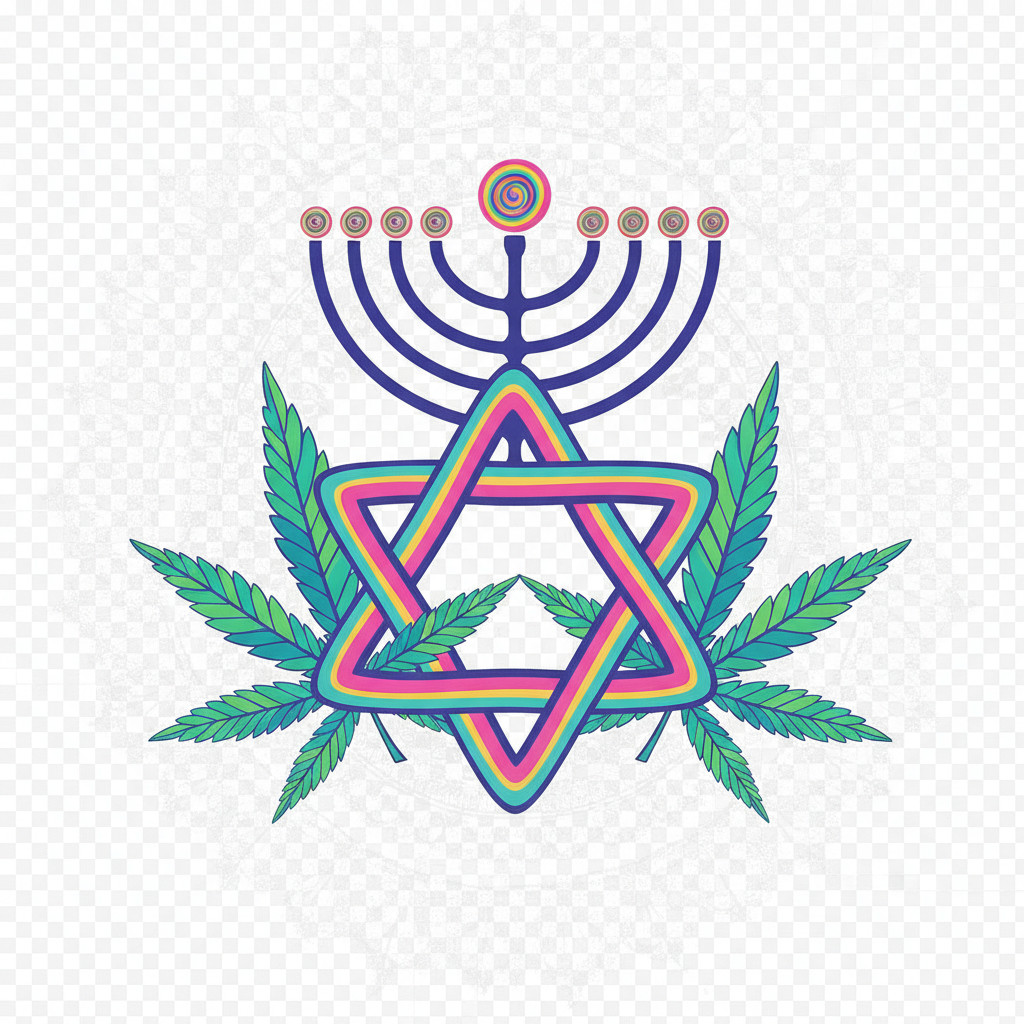
| Symbolism | Sacred objects repurposed such as mezuzot and menorah shapes | Counterculture icons like Zig Zag and leaf symbolism | Star of David interlaced with stylized cannabis leaf; mezuzah one hitter | High contrast neon with jewel tones and acid pastels | Sacred meets profane; reverence and satire |
| Materials and objects | Liturgical forms and ritual vessels reused as art objects | Smoking paraphernalia referenced or transformed into sculptures | Shabbat candle holders as glass bongs; tzitzit on everyday objects | Mixed media: glass, collage, screen print, found objects | Reuse; bricolage; material dialogue between tradition and subculture |
| Color and pattern | Traditional textile patterns and menorah motifs inform composition | Psychedelic swirls and tie dye aesthetics influence layout | Mandala like backgrounds, Hebrew letterforms next to rolling paper imagery | Magenta teal lime orange indigo with psychedelic gradients | Visual exuberance; tension between restraint and excess |
| Cultural references | Rabbinic imagery, Maimonides portrait, Hasidic silhouettes | Grateful Dead, underground comics, High Times posters | Portraits remixed with pop icons; album art echoes | Retro poster palettes updated to modern neon | Identity remix; cultural memory meets music and activism |
| Themes and tone | Exploration of faith, law, returner narratives, humor | Celebration of ritualized consumption and social protest | Irony, uplift (Chizuk), and playful sacrilege | Bright playful palettes that invite viewers in | Accessibility; debate about sacred boundaries; belonging |
Related and semantic keywords
- Pop Judaica
- Kosher pop art and kosher folk art
- Jewish culture and cannabis culture
- Counterculture, underground comics, psychedelic art
This table summarizes how Psychedelicatessen blends identity ritual and cannabis aesthetics. It helps readers spot recurring motifs and cultural threads at a glance.
Contemporary voices in Psychedelicatessen: Jewish culture meets cannabis art
Steve Marcus stands at the center of this movement. He mixes pop Judaica with counterculture motifs. Because he grew up amid the Summer of Love, his palette echoes that era. Moreover, Marcus trained at the Metropolitan Museum of Art and assisted Art Spiegelman. His background gives the work both craft and edge.
Notable contemporary examples and artists
- Steve Marcus — Known as the King of Kosher Pop Art, Marcus turned Shabbat candle holders into glass bongs and a mezuzah into a one hitter. See his exhibition notes: Exhibition Notes
- Museum shows — Major venues now host this work. For instance, the Oregon Jewish Museum and Center for Holocaust Education runs Psychedelicatessen in Portland: Oregon Jewish Museum Event
- Festival and poster art — Marcus designed posters for High Times Cannabis Cups and other events. As a result, cannabis culture and Jewish imagery reached new audiences: High Times Cannabis Cup
Why contemporary creators matter
They use humor and ritual to probe identity. Also, they balance reverence with playful critique. As Marcus says, “I’m learning this. I’m living this.” Therefore his art reads as both confession and invitation. In addition, other younger artists remix underground comics, Hasidic silhouettes, and album art. Together they expand what Jewish visual culture can look like in the 21st century.
Related keywords and themes
- Pop Judaica
- Kosher pop art
- Counterculture
- Underground comics
- Psychedelic posters
- Jewish revival
Conclusion
Psychedelicatessen captures a vivid meeting of worlds. It shows how Jewish ritual and cannabis aesthetics can fuse into bold, meaningful art. Because the work mixes satire, devotion, and pop imagery, it expands how we see faith and counterculture. Moreover, Steve Marcus and other creators translate ancient symbols into modern visual language. Therefore viewers find objects that feel sacred and subversive at once.
If you want trusted context about cannabis culture, art, and wellness, explore MyCBDAdvisor. Visit MyCBDAdvisor to read guides, reviews, and deeper commentary. Also sign up for updates to follow new exhibitions, interviews, and cultural analysis. In short, Psychedelicatessen shows that tradition and contemporary subculture can coexist. It invites curiosity, challenges assumptions, and rewards close looking.
Frequently Asked Questions (FAQs)
What is Psychedelicatessen: Jewish culture meets cannabis art?
Psychedelicatessen: Jewish culture meets cannabis art describes a hybrid art approach. It blends pop Judaica with cannabis aesthetics. Artists repurpose ritual objects and mix them with psychedelic color and counterculture symbols. The work highlights identity, memory, and satire. As a result, viewers see tradition through a contemporary lens.
Who are the key artists behind this movement?
Steve Marcus is the most visible figure. He is often called the King of Kosher Pop Art. He converts mezuzot and Shabbat candle holders into playful sculptures. Also, he designed posters for High Times Cannabis Cups. For more on Marcus see his site: Steve Marcus Official Site. For museum context see the Oregon Jewish Museum page: Oregon Jewish Museum.
How do Jewish traditions and cannabis art intersect in practice?
Artists use ritual forms as visual anchors. They then layer cannabis motifs and psychedelic patterns. This creates contrast and dialogue. Moreover, creators reference rabbinic figures, Hebrew lettering, and Hasidic silhouettes. At the same time, they borrow underground comics, Grateful Dead imagery, and rolling paper iconography. Consequently, the intersection opens new conversations about law, memory, and modern identity.
Is this art offensive to religious viewers, or is it respectful?
Reactions vary by viewer and community. Some see playful critique and uplift. Others view it as provocative. Importantly, artists like Marcus follow halacha in their practice. Therefore their intent often mixes devotion with satire. Also, museum curation aims to make the work accessible to Jewish and non-Jewish audiences.
Where can I see Psychedelicatessen and learn more?
Check museum exhibitions and festival archives. For example, see the Oregon Jewish Museum listing above. Also explore cannabis culture archives like High Times for event history: High Times Cannabis Cup. Finally, follow artist pages and local museum calendars for new shows and talks.