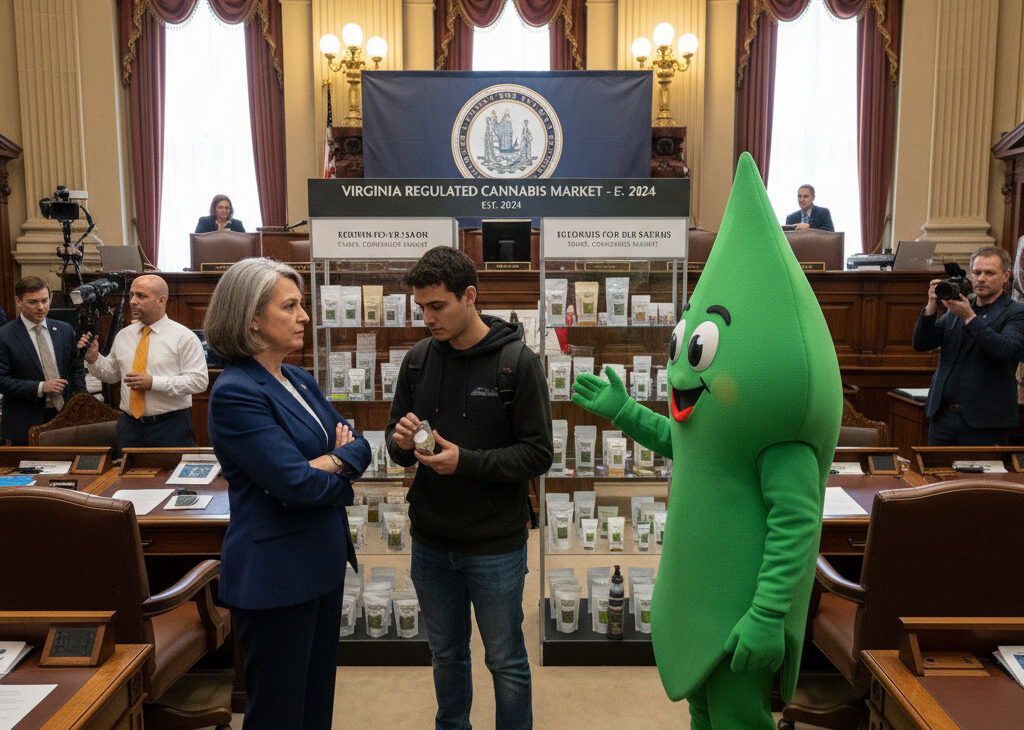
Virginia cannabis retail penalties are now at the center of a heated debate over public safety and the future of the legal market. Lawmakers on the Senate Courts of Justice Committee advanced amendments that increase consequences for illegal cannabis sales, buying from unlicensed sellers, and underage possession to shore up the regulated adult-use cannabis market.
Because leaders want to nudge consumers toward licensed shops, they added measures that reclassify offenses to Class 1 misdemeanors with higher fines and possible jail time, and they retained severe penalties for possession with intent to sell in large quantities. Moreover, proponents say the changes align cannabis rules with alcohol law, and they argue that tougher enforcement will incentivize use of the legal market while protecting youth.
As a result, retailers, consumers, and compliance teams must pay close attention to shifting rules about unlicensed transactions, underage penalties, and fines that can reach two thousand five hundred dollars plus up to one year in jail, along with long prison exposure for major trafficking cases.
Understanding Virginia Cannabis Retail Penalties
Virginia cannabis retail penalties: scope and impact
Virginia cannabis retail penalties define criminal and civil consequences for illegal cannabis activity. They set fines, jail terms, and longterm prison exposure. As a result, retailers and consumers must understand the legal landscape to avoid costly mistakes.
Key facts
- A first illegal sale can be a Class 1 misdemeanor. This carries up to one year in jail and a $2,500 fine.
- Buying from an unlicensed seller is now treated as a Class 1 misdemeanor.
- Underage possession was reclassified to a Class 1 misdemeanor from a $25 fine and education classes.
- Possession over five pounds with intent to sell still carries five to 30 years in prison.
Why this matters
Retailers face compliance risks because regulators want to protect the regulated market. Therefore shops must verify licenses, train staff, and strengthen pointofsale controls. Consumers also face criminal records and fines if they use unlicensed channels. However lawmakers say harsher penalties will steer demand to licensed vendors and align cannabis rules with alcohol law.
Legal context and resources
The Senate Courts of Justice Committee advanced amendments that changed penalties. For a news summary, see Ganjapreneur. For bill details and budget notes, see Virginia LIS. Merchants can read a focused analysis at My CBD Advisor.
Related keywords: adultuse cannabis market, regulated market, illegal cannabis sales, unlicensed buyers, underage possession, Class 1 misdemeanor, compliance.
Types of Penalties: Virginia cannabis retail penalties explained
Virginia now pairs regulatory sanctions with criminal penalties for cannabis violations. Therefore retailers and consumers face a mix of fines, licensing actions, and possible jail time. Below are the main penalty types and what they mean in practice.
Monetary fines and civil penalties
- First illegal sale can be a Class 1 misdemeanor. That carries up to one year in jail and a two thousand five hundred dollar fine, according to committee amendments.
- Previously minor civil fines for underage possession were increased to misdemeanor treatment.
License suspensions and administrative sanctions
- Regulators can suspend or revoke retail licenses for unlicensed sales or repeated violations. As a result shops must tighten ID checks and audit trails.
- Administrative penalties often include corrective plans and mandatory staff training.
Criminal charges and prison exposure
- Buying from an unlicensed seller now can trigger a Class 1 misdemeanor. Consequently buyers risk criminal records and fines.
- Possession of more than five pounds with intent to sell still risks five to thirty years in prison. This penalty preserves tough trafficking exposure.
Collateral consequences and compliance costs
- Convictions can affect employment, housing, and licensing eligibility. Additionally banks and insurers may view convicted businesses as higher risk.
- Therefore compliance teams should update policies, train staff, and document transactions.
For a merchant focused analysis, see the CBD Advisor breakdown at CBD Advisor. For legislative context, read the bill amendment notes at Virginia Legislative Bill Amendment. A news summary is available at Ganjapreneur News Summary.
Penalty Comparison: Virginia cannabis retail penalties by violation
Below is a quick reference table comparing common violations in Virginia cannabis retail and their typical penalties. This helps retailers and consumers see severity and enforcement frequency at a glance.
| Violation | Severity | Typical penalty | Frequency and notes |
|---|---|---|---|
| Illegal sale to any buyer (first offense) | Class 1 misdemeanor | Up to 1 year jail; $2,500 fine | Moderate; amended by committee to deter illegal sales |
| Buying from an unlicensed seller | Class 1 misdemeanor | Up to 1 year jail; $2,500 fine | Moderate; targets unlicensed distribution channels |
| Underage possession (under 21) | Class 1 misdemeanor | Misdemeanor charge; possible deferred dismissal for under 21 | Variable; enforcement aims to mirror alcohol rules |
| Selling to underage customer | Class 1 misdemeanor | Up to 1 year jail; fines; license risk | Moderate; retailers face strict compliance duties |
| Possession over five pounds with intent to sell | Felony | 5 to 30 years in prison | Rare but severe; reserved for major trafficking cases |
| Repeat unlicensed selling or large scale unlicensed retail | Administrative action plus criminal | License suspension or revocation; fines; possible higher charges | Increasing scrutiny; high compliance risk |
| Minor civil infraction under prior rules | Civil fine and education | $25 fine and education classes (previously) | Largely replaced by misdemeanor treatment under amendments |
Related keywords: adult-use cannabis market, regulated market, illegal cannabis sales, unlicensed buyers, underage possession, Class 1 misdemeanor, compliance
Conclusion
Understanding Virginia cannabis retail penalties matters for lawful business and personal safety. Retailers must maintain strict compliance because penalties now include misdemeanor charges, fines, and license risks. Consumers should avoid unlicensed channels because they can face criminal records, fines, or deferred charges. Therefore, training, ID checks, and clear policies protect staff and customers. Moreover, following the law supports the regulated adult-use market and reduces trafficking risk.
Frequently Asked Questions (FAQs)
What are Virginia cannabis retail penalties for illegal sales?
A first illegal sale can be charged as a Class 1 misdemeanor. That carries up to one year in jail and a $2,500 fine. Lawmakers raised this to deter unlicensed transactions. Penalties apply even when sellers claim private sales.
What happens if I buy from an unlicensed seller?
Buying from an unlicensed seller may now be a Class 1 misdemeanor. Therefore buyers risk fines and criminal records, although under-21 cases could be deferred or dismissed. Enforcement targets informal online and street sales.
How does underage possession work?
Under-21 possession shifted from a $25 fine to misdemeanor treatment. However courts can defer or dismiss charges for young adults in some cases. Education programs may still appear as alternative sanctions.
Can a retailer lose their license?
Yes. Regulators can suspend or revoke licenses for unlicensed sales or repeated violations. Additionally shops face administrative fines and corrective orders. Recordkeeping and regular audits can reduce suspension risk.
How should businesses reduce risk?
Train staff, verify IDs, document transactions, and use robust point-of-sale checks. Also consult legal counsel and monitor updates to stay compliant. Stay current because the law is evolving.
For legal specifics consult state statutes or an attorney.