Weed as a Countercultural Tool Against Hustle Culture
Weed as a countercultural tool to slow down hustle culture has become a phrase and a practice for many people. It pushes back against endless busyness by inviting stillness, presence, and a gentler sense of time. Because THC can alter time perception, and because CBD eases anxiety, cannabis often eases the pressure to perform.
However, this is not about escape; it is about carving mindful pauses into a frantic schedule. Scenes of slow afternoons, shared conversations, and simple rituals feel radical in a world that values speed. As a result, many people use indica or CBD-rich strains to anchor quiet reflection and creative thinking.
Still, moderation and intention matter because slowing down should build presence, not depend on substances alone. Therefore this article will explore strains, terpenes, and practices that pair cannabis with slow living in a balanced way. We will emphasize balance, safety, and simple slow practices alongside strain guidance. Join us as we rethink productivity, reclaim time, and practice presence together.
Weed as a countercultural tool to slow down hustle culture
Cannabis can act as a quiet rebellion against nonstop productivity. Instead of chasing constant wins, it creates space for rest and reflection. Because many people feel pressure from hustle culture, this gentle pause feels radical.
At its core, this movement blends counterculture, mindfulness, and relaxation.
- It challenges FOMO and the nonstop grind.
- It offers mindful rituals, not substance-driven escape.
- It encourages deliberate pauses that rebuild creativity and memory.
Neuroscience and human reports support these claims. For example, THC can alter time perception by stretching subjective minutes, which helps some slow down and savor small moments. See study: THC and Time Perception Study.
Meanwhile, CBD acts as an anxiolytic and eases performance anxiety. Therefore many people choose CBD-rich products for calm, not sedation. See review: CBD and Performance Anxiety Review.
Terpenes like myrcene and linalool enhance relaxation. Research shows they can reduce anxiety and promote sleep. For terpene evidence, see: Terpene Research Study.
Slowing down also has a biological basis. The brain’s default mode network supports rest and consolidation, and it benefits from unstructured time. See review: Brain Default Mode Network Review.
Therefore, cannabis works best when paired with mindful practices like yoga and meditation. However, nothing in excess helps; moderation and clear intention prevent escapism. As a result, weed can become a tool for a slower, more human rhythm.
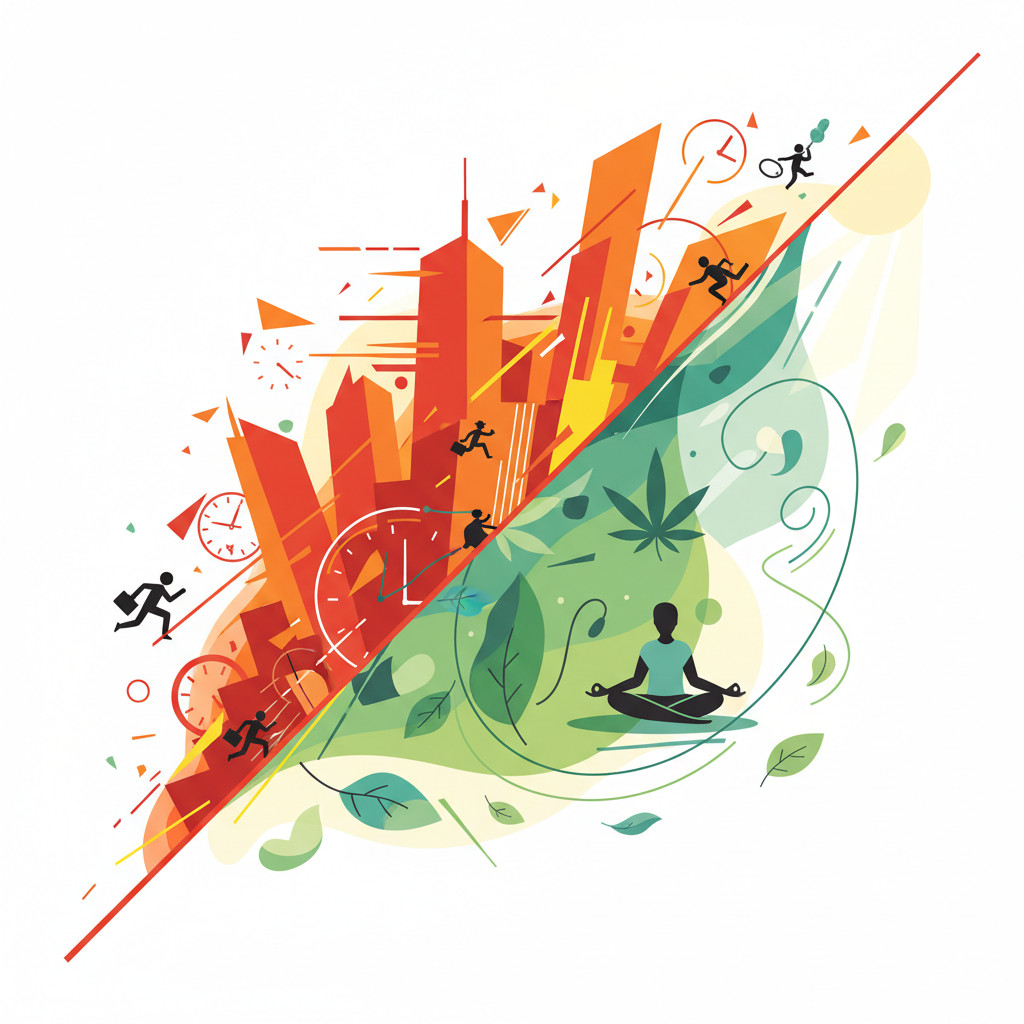
Comparison of Hustle Culture and Mindful Weed Use on Mental Wellbeing
| Aspect | Effects of hustle culture | Effects of weed and mindful use |
|---|---|---|
| Stress levels | Chronic high stress; persistent cortisol exposure; higher burnout risk | Often lower acute stress; CBD has anxiolytic effects; promotes calm when used with intention |
| Productivity | Short-term productivity spikes under pressure; long-term burnout and reduced focus | May reduce immediate drive; however supports focused recovery and sustainable output when balanced |
| Creativity | Surface-level output driven by deadlines; limited divergent thinking | Can enhance divergent thinking; slows perceived time to deepen insight and idea formation |
| Anxiety | Increased performance anxiety and rumination | CBD reduces anxiety for many; THC can increase anxiety in excess, so moderation matters |
| Overall life satisfaction | Often lower when rest and play are scarce | Can improve wellbeing if paired with mindfulness, presence, and balanced routines |
| Time perception and presence | Time feels compressed and hurried, fueling FOMO | THC may slow subjective time, which can enhance presence and mindful observation |
Therefore, use cannabis as a deliberate tool for presence and calm. Combine it with slow practices such as yoga, meditation, and conscious pauses to get the best results.
Historical roots
The cultural history of cannabis traces back thousands of years with ritual and medicinal uses recorded in many regions. Early societies used hemp for fiber and plant medicine, while later traditions incorporated cannabis into spiritual and healing practices.
In the modern era, writers and artists embraced marijuana as a way to question mainstream values and expand creativity. The Beat Generation adopted it to push against conformity, and the 1960s counterculture made cannabis a visible symbol of rebellion and communal living. For more on the hippie era and its ties to cannabis see History.com.
Shifts in policy and perception
Policy and stigma followed cultural visibility. The War on Drugs in the 1970s and 1980s increased criminal penalties and deepened social conflict over cannabis laws. Scholars and journalists documented these shifts and their impacts on communities. For a policy overview see Brookings.
Over the last two decades public opinion changed dramatically. Support for legalization climbed as research and personal stories reshaped views. Gallup reports record support for legalization at about seventy percent (Gallup).
Scientific work added nuance. Reviews on brain rest and consolidation help explain why restorative practices pair well with cannabis (Nature). Clinical studies on CBD also helped legitimize medical and wellness uses (PubMed).
This long cultural arc sets the stage for contemporary conversations that frame cannabis alongside mindfulness and slow living, rather than only rebellion or recreation.
Conclusion
Weed as a countercultural tool to slow down hustle culture offers an alternative to nonstop productivity. It can lower anxiety, reshape time perception, and encourage mindful pauses when used with intention. This article outlined strains, terpenes, and practices to anchor slower living. However, benefits appear only with moderation, careful strain selection, and pairing with slow practices.
Mindful consumption means setting intention, choosing appropriate CBD or indica-dominant strains, and watching dose. As a result, cannabis can foster presence, creativity, and rest without becoming escape. Finally, cultural understanding reminds us that cannabis history includes activism, art, and shifting policy. Because balance matters, honor both productivity and spacious rest in daily life. Visit MyCBDAdvisor for dependable guides on responsible use.
Frequently Asked Questions (FAQs)
Can weed really help me slow down from hustle culture?
Yes, many people use cannabis to create deliberate pauses in busy lives. CBD often calms anxiety, while THC can change time perception. However, benefits depend on dose, strain, and intention. Therefore set clear goals before use. Also combine cannabis with slow practices like mindfulness or gentle yoga.
Which strains or compounds work best for relaxation and presence?
Indica or indica-dominant hybrid strains commonly induce physical relaxation. In addition, CBD-rich products reduce anxiety without heavy intoxication. Terpenes like myrcene, linalool, and terpinolene support calm and sleep. For example, choose low-THC, high-CBD options when you want clarity.
Will using weed hurt my productivity?
It can if used without planning. Short-term output may drop with strong doses. However, mindful use supports recovery, creativity, and sustainable productivity. Therefore try microdosing, timing, and clear boundaries to protect work hours.
How do I use weed mindfully to reconnect with presence?
Start with intention and a safe setting. Then pair cannabis with breathing, slow walks, or journaling. Meanwhile limit use to moments meant for rest. As a result you can enhance awareness and reduce automatic busyness.
Is it safe to use weed for anxiety and rest?
Research shows CBD has anxiolytic effects for many people. At the same time high THC can raise anxiety in some users. Therefore consult a clinician when you have mental health concerns. Finally, use moderation and respect legal rules in your area.