
Regenerative Hemp Farming: Rebuilding Soil, Strengthening Communities, and Reviving Hemp’s Promise
Regenerative hemp farming restores soil health while producing valuable crops. In this approach, farmers work with biology rather than against it. Regenerative hemp farming uses cover crops, compost, and reduced tillage to rebuild the soil microbiome. Because it sequesters carbon and reduces chemical inputs, it supports climate resilience.
Key benefits of regenerative hemp farming include:
- Improved soil biology and living soil that supports stronger plants.
- Carbon sequestration and lower greenhouse gas emissions, which aid climate goals.
- New revenue streams from hemp fiber, hempcrete, and CBD topicals that diversify farm income.
- Reduced erosion and fewer chemical inputs, which protect long-term farm viability.
Across the Midwest and beyond, farms like Pott Farms show this approach works. They combined top-quality compost and targeted soil biology practices to revive a fallow field. As a result, hemp became central to their business model and social mission. In the sections ahead, we will explain practical techniques, market pathways, and the regulatory shifts that affect on-farm decisions.
Farmers, entrepreneurs, and policymakers all face tough choices. Therefore we will cover practical tactics for living soil, compost management, and hemp fiber markets. By the end, you will understand how regenerative hemp farming can build resilient farms and local economies.
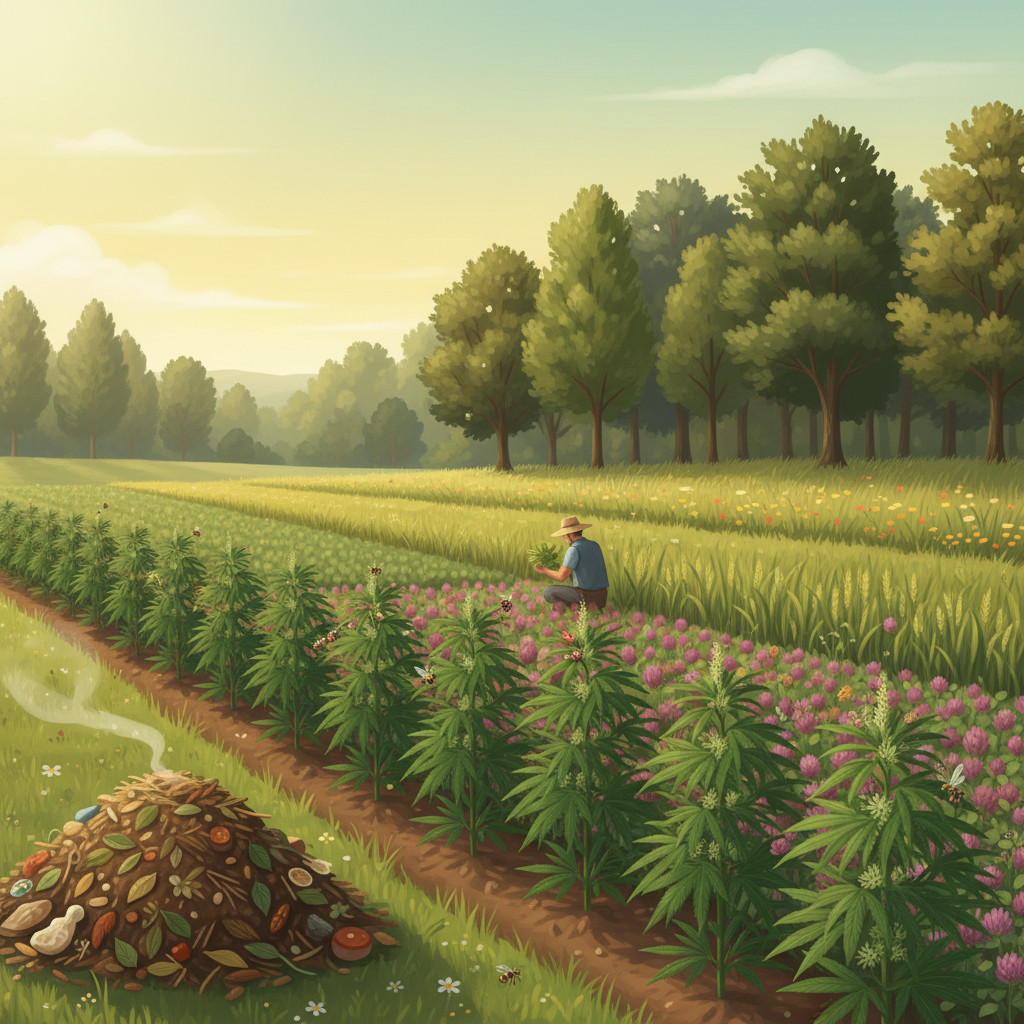
Principles of regenerative hemp farming
Regenerative hemp farming centers on restoring soil, supporting biodiversity, and building resilient systems. Farmers focus on living soil rather than sterile dirt. As a result, plants access nutrients more efficiently and resist stress. Below are core principles that guide practice and decision making.
- Soil restoration and living soil
- Rebuild soil organic matter through compost and cover crops. Additionally, reduced tillage preserves soil structure and microbes.
- Use microbial inoculants and crop-specific composts to nourish the soil biology.
- Biodiversity and ecosystem health
- Plant diverse cover crop mixes and field margins to support pollinators and beneficial insects. Moreover, diverse rotations break pest cycles and improve yields.
- Water management and resilience
- Conserve water with mulches and living roots that boost infiltration. Therefore fields hold moisture longer and need less irrigation.
- Carbon sequestration and climate benefit
- Favor deep-rooted hemp varieties and perennial cover crops to store carbon belowground. As a result, farms can draw down atmospheric carbon while producing fiber and grain.
Regenerative hemp farming and carbon sequestration
Healthy soils store more carbon and support stronger crops. For practical soil-health resources, see the USDA Natural Resources Conservation Service guidance at USDA NRCS. Farmers like Pott Farms used compost and targeted biology to revive fallow land, which shows these principles in action.
For market and business pathways, explore practical guides on sustainable farming and product strategy at Sustainable Farming Guide, and learn about environmental impacts at Environmental Impact. Finally, for brands scaling CBD topicals or white-label products that rely on regenerative supply chains, see White-Label CBD Products.
Comparison: regenerative hemp farming vs conventional methods
| Aspect | Regenerative hemp farming | Conventional hemp farming |
|---|---|---|
| Environmental impact | Lower chemical runoff; sequesters carbon; reduces emissions | Higher chemical use; more runoff; net carbon release |
| Crop yield | Stable and often increasing over time; resilient to stress | Often higher in the short term; declines without synthetic inputs |
| Soil health | Builds organic matter and a thriving soil microbiome | Degrades organic matter and depends on synthetic inputs |
| Biodiversity | Supports pollinators and beneficial insects; uses diverse cover crops | Simplified landscape; fewer beneficial species and habitat |
| Long term sustainability | Improves resilience and farm viability; diversifies income streams | Short term productivity but greater long term risk |
Environmental and Economic benefits of regenerative hemp farming
Regenerative hemp farming improves ecosystems and farm finances at once. It rebuilds soil organic matter, reduces chemical use, and diversifies revenue. Because hemp grows fast and yields high biomass, it stores carbon quickly. For example, a recent study found hemp can sequester roughly 14.78 tons of CO2 per hectare in one season. Source: bio-conferences.org
How regenerative hemp farming mitigates climate change
- Soil carbon drawdown: Regenerative practices like cover cropping and compost increase soil carbon. As a result, farms remove atmospheric CO2 and lock it belowground. See Rodale Institute for broader regenerative carbon context.
- Reduced emissions and inputs: Farmers cut fuel and fertilizer use by relying on living soil. Therefore operations lower greenhouse gas footprints.
Economic advantages for farmers and communities
- Lower input costs because healthy soil needs fewer synthetic fertilizers and pesticides.
- Diverse revenue from fiber, hempcrete, grain, and CBD products reduces market risk.
- Resilience to drought and pests improves harvest stability and long term yields.
- Local processing investments, like decorticators, can create jobs and capture value locally.
Key benefits at a glance
- Climate mitigation through carbon sequestration and reduced emissions
- Improved farm resilience and consistent yields
- Lower chemical and fuel costs
- Multiple market channels for hemp products
For practical soil-health guidance on cover crops and soil practices, see the USDA Natural Resources Conservation Service.
Regenerative hemp farming offers a path to healthier soils, stronger rural economies, and practical climate action. Across farms like Pott Farms, growers rebuild living soil while creating diverse income streams, including fiber and CBD topicals. Therefore the future of hemp depends on smart soil management and supportive policy.
MyCBDAdvisor supports that transition through MyCBDAdvisor, a trusted hub for hemp and cannabinoid education. It provides clear research, practical guides, and resources for both consumers and professionals. As a result, readers can learn market pathways, regulatory updates, and farming techniques in one place.
Start small, test cover crops, or connect with local workshops and processing partners. Moreover, by investing in soil and people, hemp can deliver both environmental returns and stable farm incomes. Therefore join the movement toward regenerative hemp farming and help scale resilient farms and local supply chains. Together, growers, brands, and policy makers can turn regenerative practices into measurable climate and economic wins.
Frequently Asked Questions (FAQs)
What is regenerative hemp farming?
Regenerative hemp farming restores the living ecology of the soil. It uses cover crops, compost, and reduced tillage. As a result, farmers rebuild organic matter and soil microbiology. This approach supports resilient hemp plants and diverse farm outputs.
Is regenerative hemp farming more profitable than conventional hemp?
Often, yes, over time. Initially, setup costs for compost and cover crops can rise. However, regenerative systems cut fertilizer and pesticide bills. Moreover, they open new markets for fiber, hempcrete, and premium CBD products. Therefore many growers see improved net returns after a few seasons.
Will regenerative methods reduce yields?
Short term yields sometimes dip during transition. However, healthy soil increases nutrient cycling and drought tolerance. As a result, yields stabilize and often improve over several years. For example, farms that invest in living soil report more consistent harvests and lower crop losses.
How does regenerative hemp farming help fight climate change?
Healthy soils capture and store carbon belowground. For example, hemp produces high biomass and can sequester notable amounts of CO2 per hectare. In addition, regenerative practices reduce synthetic fertilizer use. Therefore greenhouse gas emissions fall and long term carbon drawdown improves.
How can a farmer start with regenerative hemp farming?
Begin with a soil test and a small pilot plot. Then add compost and plant diverse cover crops. Reduce tillage and monitor soil life. Also seek training, join local workshops, and partner with nearby processors. Finally, scale gradually while recording costs and yields.