
Arizona Excessive Cannabis Smoke Ban Drawing New Attention
Arizona excessive cannabis smoke ban is drawing new attention across the state. MyCBDAdvisor explains why this policy matters for residents and cannabis users. The proposed SB1725 and SCR1048 would create a class 3 misdemeanor for excessive smoke. Because the bills apply even on private residential property, many people worry. Senator J.D. Mesnard sponsors the measure, and he says it responds to a growing problem. He described smelling smoke near his children’s bedroom windows, for example.
However, neither bill defines what ‘excessive’ smoke or odor means. That vagueness raises practical and legal questions for enforcement and public health. As a result, residents want clear standards and fair processes. MyCBDAdvisor will unpack how the ban could affect recreational marijuana users. We will also cover potential public nuisance implications and ballot initiative pathways.
Additionally, the Senate Judiciary and Elections Committee advanced the proposal by a 5 to 2 vote. Therefore, this debate could reach voters if SCR1048 succeeds. This introduction sets context for policy analysis, legal risks, and practical steps for citizens.
Arizona excessive cannabis smoke ban explained
The Arizona excessive cannabis smoke ban refers to proposed measures that would criminalize certain types of cannabis smoke and odor. Because lawmakers labeled such smoke a public nuisance, they aim to give police and prosecutors a new enforcement tool. The two main proposals are SB1725 and SCR1048, both introduced by Senator J.D. Mesnard. However, neither measure defines what counts as “excessive,” which creates uncertainty for residents and users.
Legally, SB1725 would make creating excessive marijuana smoke and odor a class 3 misdemeanor under Arizona law. SCR1048 would take the same language to voters as a ballot initiative, if passed by the legislature. The full bill text is available at SB1725 Bill Text and the concurrent resolution at SCR1048 Concurrent Resolution. 13 News reported on the proposal and the senator’s comments on February 23, 2026: News Report.
Key regulations and provisions
- Class 3 misdemeanor for causing or creating excessive cannabis smoke and odor
- Applies in public places and on private residential property
- Treated as a public nuisance under existing statutes
- A presumption that excessive smoke endangers others’ safety or health
- Potential ballot initiative route via SCR1048
Because the bill uses broad language, enforcement and legal challenges are likely. As a result, residents, advocates, and legal experts will watch how Arizona cannabis legislation and smoke restrictions evolve. For industry reaction and additional coverage see Toker’s Guide Article.
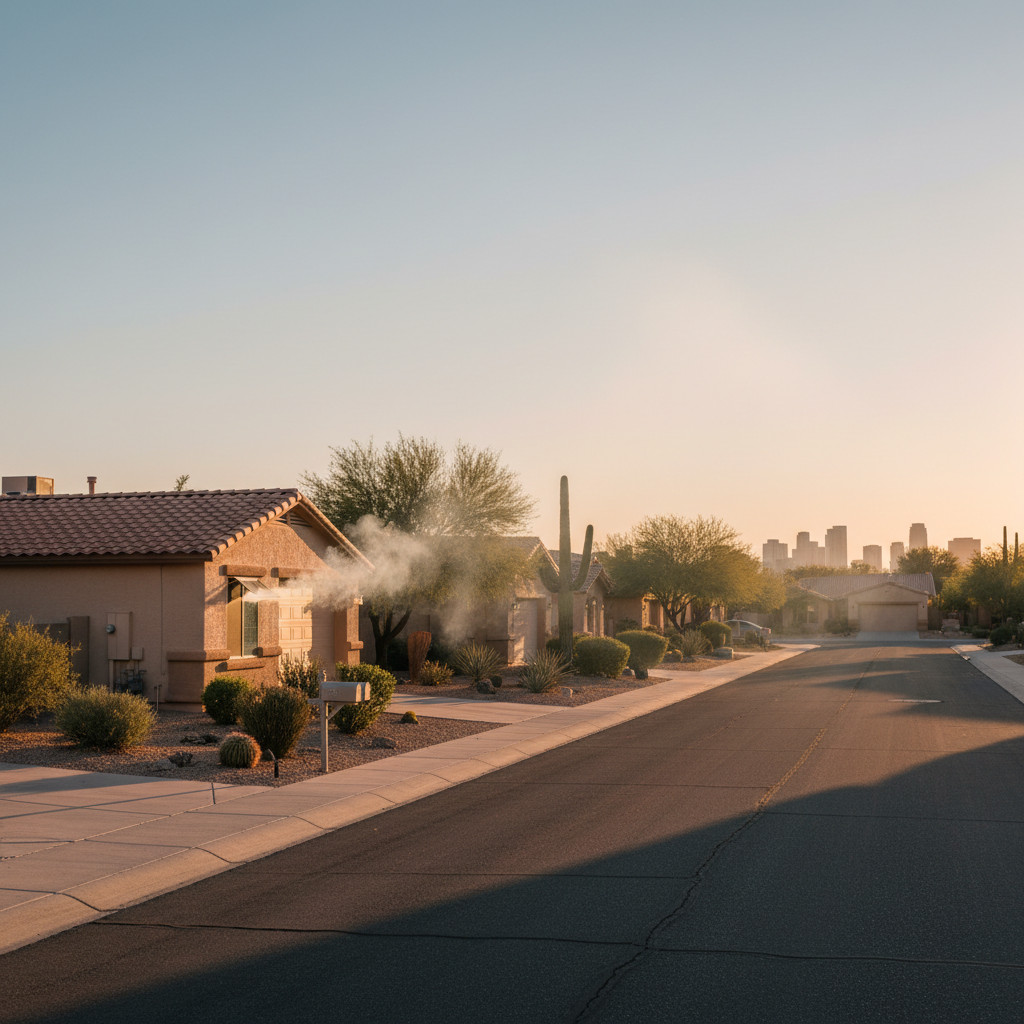
Image source: https://mycbdadvisor.com/wp-content/uploads/2026/05/img-arizona-cannabis-smoke-urban.jpg
Health and community impacts of the Arizona excessive cannabis smoke ban
The proposed Arizona excessive cannabis smoke ban targets public health and neighborhood wellbeing. Because lawmakers cite safety concerns, the measure aims to reduce secondhand smoke exposure. However, the bill’s broad language leaves open many implementation questions for Arizona law and smoke restrictions.
Scientific evidence on secondhand cannabis smoke shows real risks. For example, a 2016 study found just one minute of exposure impaired vascular endothelial function. Therefore, brief exposure can affect cardiovascular health (PubMed Study). The Centers for Disease Control and Prevention notes that secondhand cannabis smoke contains many of the same toxic chemicals found in tobacco smoke. As a result, it can pose respiratory and other health risks (CDC Overview).
Children and vulnerable populations may face higher risk. The American Lung Association warns that there is no safe level of secondhand smoke exposure, which informs arguments for stricter smoke restrictions (American Lung Association). Additionally, Harvard Health experts note that cannabis smoke contains irritants and carcinogens similar to tobacco smoke (Harvard Health Blog).
Community impacts extend beyond health. For example, smoke complaints can strain neighbor relations and burden local enforcement. Moreover, unclear standards on what counts as excessive could lead to uneven enforcement under SB1725 and SCR1048. Therefore, residents and municipalities may face more legal disputes and public nuisance claims.
Key potential benefits and concerns
- Benefits: reduces involuntary exposure to smoke, improves local air quality, protects children and people with respiratory issues
- Concerns: vague definition of excessive, enforcement on private residential property, risk of criminalizing casual use, possible disproportionate impacts on certain communities
- Evidence: clinical study on vascular effects (PubMed Study), CDC overview of secondhand cannabis smoke risks (CDC Overview)
Senator J.D. Mesnard framed the bill as a response to a growing problem. He said it highlights the need for responsible recreational marijuana use near families and children, for example (KOLD News). Meanwhile, public opinion on legalization and perceived harms remains mixed nationally, so Arizona policymakers must balance public health, cannabis legislation, and community fairness (Pew Research).
| State | Regulation Type | Smoke Restriction Details | Penalties |
|---|---|---|---|
| Arizona | Proposed state law (SB1725 SCR1048) | Classifies excessive cannabis smoke and odor as a public nuisance. Applies in public places and on private residential property. Definition of excessive is not specified. | Proposed class 3 misdemeanor; fines and criminal penalties if enacted. |
| California | State and local restrictions | Public cannabis smoking banned where tobacco smoking is banned. Cities may add stricter public consumption bans. | Local fines and civil penalties; enforcement varies by city. |
| Colorado | State public consumption ban | Recreational cannabis legal, but public use is prohibited. Consumption allowed on private property and licensed sites. | Fines; misdemeanors in some cases; license actions for businesses. |
| New York | Public use prohibited | Cannabis use banned in public places similar to tobacco rules. Local rules can increase restrictions. | Fines and civil penalties; enforcement varies regionally. |
| Oregon | Statewide public smoking ban | Public cannabis smoking is prohibited. Landlords and HOAs may enforce additional rules. | Fines and civil violations; occasional criminal charges for serious breaches. |
| Washington | Public consumption ban | Public and outdoor cannabis use is prohibited. Licensed consumption lounges are limited. | Fines and possible misdemeanors for some violations. |
Conclusion
The Arizona excessive cannabis smoke ban highlights tensions between public health and private use. SB1725 and SCR1048 would treat excessive smoke as a public nuisance and a class 3 misdemeanor. However, the bills leave “excessive” undefined, which creates enforcement and fairness issues.
Understanding the possible legal and community effects matters for every resident. Therefore, users should follow local rules and take steps to limit smoke exposure near others. For example, prefer private, ventilated spaces or noncombustion products to reduce odor and particles. As a result, communities may see fewer complaints and improved air quality.
Frequently Asked Questions (FAQs)
Is the Arizona excessive cannabis smoke ban already law?
Not yet. SB1725 is a proposed bill and SCR1048 would put the same language to voters. However, the legislature advanced the bill in committee. Therefore, readers should track legislative updates at Arizona Legislative updates.
What behavior would the ban criminalize?
The proposal targets creating excessive cannabis smoke or cannabis odor. It treats such conduct as a public nuisance. As a result, lawmakers would classify it as a class 3 misdemeanor under Arizona law.
Where would restrictions apply?
The draft language covers public places and private residential property. That means smoke complaints could arise between neighbors. Consequently, enforcement could reach inside shared housing and yards.
What penalties and enforcement might follow?
The bill proposes misdemeanor charges, fines, and potential criminal records for violations. Enforcement will vary by agency and locality. Local police and prosecutors would handle complaints, and landlords may act under lease rules.
How can residents comply and reduce disputes?
Stay informed about SB1725 and SCR1048. Prefer noncombustion products, vaping, or edible options when appropriate. Use ventilation, smoke filters, or enclosed consumption spaces. Also, communicate with neighbors and document efforts to limit odor and exposure.