
Understanding Acidic Cannabinoids: A Comprehensive Guide
Acidic cannabinoids are the plant’s raw chemical forms. They are the precursors to better-known cannabinoids like THC and CBD. They carry a carboxyl group that makes them chemically distinct. Because of that group, these molecules are usually non-intoxicating.
However, acidic cannabinoids act on targets such as 5-HT1A, COX-2, PPARγ and TRP channels. As a result, preclinical studies report anti-inflammatory and neuroprotective effects. These findings suggest therapeutic potential beyond the decarboxylated cannabinoids.
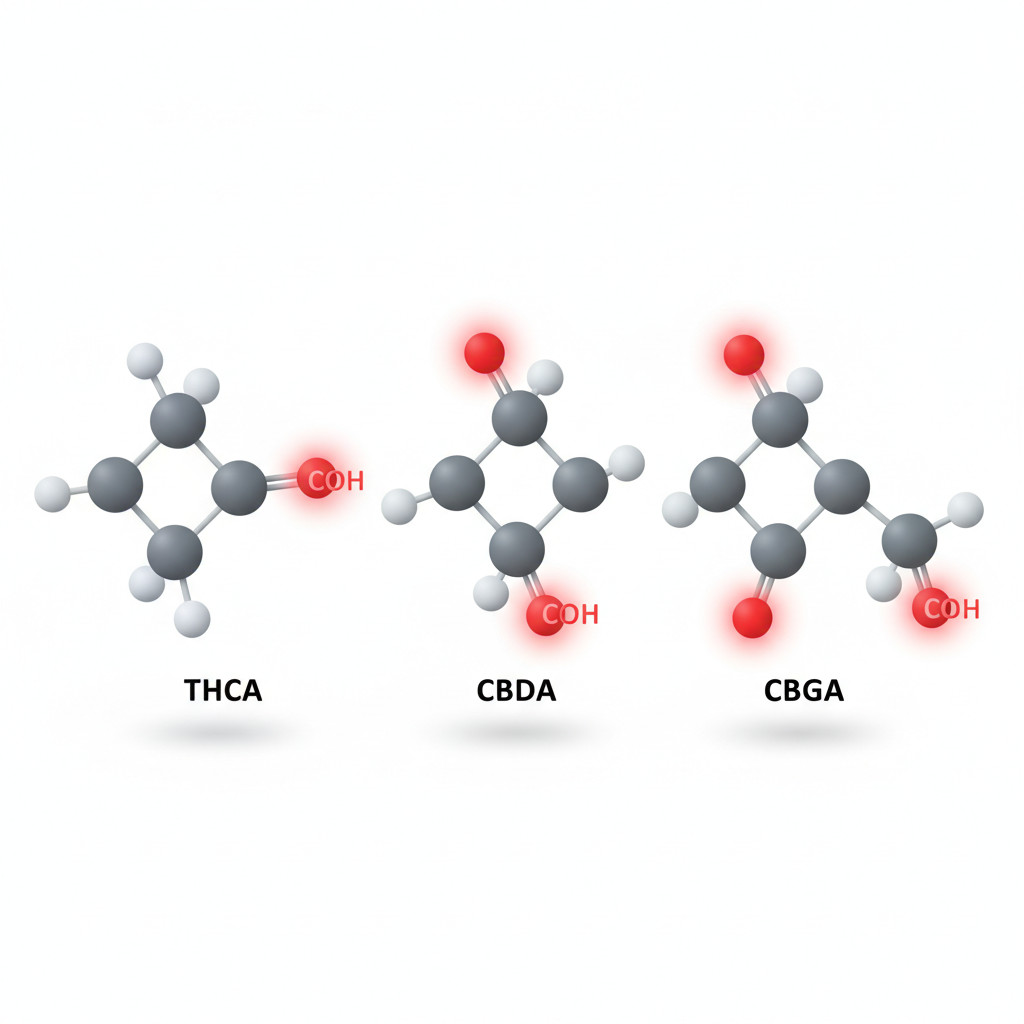
- Key acidic cannabinoids include THCA, CBDA and CBGA.
Despite being fragile, acidic cannabinoids like THCA, CBDA and CBGA deserve close attention. They originate from the mother cannabinoid CBGA and convert through decarboxylation when exposed to heat. Therefore, storage, processing and formulation choices matter for preserving activity.
This guide explains what acidic cannabinoids are and why they matter. Moreover, it covers pharmacokinetics, formulation challenges and practical preservation strategies. Read on to learn how these pre-THC and pre-CBD molecules could shape future cannabinoid medicine.
Because clinical trials remain scarce, the evidence base is early but promising. As a result, careful formulation and rigorous testing will guide safe, effective use. Start here to build understanding.
Common acidic cannabinoids
Acidic cannabinoids form the raw chemical backbone of Cannabis sativa. They carry a carboxyl group and act differently from their decarboxylated counterparts. Because of that group, they are usually non-intoxicating and pharmacologically distinct.
- THCA — Tetrahydrocannabinolic acid. It shows minimal CB1 affinity and lacks intoxicating effects. Preclinical studies document anti-inflammatory and neuroprotective signals.
- CBDA — Cannabidiolic acid. It binds targets such as 5-HT1A and shows COX-2 inhibition. Therefore, CBDA has anticonvulsant and anti-inflammatory activity in animal models.
- CBGA — Cannabigerolic acid. Known as the mother cannabinoid, it is the biosynthetic precursor to THC, CBD and CBG. As a result, CBGA sits at the start of plant cannabinoid chemistry.
- CBCA and others — Cannabichromenic acid and minor acidic forms show unique receptor profiles. Although less studied, they add chemical diversity and therapeutic promise.
Lesser-known acidic cannabinoids and significance
Because the National Library of Medicine and NIH reviewed acidic cannabinoids, interest is growing; see the PubMed review. Moreover, industry coverage highlights trends in CBG and broader cannabinoid exploration at My CBD Advisor on CBG trends and My CBD Advisor on unique benefits. Finally, remember that common processing like heating decarboxylates these molecules, so cold processing and careful handling preserve them; see practical notes at My CBD Advisor on practical notes.
Health benefits and potential uses of acidic cannabinoids
Acidic cannabinoids show multiple promising health effects in preclinical research. Because they are pharmacologically distinct from THC and CBD, they may offer unique cannabinoid benefits. However, human data remain limited and more trials are required.
- Neuroprotection and Alzheimer’s disease pathways
- THCA and related acidic forms reduce amyloid beta and modulate intracellular calcium in animal models. Therefore, they show potential to slow neurodegeneration. See the recent review at this link for details.
- Anti-inflammatory and arthritis effects
- THCA and CBDA inhibit COX-2 and activate PPARγ, reducing joint swelling in preclinical arthritis models. As a result, they could complement traditional anti-inflammatories.
- Anticonvulsant and seizure threshold improvement
- CBDA increases seizure threshold in animal studies and interacts with 5-HT1A receptors. Therefore, it represents a distinct mechanism from CBD.
- Gastrointestinal and anti-emetic benefits
- CBDA and CBGA show anti-emetic and gut-modulating signals in preclinical work and veterinary pharmacokinetic studies. For example, see oral CBDA and CBGA pharmacokinetics at this link.
- Early anticancer and metabolic signals
- Preliminary studies report anti-proliferative and PPARγ-mediated metabolic effects. However, clinical evidence is absent.
Because the National Library of Medicine and NIH highlight these molecules, interest is rising; read the NCBI summary at this link. Nevertheless, no acidic cannabinoid has FDA approval, so clinicians and consumers should proceed cautiously.
Acidic cannabinoids comparison table
| Cannabinoid | Chemical signature | Receptor/actions | Intoxicating? | Legal status (US) | Investigational medical uses |
|---|---|---|---|---|---|
| THCA | Carboxylated precursor of THC with COOH group | Minimal CB1 affinity; COX-2 and PPARγ modulation; neuroprotective signals | No | Varies by jurisdiction; regulated as cannabis in many areas | Neuroprotection; anti-inflammatory; arthritis models |
| CBDA | Carboxylated precursor of CBD | 5-HT1A agonism; COX-2 inhibition; anticonvulsant signals | No | Varies; often treated with CBD in regulatory frameworks | Seizure threshold support; anti-emetic; anti-inflammatory |
| CBGA | ‘Mother cannabinoid’ precursor to many cannabinoids | Biosynthetic starter; interacts with TRP channels and enzymatic targets | No | Varies; part of plant cannabinoid regulation | Biosynthesis feedstock; early neuro and metabolic signals |
| CBCA | Minor acidic form related to CBC | Limited data; reported anti-inflammatory activity | No | Varies; less specifically regulated | Early-stage anti-inflammatory and antiproliferative research |
Notes: All acidic cannabinoids decarboxylate when heated; cold processing preserves them.
CONCLUSION
Acidic cannabinoids represent a biologically compelling but technically fragile class of compounds. They act differently from THC and CBD and show neuroprotective, anti-inflammatory, and anticonvulsant signals in preclinical work. However, clinical evidence remains limited, and no acidic cannabinoid has FDA approval. Therefore, careful formulation, cold processing, and rigorous testing will matter for future therapies.
In short, acidic cannabinoids hold promise, yet they require better stabilization, robust trials, and standardized labeling. Consequently, progress will depend on interdisciplinary research and careful product development. MyCBDAdvisor will continue to follow this work and report findings with clarity and scientific rigor. Additionally, we commit to clear citations, transparent sourcing, and ongoing coverage. Trust grows with data and transparency.
Frequently Asked Questions (FAQs)
What are acidic cannabinoids?
Acidic cannabinoids are the naturally occurring, carboxylated forms of plant cannabinoids. Because they contain a COOH group, they differ chemically from THC and CBD. As a result, they act on distinct targets and show unique biological effects.
Do acidic cannabinoids cause a high?
No, most acidic cannabinoids are non-intoxicating in their native form. However, heat or light converts them by decarboxylation into neutral cannabinoids such as THC. Therefore, storage and processing determine intoxication risk.
What health effects and uses do acidic cannabinoids have?
Emerging research reports neuroprotective, anti-inflammatory, anticonvulsant, and anti-emetic signals. For example, THCA and CBDA show COX-2 and PPARγ activity in arthritis models. Consequently, researchers view them as promising candidates for further study.
How can consumers preserve or access acidic cannabinoids?
Use cold extraction, low-temperature storage, and stability-aware packaging to limit decarboxylation. Also, choose products with third-party lab testing that report acidic cannabinoid profiles. Because labeling varies, request COA documents when possible.
Are acidic cannabinoids legally approved and safe to use?
Currently, no acidic cannabinoid has FDA approval, and human clinical trials are limited. Therefore, consumers should consult healthcare professionals before use. In addition, prefer manufacturers with transparent testing and clear sourcing.