Cannabis Effects on Sperm
Cannabis effects on sperm now sit at the intersection of popular culture and reproductive science. With cannabis legalization expanding, many men ask whether THC or CBD can change sperm count, sperm motility, or sperm morphology. This article answers those questions with clear science and practical guidance. You will find evidence from lab studies, clinical reports, and animal models explained in plain language.
First, we summarize how cannabinoids interact with the male reproductive system. We focus on CB1 and CB2 receptors, Sertoli cell function, and CatSper channels. Then, we review data linking cannabis to lower sperm quality and discuss conflicting findings. Because studies vary in methods and dose, the picture is complex but important.
Finally, we translate the science into action steps for readers planning conception. We explain the recommended two to three month washout period and what abstinence can realistically change. Along the way, you will learn about related topics like spermatogenesis, epigenetics, smoking, vaping, and ingestion. By the end, you will have science forward, balanced advice to make informed choices about cannabis and reproductive health.
Cannabis effects on sperm: physiological mechanisms and quality
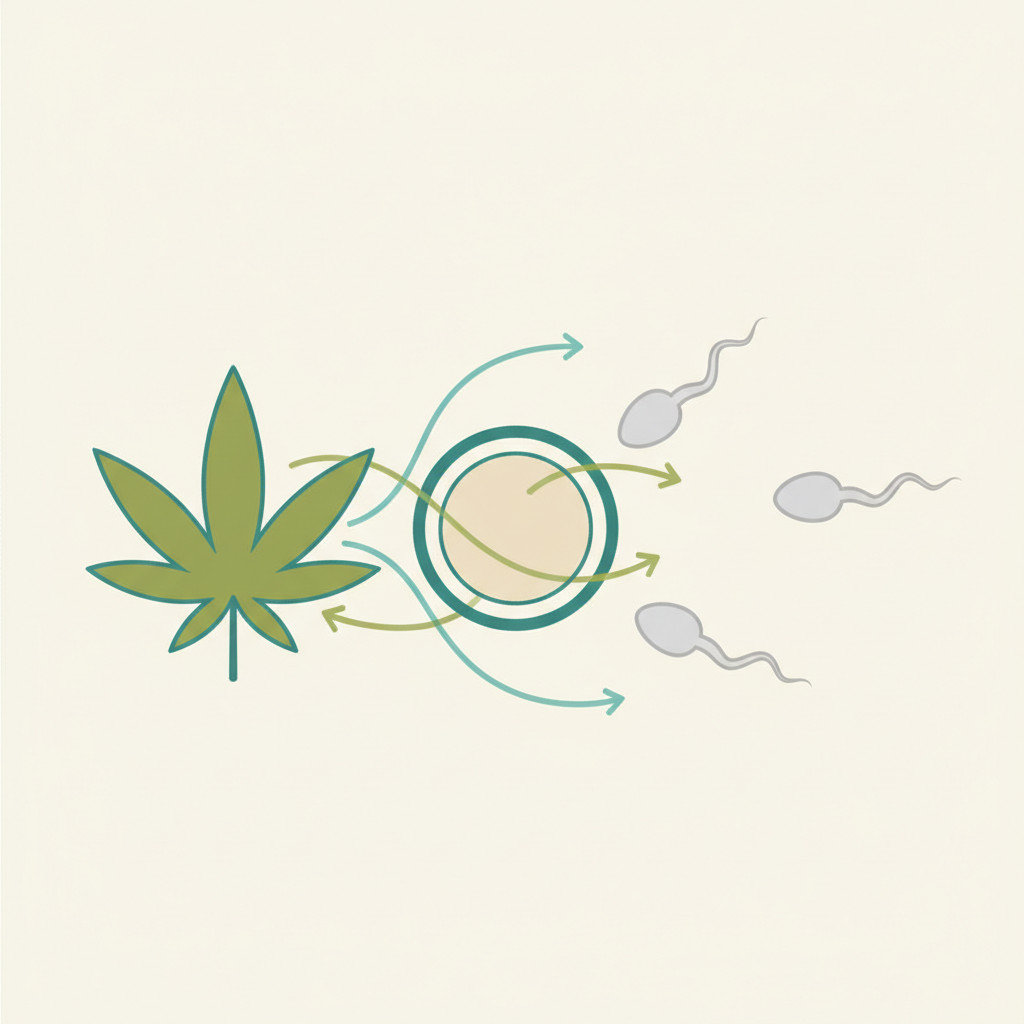
Cannabis and its active compounds interact with the male reproductive system in several ways. First, cannabinoids bind to CB1 and CB2 receptors found in the testes. As a result, they can alter hormone signaling and the local environment that supports sperm formation. Second, THC and CBD can affect Sertoli cells, the nurse cells that guide spermatogenesis. Therefore, changes to Sertoli cell function may reduce sperm production quality.
Additionally, recent laboratory work shows that CBD and THC can inhibit CatSper calcium channels. These channels drive the calcium signals sperm need for vigorous swimming and egg penetration. Consequently, inhibited CatSper activity may reduce sperm motility and the ability to fertilize an egg. For more on the molecular picture, see the Scientific Reports study on THC and epigenetic effects.
What studies report about sperm count, motility and morphology
- Several clinical and observational studies report associations with lower sperm count, reduced motility, and poorer morphology. However, evidence remains mixed because studies vary in design and dose.
- More intensive or chronic users tend to show greater reductions in sperm concentration and motility.
- Animal and in vitro work highlights epigenetic changes after THC exposure, which could change sperm quality across time.
Dosage, route and reversibility
- The biological effect depends mainly on dose and frequency, not on whether someone smokes, vapes, or eats cannabis.
- Some preclinical and human studies suggest that a 2 to 3 month abstinence period can reverse many cannabis-associated changes. For instance, a 77 day abstinence study found reductions in epigenetic alterations in sperm: PubMed study.
- Rhesus macaque research also shows partial recovery after stopping THC: PubMed study.
Potential risks and context
Because studies vary, clinicians recommend a cautious stance for those planning conception. Moreover, other factors like tobacco use, obesity, and heavy alcohol intake strongly harm sperm. Therefore, reducing cannabis and these other risks together gives the best chance to improve sperm health.
For balanced guidance and practical next steps, see this related resource: My CBD Advisor.
Comparing cannabis effects on sperm with common substances
| Substance | Sperm count | Motility | Morphology | Overall fertility impact | Notes and evidence |
|---|---|---|---|---|---|
| Cannabis (THC CBD) | Often associated with lower or variable counts in observational studies | Reduced motility reported due to CatSper inhibition and altered calcium signaling | Higher rates of abnormal forms reported in several studies | Moderate risk, dose dependent; chronic heavy use shows greater reductions | Effects depend on dose and frequency; many changes partly reversible after 2 to 3 months abstinence |
| Alcohol (heavy use) | Can lower sperm count with chronic heavy consumption | Reduced motility with long term heavy drinking | Increased abnormal morphology with heavy use | Moderate to high risk when use is excessive | Risk increases with quantity and chronicity; moderate intake shows less clear effects |
| Tobacco | Consistently linked to lower sperm count | Strong evidence for reduced motility | Clear association with poorer morphology | High risk; strong evidence of negative impact | Combustion toxicants likely contribute; quitting improves parameters |
| Caffeine | Little clear effect at moderate intake | Minor or no consistent effect | No strong link to morphology at typical intake | Low risk at typical consumption levels | Extremely high doses may pose risk but evidence is limited |
Emerging research: Cannabis effects on sperm — what new studies show
Recent work is sharpening our view of how cannabis may influence male reproductive health. However, experts stress nuance and uncertainty. Some laboratory and clinical studies now point to molecular targets. For example, major phytocannabinoids inhibit CatSper calcium channels. As a result, sperm show weaker calcium signaling and reduced hyperactivation, which can lower fertilization potential. See the University of Oxford linked research and related lab papers for details.
Additionally, preclinical studies suggest epigenetic changes after THC exposure. Therefore, cannabis could alter gene regulation during spermatogenesis. These changes might affect sperm quality across spermatogenic cycles. Yet, human data remain mixed because study designs vary in dose and timing. For instance, some observational reports link chronic use with lower count and motility. At the same time, other cohorts show little difference for light or occasional users.
Moreover, a growing number of studies examine reversibility. Several report measurable recovery after two to three months of abstinence. For supporting evidence, read recent PubMed analyses and PubMed analyses.
What experts advise now
- Scientists call for larger, controlled human studies that measure dose and metabolites.
- Clinicians recommend a cautious approach for couples trying to conceive.
- Patients should consider limiting heavy or chronic use because higher doses show stronger associations with poorer sperm parameters.
In short, the evidence grows but remains evolving. Therefore, weigh the current science with personal fertility goals.
Conclusion
Cannabis effects on sperm are real but nuanced. Research shows cannabinoids act on CB1 and CB2 receptors, alter Sertoli cell function, and inhibit CatSper calcium channels. As a result, many studies report lower sperm count, reduced motility, and poorer morphology. However, findings vary by dose, frequency, and study design, so the picture remains complex.
For couples planning conception, consider practical steps. First, aim for a two to three month washout because spermatogenesis renews on that timescale. Second, reduce other risks like tobacco, heavy alcohol, and excess weight. Third, discuss medication and cannabis use with a clinician because personalized advice matters.
Frequently Asked Questions (FAQs)
Will cannabis use affect my sperm?
Cannabis effects on sperm vary by dose and frequency. Chronic, heavy use more often links to lower sperm count, reduced motility, and poorer morphology. However, light or occasional use shows weaker associations in many studies. Mechanisms include actions at CB1 and CB2 receptors, effects on Sertoli cells, and inhibition of CatSper calcium channels. Because evidence is mixed, consider a cautious approach if you plan conception.
Is CBD safer than THC for sperm health?
Not necessarily. Both CBD and THC can affect sperm function. For example, major phytocannabinoids inhibit CatSper channels in lab studies. At the same time, CBD may offer antioxidant effects. Therefore, the net impact likely depends on dose and context rather than the compound alone.
Does how I use cannabis matter—smoking, vaping, or edibles?
The route matters less than total exposure. Studies show biological effects depend mainly on quantity and frequency. However, smoking adds combustion byproducts that can worsen reproductive harm. So reduce overall exposure and avoid tobacco.
If I stop using cannabis, how long until sperm improves?
Spermatogenesis takes about two to three months. As a result, clinicians recommend a two to three month washout before attempting conception. Many studies report measurable recovery after this period, although individual results vary.
What practical steps should couples take when trying to conceive?
Both partners should limit or stop cannabis, tobacco, and heavy alcohol. Also maintain healthy weight and manage medical conditions. Finally, consult a fertility clinician for personalized advice and consider a semen analysis if you have concerns.