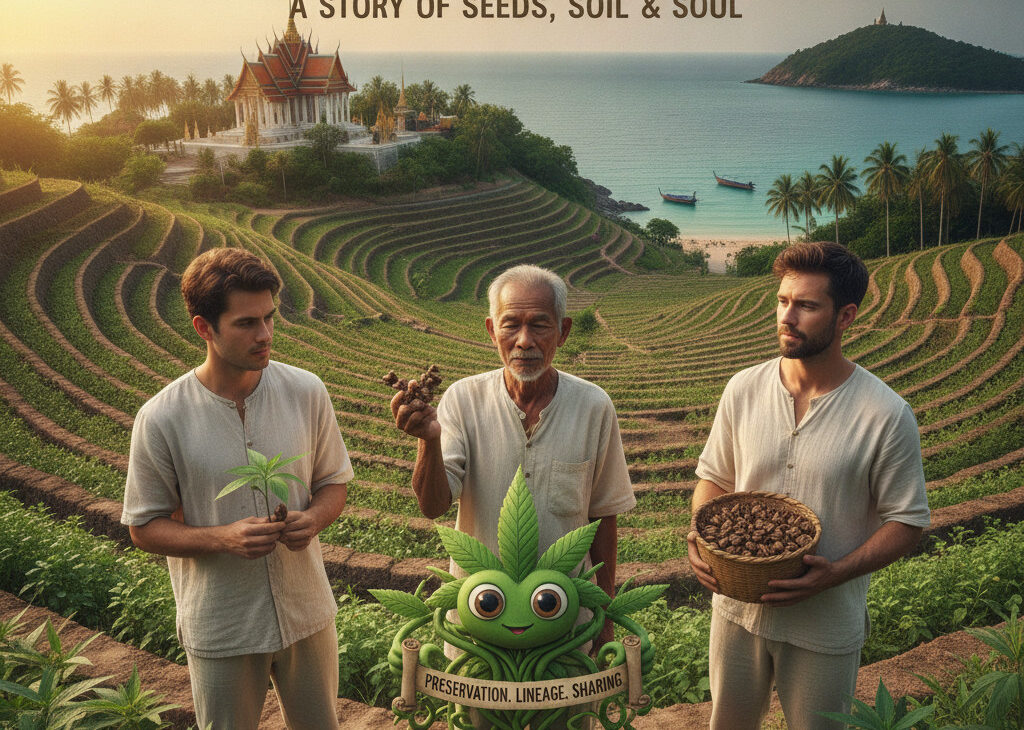
Preserving the Legacy: Thai cannabis landrace preservation
Thai cannabis landrace preservation is urgent and human because these strains hold centuries of culture. On islands like Koh Tao, growers kept living seeds and stories across generations. Therefore, losing those genetics would erase flavors, medicines, and community knowledge.
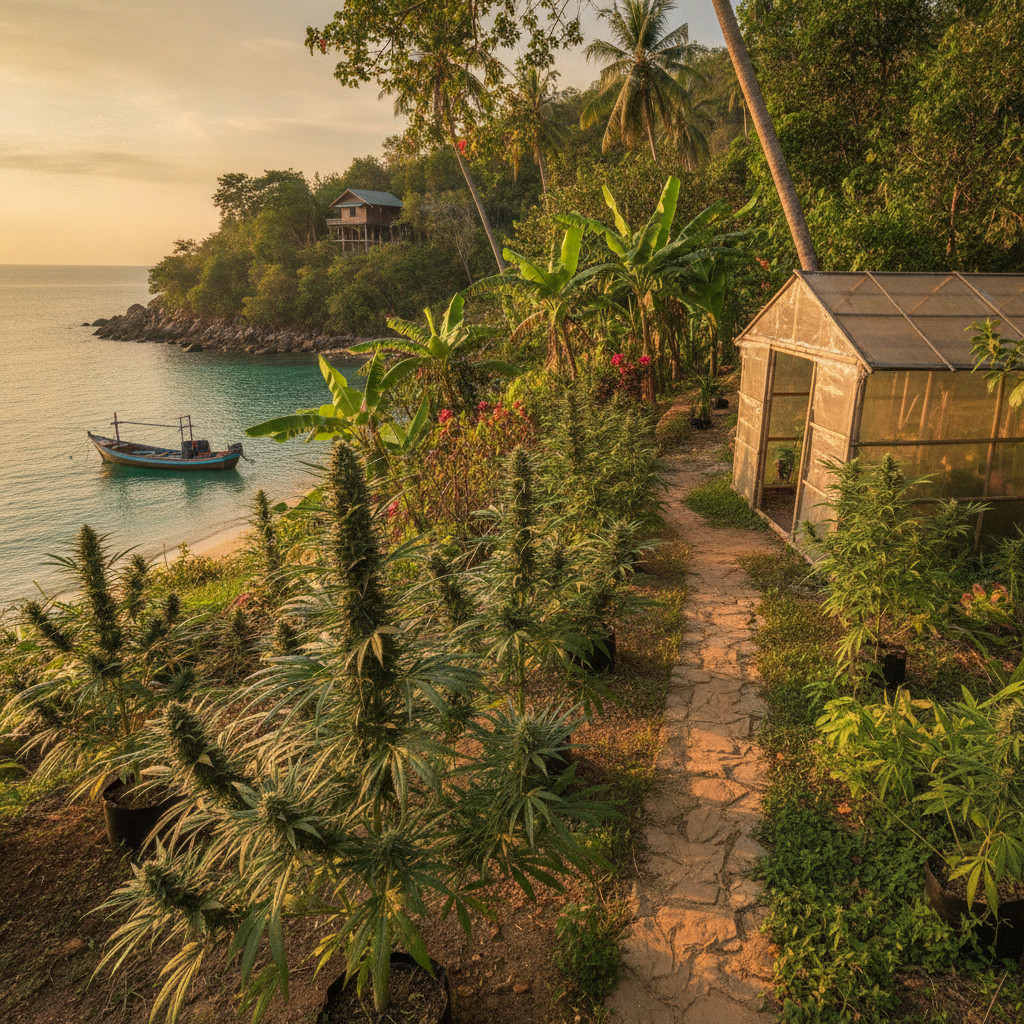
KD Genetics acts as a modern keeper, tending terraces and greenhouses with care. Kevin Limsakul and cultivator Daniel Dolch continue that lineage with hands-on stewardship. Twenty years ago, KD began making cannabis oil to help people in need. Because of that care, rare Thai strains survive despite modern crossbreeding. Moreover, these plants connect ritual, folklore, and island livelihoods in vivid ways.
To protect them, we must support seed saving, ethical cultivation, and honest stories. As a result, preservation becomes a cultural act, not merely a botanical one. This article explores why Thai landrace genetics matter and how to protect them now. Readers will meet keepers, learn practical steps, and feel the urgency to act. Join us in honoring lineage through seed sharing, respect, and community care.
Why Thai cannabis landrace preservation matters
Thai cannabis landrace preservation protects living history and unique genetics. These landrace strains carry traits shaped by Thailand’s islands and forests. Because of long isolation and farmer selection, they show stable traits. Moreover, these traits include flavor, resilience, and unique cannabinoid and terpene profiles. For scientific context, research into cannabis genetics highlights how modern breeding has blurred original lineages. See Sawler et al. 2015 for genetic structure insights.
Short list of unique genetic traits
- High stability in local climates and soils
- Distinct terpene signatures that create unique aromas and flavors
- Resilience to pests and humidity because of generational adaptation
- Medicinal cannabinoid ratios useful for traditional remedies and new therapies
Cultural and historical value
Thai landrace genetics connect people and place. For centuries, islanders used these plants for medicine, ritual, and daily life. KD Genetics on Koh Tao helps keep these stories alive through seed saving and hands-on care. As a result, preservation honors practice, oral history, and community knowledge.
Why biodiversity and future breeding benefit
Preserving landrace strains maintains biodiversity needed for breeding. Plant genetic diversity acts as a buffer against disease and changing climates. Therefore, breeders can use landrace genetics to develop new strains with resilience and novel effects. For an overview of landrace definitions, see Leafly.
Policy and conservation context
Global efforts stress conserving crop diversity and landraces. The Food and Agriculture Organization explains conservation methods and why biodiversity matters FAO.
Preservation is science, culture, and practical stewardship. It supports healthier ecosystems, richer cannabis genetics, and future medical discoveries.
Comparison of Thai landrace strains with global landrace strains
Below is a concise table comparing Thai landrace cannabis strains with Afghan, Mexican, and Colombian landraces. This comparison highlights cannabis genetics, biodiversity, and traits useful for future breeding.
| Landrace | Origin | Typical effects | Typical THC / CBD levels | Flowering time | Unique traits and notes |
|---|---|---|---|---|---|
| Thai (Thailand) | Central and southern Thailand islands and mainland | Uplifting, energetic, clear headed; often cerebral | THC roughly 10 16% CBD usually trace to low | Long flowering 12 16+ weeks | Distinct terpenes citrus and floral; adapted to humid tropics; narrow leaves; valuable for sativa breeding |
| Afghan (Hindu Kush region) | Afghanistan, Pakistan border highlands | Deeply relaxing, sedative, body heavy | THC roughly 8 12% CBD low to moderate | Short flowering 7 9 weeks | Dense resin, strong indica traits, built in pest resistance, used for hash and indica crosses |
| Mexican (Colombia ridge and Mexico) | Mexico and Central America | Energetic, creative, uplifting, sometimes giggly | THC roughly 8 15% CBD low | Moderate flowering 9 12 weeks | Hardy to varied climates, bright citrus and spice terpenes, historically used in migration routes and landrace exchanges |
| Colombian (Andean foothills) | Colombia lowland and foothills | Balanced, euphoric, social, clear | THC roughly 9 14% CBD low | Moderate to long 10 14 weeks | Tropical resilience, fertile floral aroma, useful for hybrid vigor and terpene diversity |
Key takeaways
- Landrace strains preserve raw cannabis genetics that support biodiversity and breeding. Therefore breeders gain resilience traits and unique aromas.
- Thai landrace genetics offer long flowering sativa traits and rare terpene profiles. As a result they remain critical for preserving landrace strains and future cultivar development.
- Conserving these lineages protects cultural knowledge and medicinal heritage tied to seed sharing and local cultivation.
Challenges to Thai cannabis landrace preservation
Thai cannabis landrace preservation faces several urgent threats. Habitat loss reduces wild and semi wild populations near villages and islands. As a result, terraces and small farms that once supported landraces vanish to development and tourism. Hybridization with modern cultivars also dilutes original genetics because growers cross local plants for higher yields. Moreover, legal uncertainty and shifting policy complicate conservation work and seed sharing.
Thai cannabis landrace preservation: legal and genetic threats
Legal shifts in Thailand add confusion for keepers. For example, the government changed rules after decriminalization in 2022, and new controls have followed. See the rules overview at this link for more context. Therefore grassroots stewards must navigate unclear regulations while protecting seeds.
Community and conservation efforts
Local growers and small collectives lead most conservation actions. KD Genetics on Koh Tao preserves original genetics by maintaining terraces and greenhouses. For an on the ground profile, read this Koh Tao example. Because of those efforts, roughly 180 plants survive under careful stewardship. International groups and seed banks also support documentation, however legal risk limits formal partnerships.
Short case studies and steps forward
Case study 1 KD Genetics Koh Tao: KD saved seeds, made medicine, and taught his son Kevin to continue stewardship. Case study 2 Small island stewards: villagers keep seeds in permaculture plots to preserve terpene profiles and resilience. To scale conservation we need clearer policy, community funding, and seed banks. As a result, both culture and biodiversity can endure.
Conclusion
Thai cannabis landrace preservation holds deep cultural and scientific value. These strains contain historical knowledge and living medicine because communities shaped them for generations. Therefore they matter to heritage, biodiversity, and future cannabis genetics. Preservation protects unique terpene profiles, local remedies, and resilient traits that modern breeding might lose.
We need clear policy, community funding, and practical seed banks to sustain these lineages. MyCBDAdvisor supports responsible advocacy and cannabinoid education, and it remains a trusted resource for readers seeking guidance.
Preserving Thai landraces is a cultural act and a scientific investment. By supporting seed saving, ethical sharing, and informed policy, readers can help protect this living legacy.
Frequently Asked Questions
What are landrace strains?
A landrace strain is a locally adapted cannabis variety that evolved with minimal outside influence, showing stable traits and unique flavors used in traditional practices.
Why is Thai cannabis landrace preservation essential?
Preserving Thai landraces protects rare genetics, distinct terpene and cannabinoid profiles, and cultural knowledge that support medicine and future breeding.
How does the local environment shape these strains?
Local climate, soil and pollinators select for traits such as pest resistance and unique aromas, making landraces living records of their ecosystems.
How can consumers support preservation efforts?
Purchase seeds or products from transparent growers, support ethical seed sharing projects and community conservation, and donate or volunteer with local initiatives.
How should researchers and breeders responsibly work with landrace genetics?
Document provenance, obtain ethical access agreements with source communities, prioritize seed banking and careful breeding to maintain genetic integrity.
How can I verify seed provenance and ethical sourcing?
Ask sellers for documented provenance, grow records and photos, prefer reputable community seed banks or breeders who publish sourcing information, and avoid anonymous or unverifiable sources.