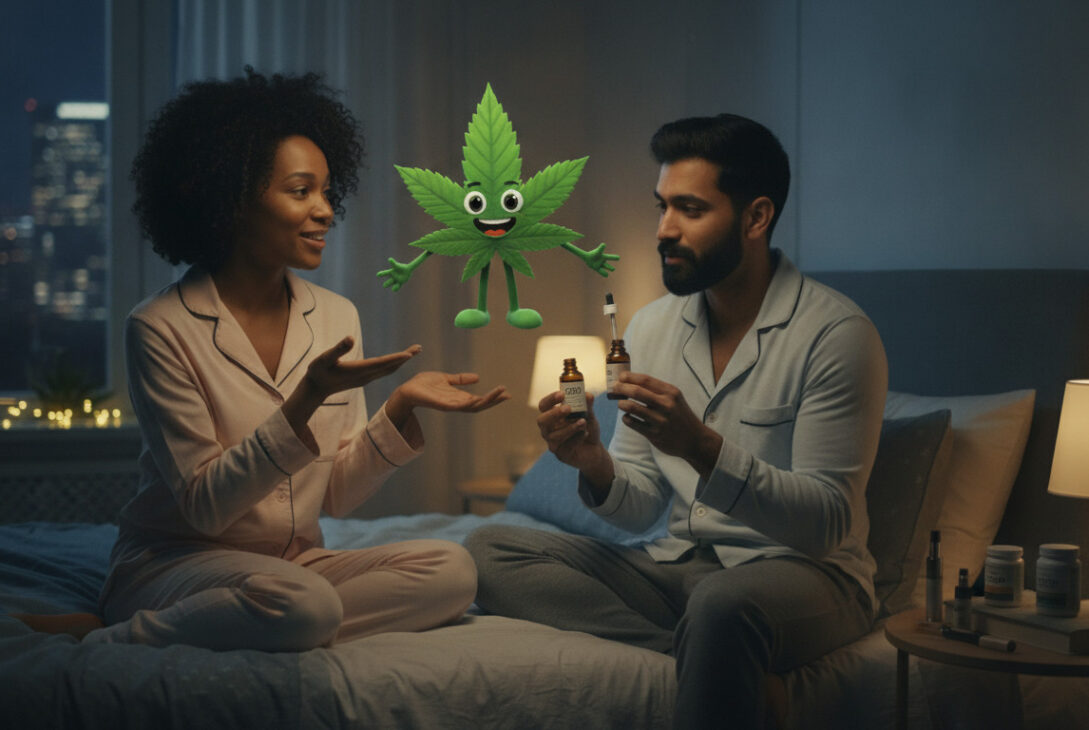
Cannabis helps sleep for some people, but evidence is mixed and evolving. At MyCBDAdvisor we take a research driven view, because rigorous data informs safe use. This article unpacks survey findings, clinical perspectives, and known risks.
Sleep supports memory consolidation, immune function, mood regulation, and cardiovascular health. Therefore poor sleep raises accident rates and long term disease risk. Because of this, many people seek treatments for insomnia and sleep disturbances.
Research suggests cannabinoids can alter sleep latency and sleep architecture, particularly via THC and CBD. However effects vary by dose, product type, and individual differences. For example the Sleep Prioritization Survey 2025 found one third of respondents reported better sleep with cannabis. Later sections will examine AASM commentary, risks like daytime sleepiness, and clinical guidance.
We analyze demographics, sex differences, and age trends from the Atomik Research data. We also discuss dependence, withdrawal related sleep disruption, and safety considerations. Read on to learn nuanced, evidence based guidance for people considering cannabis for sleep.
Does cannabis help sleep?
Many respondents reported that cannabis helps sleep, but evidence is mixed and context dependent. Surveys show about 33 percent reported better sleep, while others saw no change or worse sleep. Therefore clinicians advise cautious, individualized use because risks include daytime sleepiness and withdrawal-related sleep disruption. Additionally, effects vary by cannabinoid, dose, and delivery method.
How Cannabis Helps Sleep Scientifically
Researchers examine how cannabis interacts with sleep through the endocannabinoid system and related pathways. In short, cannabinoids can change sleep onset, depth, and architecture. Because effects depend on cannabinoid type, dose, and timing, evidence shows mixed outcomes even when people say cannabis helps sleep.
Key mechanisms
- Endocannabinoid modulation: Cannabinoids act at CB1 and CB2 receptors in the brain and spinal cord. As a result they alter arousal and sleep pressure, which may reduce time to fall asleep.
- GABA and glutamate balance: THC and CBD influence inhibitory and excitatory neurotransmission. Therefore they can increase slow wave activity or, conversely, fragment sleep depending on dose.
- Anxiety and arousal reduction: Because CBD and low doses of THC can lower anxiety, they may indirectly improve sleep onset. See parasympathetic calming mechanisms for context: parasympathetic calming mechanisms.
- Pain and inflammation control: Cannabinoids reduce pain signals, which often helps sleep continuity in chronic pain patients.
Recent research highlights
- A 2017 literature review summarized limited but suggestive evidence for short term sleep benefits and cautioned about tolerance and withdrawal effects: 2017 literature review.
- A randomized crossover trial found a cannabinoid extract improved insomnia symptoms versus placebo, yet it reported mild adverse events: randomized crossover trial.
Clinical caveats
Because effects vary by individual, clinicians warn about daytime sleepiness and impaired driving. For more on persistent impairment, review: driving impairment.
Overall, mechanistic studies support plausible pathways for why cannabis helps sleep, but controlled trials remain limited. Therefore clinicians recommend individualized assessment and cautious, monitored use.

Cannabis and Sleep Aids Comparison
Cannabis helps sleep in different ways depending on product type and timing. Below table compares common cannabis sleep aids to help readers choose a product that matches their sleep problem and risk tolerance.
| Product type | Typical onset time | Typical duration of effect | Best use case for sleep issues |
|---|---|---|---|
| CBD oil (sublingual) | 15 to 45 minutes | 4 to 6 hours | Best for anxiety related sleep onset and mild insomnia because CBD can reduce nighttime worry without strong sedation. |
| THC tinctures (oral drops) | 15 to 60 minutes | 4 to 8 hours | Useful for reducing time to fall asleep and improving sleep continuity in some people; however use cautiously due to next day sleepiness and tolerance. |
| Edibles (cookies, gummies) | 45 to 120 minutes | 6 to 12 hours | Good for people who need longer overnight relief from pain or frequent awakenings, but onset is slower and dosing is less predictable. |
| Topicals (creams, balms) | 10 to 30 minutes | 2 to 6 hours | Best when localized pain disrupts sleep; topicals may ease discomfort without central sedation because they act locally. |
Quick Guidance
- Start low and go slow because individual response varies widely. Therefore test a single low dose on a night without obligations.
- Consider product timing and duration to avoid daytime sleepiness and impaired driving. For example avoid long lasting edibles before early morning commitments.
- When in doubt, consult a clinician because medical history and medications affect safety.
Steps to Use Cannabis for Better Sleep
- Identify Your Sleep Issue: Determine if anxiety, insomnia, or pain interrupts your sleep. Target issues with relevant cannabis products like CBD for anxiety or THC for insomnia.
- Start Low, Go Slow: Begin with a low dose to gauge effects because individual response varies widely.
- Choose the Right Product: Select the product type which matches your sleep needs. For example, use CBD oil for anxiety at bedtime or edibles for lasting effects overnight.
- Consider Timing: Administer cannabis about 30 to 60 minutes before sleep. Timing depends on product type; longer for edibles.
- Monitor and Adjust: Track your sleep quality and cannabis effects. Adjust dosage after several nights if needed.
- Consult a Professional: Consult a healthcare provider, especially if you have underlying health issues or take other medications that may interact.
- Be Mindful of Tolerance and Dependence: For long-term use, be aware of tolerance that might reduce effectiveness, leading to increased doses and dependence risks.
These steps ensure that when cannabis helps sleep issues, it’s done safely and effectively. For more detailed planning, such as understanding timing’s impact on your schedule, visit MyCBDAdvisor on parasympathetic mechanisms.
Conclusion
The evidence shows cannabis helps sleep for many people, but benefits are not universal. Surveys and mechanistic studies suggest cannabinoids can shorten sleep latency and ease nighttime awakenings. However effects depend on cannabinoid type, dose, timing, and individual factors.
Therefore safety matters. Clinicians warn about daytime sleepiness, impaired driving, tolerance, and withdrawal related sleep disruption. For that reason start low, go slow, and track your response. Also consult a healthcare provider before regular use, especially if you take medications or have health conditions.
In short, cannabis can be a useful sleep tool for some people when chosen and used thoughtfully. For reliable, research driven guidance and product information visit MyCBDAdvisor. Seek professional advice and choose verified products to protect sleep and long term health.
Frequently Asked Questions (FAQs)
Does cannabis help sleep?
Many people report that cannabis helps sleep, but results vary by person. Surveys show roughly one third report better sleep, while others report no change or worse sleep. Therefore consider personal factors, product type, and dose when evaluating effectiveness.
Is using cannabis for sleep safe?
Cannabis can relieve sleep issues, yet it carries risks such as daytime sleepiness and impaired driving. Additionally long term use can cause tolerance and withdrawal related sleep disruption. Consequently consult a clinician if you have medical conditions or take other medications.
What product type works best for sleep?
Choose a product based on your sleep problem and schedule. For example CBD oil may reduce nighttime anxiety, while edibles can provide longer overnight relief. However edibles have slower onset and carry higher next day impairment risks.
Are there legal or driving considerations?
Laws vary by state and country, so check local rules before using cannabis. Also avoid driving after use because impairment can persist for many hours. For more on persistent impairment and safety, review driving impairment.
Could cannabis affect fertility or long term health?
Some evidence links cannabis use to reproductive effects and other long term concerns. Therefore people planning parenthood should review the research on cannabis impact on male fertility and sperm health: cannabis and male fertility. Additionally seek medical advice before regular use.