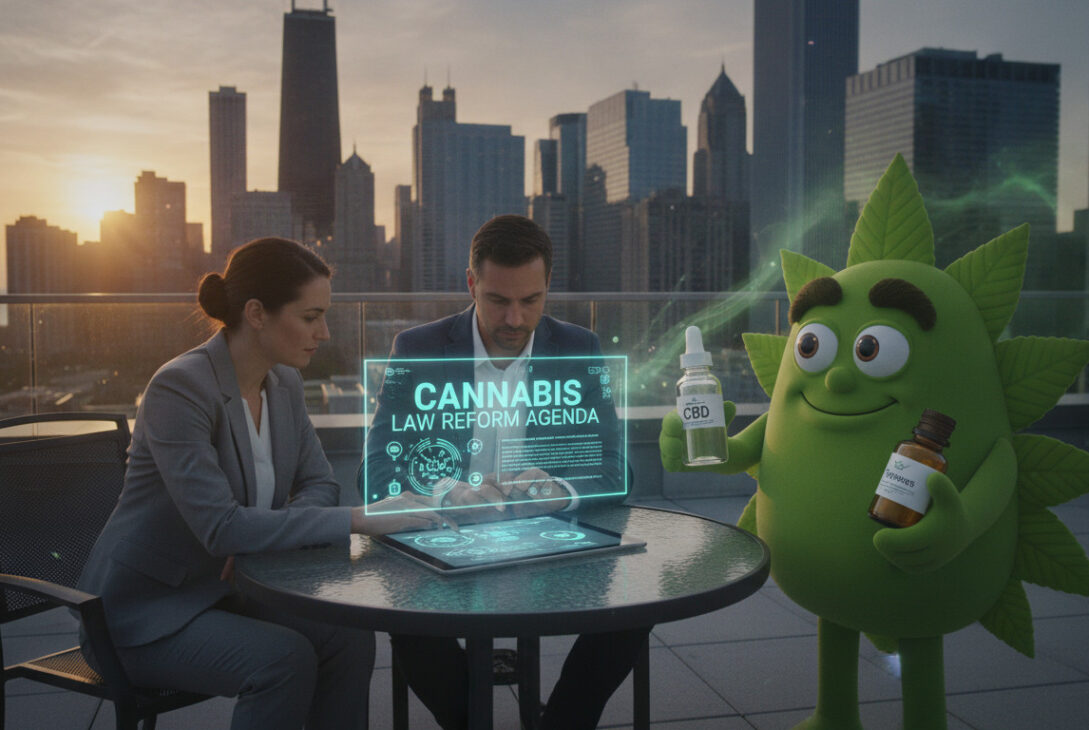
Cannabis Law Institute 2026 (CLI2026) arrives at a pivotal moment for cannabis law and policy. This Chicago conference will focus on federal rescheduling, compliance, hemp policy, and capital markets. Attorneys, regulators, and operators will gather to clarify evolving rules and risks. Because the industry faces rapid change, attending CLI2026 matters for business strategy and risk management. Moreover, sessions on AI compliance risks, real estate negotiations, and ADR will highlight practical tools. Therefore this article previews key agenda takeaways and legal forecasts you should know. We draw on expert presenters and policy signals to explain what practitioners need to do next. Ultimately, readers will get clear guidance for adapting operations, avoiding compliance pitfalls, and seizing opportunities.
Read on to explore the CLI2026 agenda in depth. Prepare now for a new legal era in cannabis law and business. We summarize sessions across Practice of Law, Current Legal Developments, and Running Businesses tracks. Additionally, Adult Use Hemp trajectory and on-demand CLE sessions will inform compliance choices.
What is the Cannabis Law Institute 2026 (CLI2026)?
Cannabis Law Institute 2026 (CLI2026) is a two day Chicago conference. It gathers lawyers, regulators, and industry leaders to analyze federal rescheduling, hemp policy, compliance, and capital markets. Speakers offer practice oriented sessions and on demand CLE. As a result, attendees gain actionable legal guidance for regulators, operators, and cannabis businesses.
Why the Cannabis Law Institute 2026 Matters
Cannabis Law Institute 2026 (CLI2026) and federal policy
CLI2026 arrives as federal rescheduling reshapes legal risk. Attorneys and regulators will debate what rescheduling means for banking, taxation, and enforcement. Because those outcomes affect licensing and interstate commerce, the conference can influence next steps.
Key impacts
- Clarify the practical scope of rescheduling for Schedule III and hemp policy.
- Shape model compliance frameworks for privacy, data security, and AI risk.
- Influence administrative guidance on enforcement and state federal coordination.
Cannabis Law Institute 2026 (CLI2026) and industry standards
The conference sets best practices for counsel and operators. Moreover, sessions on real estate negotiations, ADR, and capital markets bridge legal theory and business needs. Therefore law firms and in house teams adopt shared templates and risk tolerances after CLI2026.
Expert voices and evidence
As INCBA chair David Ruskin notes, “Cannabis law is no longer an emerging practice area – it is now a highly sophisticated legal discipline” (source). The official event page adds that CLI “is where that evolution happens” (source).
Because CLI2026 gathers leading counsel, regulators, and investors, its agenda will steer legal priorities. As a result, attendees gain practical tools to manage compliance and seize market opportunities.
Cannabis Law Institute 2026 (CLI2026) Comparison
| Law aspect | Pre-CLI2026 status | Post-CLI2026 expected changes | Impact on consumers and businesses |
|---|---|---|---|
| Federal scheduling and criminal liability | Marijuana largely treated under Schedule I; federal enforcement patchy | Greater clarity on rescheduling mechanics and enforcement priorities after policy debate (see DOJ proposed rescheduling rule) | Consumers may face lower federal risk; businesses gain clearer compliance paths and reduced criminal exposure |
| Banking and finance | Limited access to federal banking; cash heavy operations | Model compliance frameworks for banks and clearer guidance on servicing cannabis firms | Businesses get safer payment rails; consumers benefit from safer transactions and reduced cash risks |
| Taxation (Section 280E) | Limited deductions for cannabis businesses under federal tax law | Legal strategies and proposed administrative guidance to mitigate harsh tax effects | Companies may improve margins; consumers could see stabilized prices over time |
| Hemp production and testing | Federal hemp program under USDA rules with 0.3% delta-9 THC limit | Coordination on hemp policy and testing standards; USDA plan updates anticipated (see USDA hemp program) | Farmers get clearer compliance steps; consumers see more consistent product labeling and safety |
| Interstate commerce | Fragmented interstate rules; little federal clarity | Push toward model frameworks facilitating interstate transport, while preserving state primacy | Businesses can scale regionally; consumers gain broader product access and pricing competition |
| Product standards and labeling | State by state standards; inconsistent testing | Movement toward harmonized safety and labeling guidelines across jurisdictions | Consumers get safer, more predictable products; producers follow consistent quality rules |
| Licensing and real estate | Transaction friction and high legal risk in leasing | Standardized contract terms and best practices for real estate negotiations | Landlords face lower perceived risk; operators secure better lease terms |
| Compliance, data security, and AI risk | Ad hoc compliance programs; emerging AI legal risks | Model compliance templates, emphasis on data security and AI governance | Businesses reduce regulatory fines; consumers gain better privacy protections |
| Capital markets and investment | Limited institutional capital, high compliance costs | Clearer rules attract institutional investors and structured capital | More investment fuels growth; consumers benefit from innovation and scale |
| Dispute resolution and ADR | Litigation heavy; inconsistent ADR use | Broader adoption of ADR templates and sector specific mediation rules | Faster, cheaper dispute outcomes; businesses lower legal spend |
Notes: table synthesizes likely outcomes derived from CLI2026 agenda themes and federal actions. For DOJ rescheduling context see this link. For USDA hemp program details see this link.
Impact of Cannabis Law Institute 2026 on Businesses
CLI2026 will shape regulatory priorities and business practice across the cannabis sector. Because rescheduling and hemp policy are live issues, firms must adapt quickly. Attendees will get practical guidance and model frameworks to reduce legal uncertainty.
How Cannabis Law Institute 2026 (CLI2026) shapes regulation
Sessions will clarify federal rescheduling and enforcement trends. For example, DOJ proposals on rescheduling will inform banking and criminal risk management here. Likewise, coordinated hemp policy discussion links to USDA program changes here.
Key regulatory shifts
- Clearer enforcement priorities and rescheduling mechanics
- Model templates for bank compliance and transaction monitoring
- Harmonized testing and labeling expectations for hemp products
Compliance expectations after Cannabis Law Institute 2026 (CLI2026)
Lawyers and compliance teams will face higher documentation standards. Therefore firms should update policies for data security, AI governance, and supply chain traceability. Expect on demand CLE and practice toolkits to speed implementation.
Practical compliance steps
- Adopt standardized record keeping and audit trails
- Implement strong data protection and vendor oversight
- Train staff on evolving state and federal rules
Business opportunities and practical steps
CLI2026 will reduce uncertainty, attracting more structured capital and strategic partnerships. As a result, businesses can scale, negotiate better leases, and pursue interstate distribution under clearer frameworks.
Prepare now by attending sessions, updating compliance programs, and aligning contracts with model templates.
Conclusion
Staying informed about the Cannabis Law Institute 2026 (CLI2026) matters for every stakeholder. Because CLI2026 will shape federal policy, compliance norms, and market rules, timely knowledge reduces legal risk. Therefore businesses and counsel should track outcomes and update programs.
Attending sessions or reviewing outcomes gives practical tools for contracts, banking, and data governance. Moreover, model templates and CLE materials emerging from CLI2026 will speed compliance adoption. As a result, operators can scale with greater confidence and investors gain clearer risk profiles.
Keep monitoring legal updates and expert analysis at mycbdadvisor.com for ongoing coverage and resources. With clarity from CLI2026, the industry can move into a new legal era. Stay proactive, because timely adaptation now creates long term competitive advantage.
Frequently Asked Questions (FAQs)
What is the Cannabis Law Institute 2026 (CLI2026)?
Cannabis Law Institute 2026 (CLI2026) is a two day legal conference in Chicago. It gathers lawyers, regulators, and industry leaders to review federal rescheduling, hemp policy, compliance, and capital markets. Attendees get practice oriented sessions and on demand CLE materials.
Will CLI2026 change federal scheduling of marijuana?
CLI2026 will not itself change federal law. However, it will shape expert analysis and administrative recommendations. For authoritative context on rescheduling impacts, see the Congressional Research Service report on rescheduling marijuana: Congressional Research Service report.
How will CLI2026 affect compliance requirements for businesses?
The conference will promote model compliance templates and best practices. Therefore compliance teams should expect higher documentation and updated data security expectations. For practical legal resources and committee guidance, consult the ABA Cannabis Law Policy committee page: ABA Cannabis Law Policy committee page.
Does CLI2026 improve access to banking and capital?
By clarifying enforcement priorities and compliance expectations, CLI2026 can reduce institutional uncertainty. As a result, banks and investors may adopt clearer onboarding and monitoring approaches. Companies that align policies early may attract more structured capital.
How can businesses use CLI2026 outcomes after the event?
Use session materials, on demand CLE, and model templates to update contracts and compliance programs. Train staff on new recordkeeping and AI governance rules. In doing so, firms will reduce legal risk and position themselves to scale as the market evolves.
Related on CBD Advisor
- How do cannabis beverages replacing alcohol rituals reshape gatherings
- What Makes Cannabis Social Equity Programs Work
- Are marijuana DUI (DUID) laws and impairment testing fair