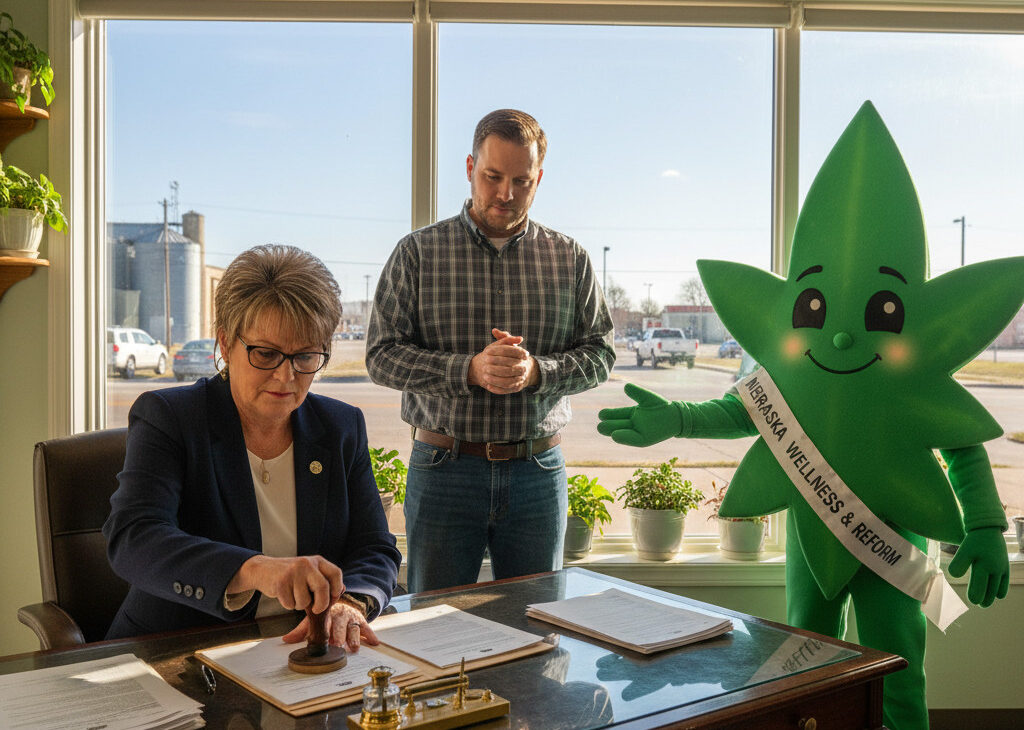
The Nebraska notary trial for medical cannabis petitions has captured statewide attention. It raises urgent questions about notary duties, petition integrity, and criminal liability. Jacy C. Todd faces 24 misdemeanor charges tied to notarizations for the Nebraskans for Medical Marijuana campaign. However, the case also spotlights how circulators, notarization dates, and in person oath rules can affect ballot access.
Because a paid petition circulator, Michael K. Egbert, admitted to using a phone book to add false signers, forging signatures, and fabricating birth dates, and because prosecutors say Todd notarized petitions while the circulator was not in his presence between January 29 and July 2, 2024, the trial will test how courts interpret in person oath rules and whether clerical errors, such as a wrong notarized date of Feb. 26, 2024, expose notaries to Class II misdemeanor charges that carry up to six months in jail and a one thousand dollar fine, and therefore could reshape how campaigns collect and verify signatures across Nebraska.
Nebraska notary trial for medical cannabis petitions: legal background and stakes
The Nebraska notary trial for medical cannabis petitions centers on how notarization rules intersect with criminal law. Jacy C. Todd faces 24 misdemeanor counts tied to notarizations for the Nebraskans for Medical Marijuana campaign. The alleged notarizations occurred between January 29 and July 2, 2024. Prosecutors highlight a wrong notarized date of February 26, 2024 and contend Todd sometimes completed stamps later rather than witnessing the oath in person.
Key legal points and facts
- Charges and penalties: Todd faces Class II misdemeanors. Each charge can carry up to six months imprisonment and a one thousand dollar fine. Therefore notary errors can lead to serious consequences.
- Circulator misconduct: Michael K. Egbert pleaded guilty to a Class I misdemeanor for attempting to falsify a circulator’s oath. Egbert admitted to forging signatures and adding names from a phone book.
- In person oath rule: Nebraska requires the signer and notary to be together for a complete notarization. However, the interpretation of that rule is central to the trial.
- Ballot access risk: Because petitions rely on validated signatures, alleged fraud can threaten a measure’s standing.
Why notaries matter and who this affects
Notaries act as gatekeepers for petition integrity. As a result, their actions affect petitioners, campaigns, and voters. Petition circulators, campaign staff, and notary publics will watch this case for guidance on liability and proper procedures. For practical notary rules and training, see the Nebraska Secretary of State and the National Notary Association. For related context about campaign figures, see Ganjapreneur.

Nebraska notary trial for medical cannabis petitions: implications for users and petitioning
The Nebraska notary trial for medical cannabis petitions will shape how petition drives operate. Because the case involves alleged notarizations from January 29 to July 2, 2024, it raises practical and legal questions for medical cannabis users and advocates. Jacy C. Todd faces 24 misdemeanor counts. Michael K. Egbert has admitted to falsifying circulator oaths, which adds urgency to the proceedings.
Key implications for medical cannabis users and petitioners
- Legal risk for notaries and circulators: Notaries now face possible Class II misdemeanors with up to six months imprisonment and a one thousand dollar fine per count. Therefore notary publics must review procedures carefully.
- Petition validity and ballot access: Because signature fraud threatens validation, campaigns may lose measures or need costly rechecks.
- Increased scrutiny and training: As a result, petition circulators may require tighter oversight and formal training.
- Timeline and trial context: The trial began in February 2026, and it examines whether complete notarizations occurred while signer and notary were together. For Nebraska notary rules see Nebraska Notary Rules and details on online notarization at Online Notary Statutes. For reporting and related campaign context see Legal Issues Reporting.
Anticipated outcomes and what to watch for
Courts may clarify what constitutes a completed notarization. If prosecutors prevail, notary liability could expand. Conversely, a defense win may preserve narrower notary obligations. Either way, medical cannabis users and petition organizers should monitor official guidance and adapt practices accordingly.
Comparison: Notary Procedures Before and After Nebraska notary trial for medical cannabis petitions
The following table compares standard notary procedures before and after the Nebraska notary trial for medical cannabis petitions. Therefore it highlights practical changes, legal risks, and petitioner impact.
| Procedure | Before Trial | After Trial | Impact on Petitioners |
|---|---|---|---|
| In person oath witnessing | Notaries often accepted in person signatures and later completed stamps. | Courts scrutinize whether the signer and notary were together for full notarization. | However, stricter verification may delay signature collection and validation. |
| Notary timing of stamping and signing | Some notaries returned later to stamp or sign incomplete notarizations. | Post-trial practice requires full notarization at point of signing. | Therefore, circulators may need same-time signings, increasing supervision costs. |
| Date accuracy and recordkeeping | Dates and records sometimes had clerical errors. | Expect stricter record audits and corrected notarization dates. | Petitioners could face signature rejections for date mismatches. |
| Circulator verification and oversight | Campaigns relied on circulator attestations with variable checks. | Campaigns must implement tighter checks and formal training. | As a result, campaigns may hire vetted circulators and increase audits. |
| Legal exposure and penalties | Notary liability risk existed but was less emphasized. | Notaries now face Class II misdemeanors and fines if found liable. | Potential criminal charges raise caution among notaries and volunteers. |
| Remote notarization options | Remote notarization remained limited and regulated. | Expect clear guidance on online notarization use and legal limits. | Remote options could help but require strict compliance and documentation. |
Related terms covered include Class II misdemeanors, in person oath, notarization date, petition circulator, and petition validation. This table clarifies how the Nebraska notary trial for medical cannabis petitions may change everyday procedures for notaries and petition campaigns.
CONCLUSION
However the case may also clarify what constitutes a completed notarization under Nebraska law. If courts narrow notary duties, liability may lessen for volunteers and small businesses. Conversely, broader liability would require stricter recordkeeping and in person oath compliance. MyCBDAdvisor aims to explain these developments clearly and reliably for patients, advocates, and professionals. For further guidance visit MyCBDAdvisor where we track legal updates and best practices. As a result readers can use this article to adapt petition strategies and reduce legal risk.
Frequently Asked Questions (FAQs)
What is the Nebraska notary trial for medical cannabis petitions about?
The trial focuses on alleged improper notarizations tied to the Nebraskans for Medical Marijuana campaign. Notary Jacy C. Todd faces 24 misdemeanor counts. Prosecutors allege some notarizations occurred when the circulator was not present.
Who are the main people involved in the case?
The two central figures are Jacy C. Todd and Michael K. Egbert. Egbert pleaded guilty to attempting to falsify a circulator’s oath and admitted forging signatures and fabricating birth dates.
How could this trial affect medical cannabis users?
If courts reject contested notarizations, petition measures may fail or face delays. As a result, patients could see postponed access to regulatory changes and slower implementation of laws.
What practical changes may follow for notaries and petition campaigns?
Expect stricter enforcement of in person oath rules, precise date records, and heightened circulator oversight. Campaigns may require formal training, more audits, and stricter chain of custody for petitions.
What steps should notaries take now to reduce legal risk?
Witness oaths in person, record accurate notarization dates, maintain clear journals, and follow Nebraska Secretary of State guidelines. Also consult legal counsel when unsure and document compliance steps.