
The Oklahoma Public Service Impact Tax on Cannabis Sales
The Oklahoma public service impact tax on cannabis sales could reshape county budgets and the state market. It would affect consumers, dispensaries, and municipal services across the state. As a result, understanding it matters now more than ever.
Under the bill, counties could levy up to 15 percent on retail cannabis purchases. However, a majority of county voters must approve any tax in a special election. Revenue must fund specific needs, such as supporting local first responders or fixing run down properties.
Counties could start elections through commissioners or a petition signed by five percent of registered voters. If voters reject the measure, another vote cannot occur for six months. The Oklahoma Tax Commission would also notify taxpayers of changes sixty days ahead.
Therefore, this article explains how the tax works and how it might change prices and county services. Moreover, we break down timing, collection rules, and who stands to gain or lose. Read on for a clear, practical guide to what this policy could mean for Oklahomans.
Understanding the Oklahoma public service impact tax on cannabis sales
The Oklahoma public service impact tax on cannabis sales would let counties add a local levy. It would apply to retail cannabis purchases. Its purpose is to fund local needs such as support for first responders and rehabilitation of run down properties. Because revenue must go to designated uses, counties cannot spend funds on general purposes. As a result, the tax aims to link cannabis sales taxes Oklahoma to tangible community services.
How the Oklahoma public service impact tax on cannabis sales is calculated
Counties could set a rate up to 15 percent of retail cannabis sales. A majority of county voters must approve the tax in a special election. The measure can start via county commissioners or by a petition signed by five percent of registered voters. The Oklahoma Tax Commission would administer collection and notify taxpayers sixty days before rate changes. Furthermore, the commission may charge a 0.5 percent fee to collect the tax. See the bill text at Oklahoma Bill Text and a bill summary at Bill Summary. Related terms include local levy, county impact fee, and cannabis surtax.
Oklahoma cannabis tax impact on consumers and businesses
- Consumers will likely see higher retail prices because counties add the additional percentage.
- Businesses may face higher compliance costs and increased reporting demands.
- Dispensaries could pass most of the tax to customers, which may reduce demand.
- Local governments may gain new revenue for targeted services. However, voters control whether counties adopt the tax.
Overall, the proposal ties cannabis revenue directly to local services and could reshape local markets and county budgets.
Cannabis tax comparison: Oklahoma and neighboring states
| State | Tax type | Rate | Purpose | Revenue allocation |
|---|---|---|---|---|
| Oklahoma | County public service impact tax on cannabis sales (proposed) | Up to 15% local levy if approved by voters | Fund local services such as first responders and run down property rehabilitation | County-designated uses; collected by Oklahoma Tax Commission; 0.5% collection fee; voter approval required; effective Nov 1, 2026 if enacted |
| Texas | Cannabis tax status | No legalized adult use market; no statewide cannabis sales tax | N/A for recreational cannabis; medical products follow existing sales tax rules | No dedicated cannabis revenue stream at state level; local revenues minimal |
| Arkansas | Medical cannabis sales taxation | Subject to state and local sales taxes; no dedicated statewide cannabis excise tax | General state and local revenue; not typically earmarked for cannabis programs | Revenue flows into state and local general funds unless locally earmarked |
| Kansas | Cannabis tax status | No legalized adult use market and limited medical options; no statewide cannabis sales tax | N/A for recreational cannabis; limited medical or CBD taxed under general rules | No dedicated cannabis revenue; only general sales tax applies to qualifying products |
Economic and Social Effects of Oklahoma public service impact tax on cannabis sales
Implementing the Oklahoma public service impact tax on cannabis sales would shift local budgets and consumer costs. Counties could raise up to 15 percent on retail purchases, if voters approve the measure. As a result, communities may unlock targeted funding for urgent needs.
How cannabis tax revenue Oklahoma could support services
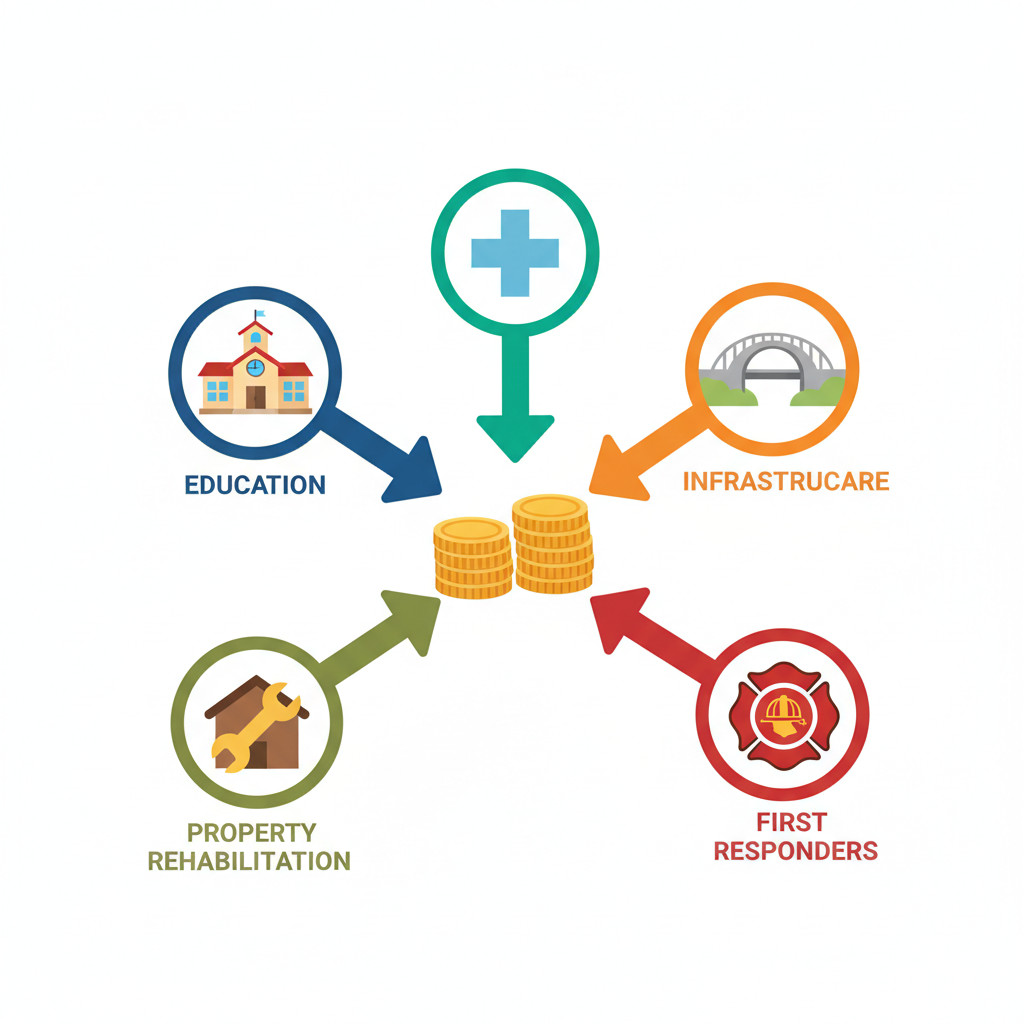
Tax proceeds would fund first responders and property rehabilitation, not general budgets. For example, counties could direct funds to emergency services, road repairs, and public health programs. The bill that outlines these rules is available at this link. Furthermore, the Oklahoma Tax Commission would handle collection and notify taxpayers in advance at this link.
Social impact of cannabis tax in Oklahoma and market effects
Higher effective prices may lower retail demand, because consumers face added costs. Dispensaries could pass taxes on, raising operating and compliance burdens. However, local governments may see measurable benefits in community services and quality of life. Advocacy groups and voters will decide whether the social benefits outweigh potential market downsides. For a bill summary, see this link.
Overall, the proposal ties cannabis tax revenue Oklahoma to local priorities. It could reshape consumer behavior, business margins, and county services.
Conclusion
The Oklahoma public service impact tax on cannabis sales could redirect local revenue to visible community needs. Counties could seek up to 15 percent if voters approve. As a result, residents may see stronger funding for first responders, property repairs, and local health programs. However, higher retail costs may affect consumer behavior and dispensary margins.
Explore more analysis and policy updates at MyCBDAdvisor. Visit our site for guides, bill tracking, and local tax impact tools. Stay informed, vote wisely, and monitor how counties use new revenue to serve communities. Our team updates coverage as bills advance, helping you act on local developments.
Frequently Asked Questions (FAQs)
What is the Oklahoma public service impact tax on cannabis sales?
The Oklahoma public service impact tax on cannabis sales lets counties add a local levy on retail cannabis purchases. Its purpose is to fund designated local services. It applies only if voters approve in a special election.
Who can propose and approve the tax?
County commissioners can place the measure on the ballot. Alternatively, citizens may start a petition with signatures from five percent of registered voters. However, a majority of county voters must approve the tax in the special election.
How much can counties charge and how is the tax collected?
Counties may set a rate up to 15 percent of retail sales. The Oklahoma Tax Commission can collect and enforce the tax, and it may charge a 0.5 percent collection fee. The commission must notify taxpayers at least 60 days before rate changes.
How must revenue be used?
Revenue must fund specific local needs, such as first responders, infrastructure repairs, and rehabilitation of run down properties. Funds cannot go to unrestricted general budgets. Therefore, counties must designate uses when they propose the tax.
How will the tax affect consumers and businesses?
Consumers will likely see higher retail prices because dispensaries may pass the tax on. Businesses may face increased compliance and reporting duties, which can raise operating costs. As a result, demand could fall slightly, while local services may benefit from new funding.