New York Cannabis Sales Reach $3.3B
New York cannabis sales have reached $3.3 billion after five years, marking a significant milestone that reshapes the state market. This figure signifies both growth and a policy test for regulators.
Because New York aimed to build an equity-focused market, this article will unpack who benefited, including licensee counts, dispensary growth, and the share of licenses granted to Social and Economic Equity applicants, as well as the role of community reinvestment funds.
We report grants totaling $10 million and efforts to curb illicit shops. Moreover, we will analyze sales trends, regional shifts, and regulatory hurdles. We use data from state reports and industry research to show what the numbers mean for small businesses, women-owned operations, minority-owned owners, workforce training, and future tax revenues.
Additionally, we offer practical takeaways for entrepreneurs and policymakers seeking to navigate New York’s adult use landscape, while outlining licensing trends and projected revenue scenarios through 2030, with clear implications for community reinvestment goals.
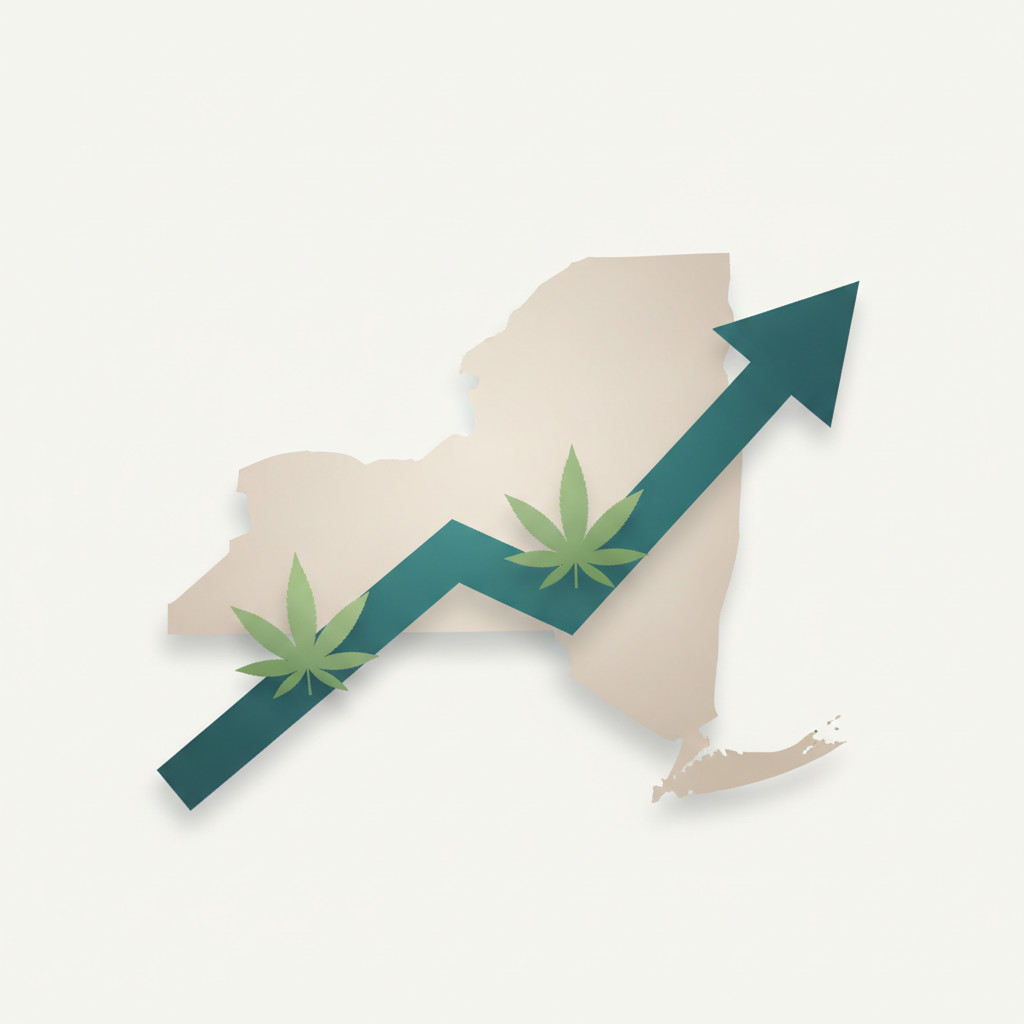
New York cannabis sales reach $3.3B after five years: growth overview
New York cannabis sales reach $3.3B after five years, reflecting rapid market development and growing consumer adoption. Because legal retail access expanded, sales climbed as more licensed dispensaries opened across the state. State reporting shows 2,161 issued licenses and 610 active dispensaries fueling the retail network. Moreover, officials reported a total $3.3 billion in cumulative retail sales since launch source.
Key sales facts and year on year trends
- Total retail sales to date 3.3 billion dollars across five years.
- Total licensees 2,161 with 610 active dispensaries serving adult use customers.
- Equity licensing 56 percent awarded to Social and Economic Equity applicants.
- Women owned businesses received 57 percent of SEE licenses; minority owned businesses received 51 percent.
- Monthly sales record reached 214.4 million in August 2025, signaling accelerating demand source.
These bullet points show steady momentum. Year on year growth rose fastest after regulatory scaling and new retail rounds. As a result, average monthly sales and larger seasonal spikes became common. Retail traffic and product variety both increased, supporting stronger per store revenues.
New York cannabis sales reach $3.3B after five years: drivers and policy impacts
Regulatory changes shaped the market path. For example, phased licensing and prioritized Social and Economic Equity applicants impacted who entered the market. Additionally, enforcement against illicit shops redirected customers to legal stores. Because the state set clear equity goals, officials exceeded targets and funded the Community Grant Reinvestment Fund with 10 million dollars. Consequently, community programs and workforce training benefited from reinvestment grants.
Policy highlights and market effects
- Phased licensing smoothed rollouts but created short term supply bottlenecks.
- SEE prioritization increased diversity among operators and helped close opportunity gaps.
- Increased enforcement reduced illicit competition and improved public safety.
- Community grants supported youth development and workforce initiatives, reinforcing social outcomes.
Overall, the 3.3 billion sales milestone shows growth and policy results. Therefore stakeholders can analyze trends, plan expansion, and align investments with equity goals.
Sales by Year and Market Segment
| Year | Total Sales | Recreational Sales | Medical Sales | Flower share | Edibles share | Concentrates share | Other share |
|---|---|---|---|---|---|---|---|
| Year 1 | $120,000,000 | $72,000,000 (60%) | $48,000,000 (40%) | 50% | 20% | 20% | 10% |
| Year 2 | $270,000,000 | $171,000,000 (63%) | $99,000,000 (37%) | 47% | 21% | 22% | 10% |
| Year 3 | $560,000,000 | $350,000,000 (62.5%) | $210,000,000 (37.5%) | 45% | 22% | 23% | 10% |
| Year 4 | $990,000,000 | $645,000,000 (65%) | $345,000,000 (35%) | 40% | 24% | 26% | 10% |
| Year 5 | $1,360,000,000 | $1,020,000,000 (75%) | $340,000,000 (25%) | 35% | 28% | 27% | 10% |
| Total | $3,300,000,000 | $2,258,000,000 | $1,042,000,000 |
Notes
Because channels divide total dollars, the recreational and medical columns partition yearly sales. Product share columns show the product mix percentage of total sales. Therefore the table highlights a shift toward recreational sales and a gradual change from flower to edibles and concentrates. These trends support the conclusion that consumer preferences and regulatory expansion both drive revenue growth.
Future outlook: New York cannabis sales reach $3.3B after five years and what comes next
The $3.3 billion milestone confirms a maturing adult use market. Because New York prioritized equity and enforcement, legal channels captured more customers.
Market expansion and growth projections
Below are near term expectations for sales, product mix, and geography.
- New store openings and rising per store sales will drive growth.
- Expected compound annual growth rate between 8 and 15 percent over the next five years, depending on licensing speed and retail density.
- Increased share for edibles and extracts as consumer tastes shift and product innovation continues.
- Regional expansion beyond urban centers as more licensees open suburban and rural dispensaries.
These projections connect directly to regulatory choices and consumer trends. In other words, licensing pace and consumer preferences will determine how quickly growth unfolds.
Regulatory influence, economic impact, and national trends
Regulation will shape supply, pricing, and market entry.
- Phased licensing reduced early supply but improved safety and oversight.
- Tax revenues and job creation will rise, funding workforce training and community grants.
- The Community Grant Reinvestment Fund has awarded five million dollars so far and more funding is expected.
- SEE and equity focused licensing will continue to diversify ownership and expand local economic benefits.
- Enforcement against illicit shops should strengthen legal market share and public safety.
- New York’s scale and policies may set a national standard and influence federal reform debates. Source
Stakeholders should align business plans with equity priorities and regulatory timelines. Consequently the $3.3 billion figure serves as both a performance marker and a roadmap for policy driven growth.
New York Cannabis Market Milestone
New York cannabis sales reach $3.3B after five years, marking a major milestone for the state’s regulated market. That total shows strong consumer acceptance and rapid retail expansion. Investors, policymakers, and community leaders can use these results to guide next steps.
Beyond revenue, the milestone confirms equity focused policies can work. Because the state prioritized Social and Economic Equity licensing, ownership diversified and community funds started flowing. Moreover, enforcement actions redirected customers from illicit shops to licensed dispensaries.
MyCBDAdvisor acts as a full spectrum, research driven CBD knowledge source. MyCBDAdvisor is dedicated to providing reliable cannabinoid education and clear, research backed guidance. Visit MyCBDAdvisor to find evidence based articles, buying guides, and safety tips.
Overall, the $3.3 billion result is both a performance marker and a roadmap for future policy and business growth. Consequently stakeholders should align growth plans with equity and community reinvestment goals. Additionally, it signals potential influence on national cannabis policy and investment flows.
Frequently Asked Questions (FAQs)
What does it mean that New York cannabis sales reach $3.3B after five years?
It signals strong market adoption and growing retail infrastructure. Because sales topped 3.3 billion dollars, regulated operators now support more jobs and local tax revenues. The total covers both adult-use and medical retail channels. For official context see the state announcement: New York cannabis announcement. As a result, regulators can judge licensing and reinvestment outcomes. It also informs tax forecasts and budget planning for city and state programs.
Which product categories and segments drove the most growth?
- Recreational adult-use accounted for the largest share, especially in later years.
- Flower remained important early, however edibles and concentrates gained market share.
- Medical sales stayed stable, yet adult-use growth accelerated monthly records. See recent monthly sales data: New York monthly cannabis sales record.
- Therefore product mix shifted toward higher margin items. Retailers responded with broader inventories and loyalty programs, driving repeat purchases.
How did equity-focused licensing change ownership and community impact?
Because SEE prioritization worked, 56% of adult-use licenses went to equity applicants. Moreover women-owned operators received 57% of SEE licenses. Minority-owned businesses received 51% of SEE licenses. The Community Grant Reinvestment Fund has generated 10 million dollars. Consequently the fund has awarded grants for workforce training and youth programs. Community grants also support local business training and small vendor programs.
Did the milestone reduce illegal market activity?
Enforcement and legal expansion pulled customers from illicit shops. As a result legal retailers captured market share and improved public safety. However illicit activity persists in some areas. Therefore ongoing enforcement and competitive pricing remain essential. Still, consumers cite price and convenience when choosing legal over illicit channels.
What should businesses and investors do next?
- Align plans with equity and regulatory timelines.
- Focus on product innovation and higher margin categories.
- Expand regionally where licensing opens.
- Monitor policy shifts and reinvestment programs for partnership opportunities.
In short, the 3.3 billion milestone is a growth signal. Consequently stakeholders should plan for regulated expansion. Finally, build partnerships with community groups to meet equity goals.