

New York cannabis legalization: Five Years of Enforcement, Equity, and Retail Evolution
New York cannabis legalization has reached a pivotal moment, driven by regulatory change and rapid retail growth. Because the Office of Cannabis Management and the Cannabis Control Board created new rules, markets shifted quickly. As a result, legal adult-use dispensaries multiplied, and consumers began shopping for effects and terpenes. However, early licensing delays and a thriving unlicensed market left uneven outcomes for communities.
Enforcement has grown more visible, and unsafe products are now targeted for removal. Meanwhile, more than 582 licensed dispensaries and over 2.5 billion in sales show the market’s scale. At the same time, social equity goals and debt burdens shaped who could open stores. Because loyalty programs and brand partnerships evolved, consumer choice expanded beyond potency alone.
This guide takes a research-driven look at enforcement, equity, and retail evolution in New York. Therefore, we will examine policy, market data, and business experience to map what comes next.
New York cannabis legalization update
New York cannabis legalization now rests on a formal regulatory structure. The Office of Cannabis Management and the Cannabis Control Board set licensing rules and equity goals. Because the state rolled out METRC for track and trace, regulators now monitor product safety more closely. As a result, unsafe products are removed more quickly. This shift matters for both consumers and small business owners.
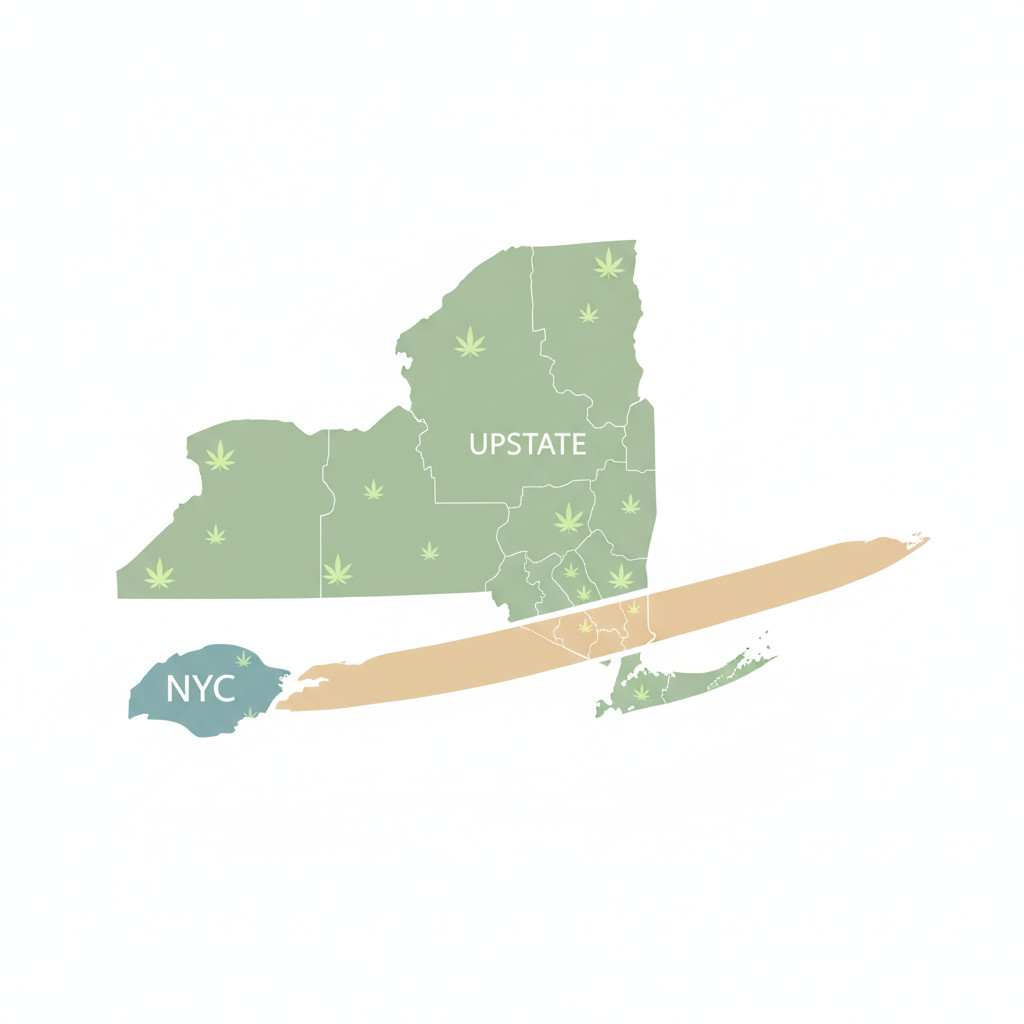
Today the market shows scale and strain. There are over 582 adult-use dispensaries and more than 2.5 billion in sales. However, early licensing delays left many licensees carrying heavy debt. Meanwhile unlicensed storefronts proliferated in some neighborhoods. Enforcement has increased, but challenges remain. For a focused look at the boom and remaining risks, see this article.
What this means for residents depends on priorities. Consumers gain safer, lab-tested products and more choice. At the same time, social equity programs aim to repair past harms. Yet access varies by region, and price compression affects small operators. Loyalty programs and clearer branding now help customers find value and effects.
Compared with other states, New York emphasizes equity and centralized oversight. Therefore the state has a heavier regulatory burden than some markets. However this model also prioritizes community reinvestment. Federal conflicts still complicate rights and licensing. For legal context on firearms and cannabis, read this article and this article.
For technical details on track-and-trace systems, visit METRC at METRC.
Benefits and challenges of New York cannabis legalization
New York cannabis legalization has produced clear benefits and notable challenges. Because policymakers prioritized social equity, the law aims to repair past harms. As a result, community reinvestment and licensing set this market apart. However, the regulatory framework also creates complexity for operators and regulators. Therefore residents should understand both the public health effects and the cannabis industry impact.
Benefits
- Economic growth and jobs: Legal sales exceeded 2.5 billion and support many local positions. Consequently communities see new tax revenue.
- Safer consumer products: Licensed sellers use testing and track and trace, which improves product safety. For more on regulation visit New York Cannabis Regulation.
- Social equity and expungement: The law created pathways for impacted people to enter the market. As a result, some ownership opportunities reached historically harmed neighborhoods.
- Better consumer choice: Consumers now shop for effect, terpene profiles, and value rather than just potency.
Challenges
- Licensing delays and debt: Many licensees carried heavy debt after opening restrictions delayed retail starts. This affects small operators and local competition.
- Unlicensed market pressure: Unregulated storefronts proliferated early, which undercut legal prices and posed public health risks. For federal public health guidance see CDC Marijuana Guidance.
- Regulatory burden: Centralized oversight and METRC tracking require compliance resources. Therefore smaller businesses face higher operating costs.
- Market consolidation risk: As price compression continues, multi state operators may gain market share over local firms.
Overall, the net effect balances economic growth with public health priorities and equity goals. Stakeholders must keep adapting, because policy and market forces will continue to change.
State by state comparison: New York cannabis legalization and peers
Below is a concise table comparing age limits, possession rules, home cultivation, retail oversight, and tax structures. Because readers need clear context, this table highlights how New York stacks up against California, Colorado, and Massachusetts. The comparison uses official state sources for accuracy.
| State | Legal age | Adult possession limit | Home cultivation | Retail oversight and licensing | Tax structure | Key notes and links |
|---|---|---|---|---|---|---|
| New York | 21+ | Up to 3 ounces of cannabis flower and 24 grams of concentrate | Not broadly permitted yet; rules pending | Office of Cannabis Management issues licenses and enforces METRC track and trace | 9% state excise plus up to 4% local tax; additional distribution rules apply | Official |
| California | 21+ | Up to 28.5 grams (about 1 ounce) of flower; 8 grams concentrate | Up to six plants per residence for personal use | Department of Cannabis Control regulates licensing; local rules apply | 15% state excise tax plus sales and local taxes | Official |
| Colorado | 21+ | Up to 2 ounces of cannabis (state law) | Up to six plants per person; local rules may differ | Marijuana Enforcement Division and Department of Revenue oversee licenses | 15% retail sales tax plus 15% excise tax in many transactions; local taxes may apply | Legal context and tax details |
| Massachusetts | 21+ | Up to 2 ounces in public; up to 10 ounces at home | Up to six plants per person, max 12 per household | Cannabis Control Commission licenses retailers and enforces rules | State excise and sales taxes apply; locals may add taxes | Official |
Sources
- New York Office of Cannabis Management
- California Department of Cannabis Control
- Colorado legislative context and taxes; tax details
- Massachusetts state law summary
This table provides empirical context to assess cannabis industry impact, public health rules, and tax models. Therefore policymakers and residents can compare regulations and see how New York prioritizes equity and centralized oversight.
Economic and social impact of New York cannabis legalization
New York cannabis legalization has produced measurable economic gains and complex social effects. Because legal sales exceeded 2.5 billion and more than 582 dispensaries operate in the state, the market supplies jobs and tax revenue. As a result, local economies see new storefront wages and supporting services. However, the benefits are uneven and require policy attention.
Economic benefits
- Job creation: Retail, cultivation, processing, testing, and ancillary services created thousands of positions. Therefore communities near dispensaries gain new hiring opportunities.
- Tax revenue and public funds: Legal sales produce excise and sales tax receipts. Consequently some revenue funds community reinvestment and public programs. See the Office of Cannabis Management for program details at Office of Cannabis Management.
- Small business growth and brand partnerships: Independent operators and local brands such as Back Home Cannabis and Florist Farms have grown. As a result, New York’s market supports entrepreneurship and product innovation.
Social impacts
- Social equity and expungement: The law created licensing priorities and expungement pathways for people harmed by prohibition. Therefore affected communities may gain ownership and legal relief.
- Public health and safety: METRC track and trace improves product safety and recall capacity. As a result, regulators can remove unsafe products more quickly; for system details see METRC.
- Uneven access and debt burdens: Licensing delays left many licensees carrying significant debt. Meanwhile unlicensed sellers undercut legal operators and complicate enforcement.
In short, New York shows clear economic growth and targeted social progress. However policymakers must keep adjusting rules, because long term success depends on balancing public health, equity, and market viability.
Conclusion
Five years in, New York cannabis legalization shows clear progress and real challenges. Because the Office of Cannabis Management and the Cannabis Control Board set firm rules, retail scaled up. As a result, consumers have safer products and more choice. However, licensing delays, unlicensed markets, and debt burdens tempered outcomes. The state’s emphasis on social equity and METRC track and trace improved safety and accountability, but access and cost remain uneven.
Frequently Asked Questions (FAQs)
What are the legal age and possession limits in New York?
New York cannabis legalization sets 21 as the legal age. Adults may possess up to 3 ounces of flower. They may also carry up to 24 grams of concentrate. However limits vary by context, so check local rules.
Where can I buy cannabis legally and how do I purchase?
Buy only at licensed dispensaries. Because retailers require ID, bring government photo identification. Dispensaries follow testing and labeling rules. Meanwhile loyalty programs now exist in many stores.
Can I consume cannabis in public or at my residence?
Public consumption remains restricted. Use in private residences is generally allowed, but landlords may prohibit it. Therefore avoid using cannabis near schools and public transit.
What social equity programs and supports exist?
The OCM prioritizes social equity applicants. It also supports expungement and community reinvestment. As a result, affected communities can gain licenses and funding. However access has been uneven.
How safe are legal cannabis products?
Regulators require lab testing for contaminants and potency. METRC tracks products through the supply chain. Consequently regulators can issue recalls when needed, which protects public health.
If you need more details on licensing or safety, consult the Office of Cannabis Management. Stay informed, because rules and the cannabis industry impact will evolve.