
Introduction
Cannabistilbenes are stilbenoid polyphenols from Cannabis sativa that act outside classic cannabinoid signaling, making them a distinct non cannabinoid class with promising therapeutic potential. These compounds matter because enzyme targeting and polyphenolic chemistry open new pathways for inflammation and infection management.
- Anti inflammatory
- Antifungal
- Topical delivery
These molecules are often prenylated, which increases lipophilicity and membrane affinity and supports skin penetration. They target enzymes such as 5‑lipoxygenase and COX‑2 rather than CB1 and CB2 receptors; for example, Canniprene potently inhibits 5‑lipoxygenase (see Canniprene 5‑lipoxygenase study) and a broader review predicts COX‑2 activity across Cannabis stilbenes (comprehensive review of Cannabis stilbenes).
Cannabistilbenes are non‑cannabinoid cannabis compounds from Cannabis sativa that modulate inflammatory enzymes such as 5‑lipoxygenase and COX‑2 and display preclinical antifungal activity, suggesting promise for topical cannabis treatments. Key evidence includes potent 5‑lipoxygenase inhibition by Canniprene and predictive COX‑2 activity across stilbenes.
For more details, you can refer to the following studies: 5‑lipoxygenase study and stilbene review.
Chemical Structure and Properties of cannabistilbenes
Stilbene core
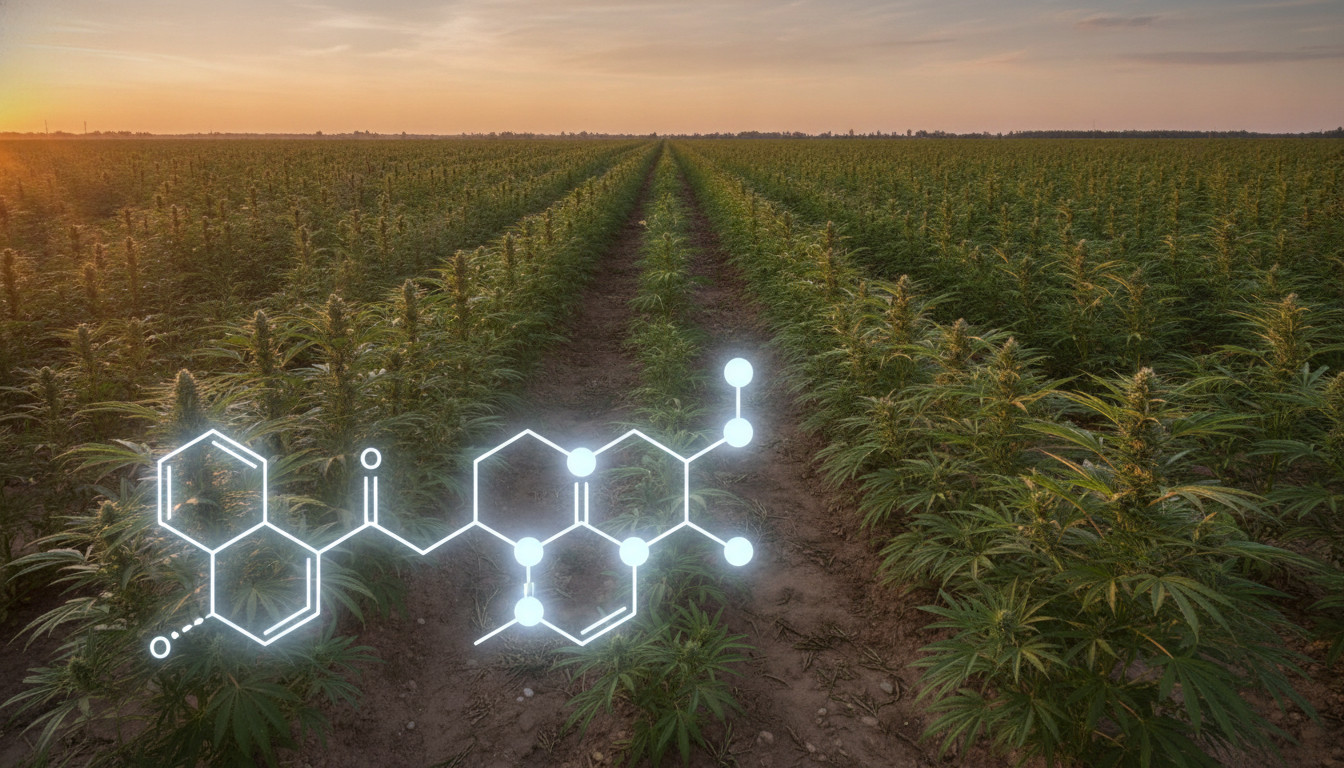
Cannabistilbenes are built on a stilbene or dihydrostilbene scaffold, making them resveratrol like polyphenols and classifying them as prenylated stilbenoids and polyphenolic phytochemicals. This conjugated, planar core supports hydrogen bonding and radical scavenging, which helps explain antioxidant behavior and enzyme interactions. Several reviews summarize the diversity and predicted bioactivity of these compounds comprehensive Cannabis stilbenes review and place them in the context of broader Cannabis phenolics Cannabis phenolics review.
Effects of prenylation
Prenyl groups frequently decorate the aromatic rings and raise lipophilicity and membrane affinity. Consequently prenylation alters delivery and target engagement in meaningful ways.
Formulation implications
- Reduced aqueous solubility that complicates oral and topical formulation strategies
- Improved skin penetration and cellular uptake that favor topical delivery
- Increased plasma protein binding and altered tissue distribution that affect pharmacokinetics
Structure activity relationship note
Structure activity relationship studies link specific hydroxylation and prenylation patterns to differential potency against enzymes such as 5‑LOX and COX‑2, so substitution pattern drives both selectivity and potency.
Formulation challenges
Because lipophilicity rises with prenylation formulators often use oil based carriers emulsions or prodrugs to balance solubility and bioavailability. For topical products penetration enhancers and optimized emulsions can leverage increased skin permeation while maintaining stability and controlled release.
Potential Health Benefits of cannabistilbenes
Anti‑inflammatory evidence
Preclinical evidence shows strong anti inflammatory activity for several cannabistilbenes, especially Canniprene. In vitro assays found Canniprene inhibits 5‑lipoxygenase with an IC50 of approximately 0.4 µM, suggesting leukotriene pathway suppression Canniprene 5 lipoxygenase study. Prenylation appears to increase lipophilicity and skin penetration, supporting topical anti inflammatory formulations while posing solubility challenges. No human clinical trials to date.
- Canniprene: 5‑LOX IC50 ≈ 0.4 µM (in vitro)
- Related stilbenes: selective COX‑2 modulation predicted (in silico)
Antifungal & antimicrobial evidence
In silico docking and preclinical screens indicate binding of cannabistilbenes to fungal enzymes such as GMP synthase and Chitin Synthase 2, supporting topical antifungal potential predictive modeling review. Activity depends on substitution patterns and prenylation, so efficacy and skin delivery vary across derivatives and formulations. Researchers note formulation strategies are needed to balance lipophilicity with bioavailability for topical creams. No human clinical trials to date.
- Computational docking predicts GMP synthase and Chitin Synthase 2 binding (in silico)
- In vitro antimicrobial screens report variable activity influenced by prenylation and substitution patterns
Cannabistilbenes compared to major cannabinoids
| Compound | Chemical structure | Psychoactive effects | Reported medical benefits | Typical legal status |
|---|---|---|---|---|
| Cannabistilbenes | Stilbenoid polyphenols with a stilbene or dihydrostilbene core; many are prenylated. | Non psychoactive; bypass CB1 and CB2 receptors. | Anti inflammatory via 5 lipoxygenase and COX 2 modulation; antifungal binding GMP synthase and Chitin Synthase 2; good skin penetration reported. | Regulatory status unclear; often falls under cannabis extract rules; not explicitly scheduled in many jurisdictions. |
| CBD | Terpenophenolic phytocannabinoid; molecular formula C21H30O2. | Non psychoactive; low affinity for CB1. | FDA approved for certain epilepsies; studied for anxiety, inflammation, pain. | Hemp derived with <0.3% THC generally legal federally in US; rules vary by country and state. |
| THC | Tricyclic terpenophenolic; delta 9 tetrahydrocannabinol (C21H30O2). | Psychoactive; partial agonist at CB1 receptors. | Analgesic, antiemetic, appetite stimulant; medical use varies by formulation and country. | Schedule I or II in many countries; legal status varies widely by jurisdiction. |
| CBG | Minor terpenophenolic cannabinoid; biosynthetic precursor to other cannabinoids. | Non psychoactive at common doses. | Early evidence for anti inflammatory, antibacterial, neuroprotective effects. | Legal status similar to CBD when derived from hemp; varies by jurisdiction. |
Conclusion
Cannabistilbenes are a distinctive class of stilbenoids in Cannabis sativa. They act outside CB1 and CB2 and target enzymes, inflammatory pathways, and fungal proteins. This gives them unique therapeutic potential compared with classic cannabinoids.
Preclinical studies show strong anti-inflammatory and antifungal effects for Canniprene and Cannabistilbene I. However human trials and safety data remain scarce, so clinical validation is required. Therefore formulation, dosing, and pharmacokinetics must be studied before medical use.
Additionally these stilbenoids expand the Entourage Effect by adding polyphenolic synergy to whole plant extracts. As research matures, they could enable targeted topical therapies and novel systemic agents. Watch for more studies that clarify efficacy, safety, and best uses.
MyCBDAdvisor will track developments and report key findings and product updates. Visit MyCBDAdvisor for timely updates and expert analysis.
Frequently Asked Questions
What are Cannabistilbenes?
Cannabistilbenes are stilbenoid polyphenols isolated from Cannabis sativa that act outside CB1 and CB2 receptors and target enzymes and microbial proteins, including enzyme inhibitors relevant to inflammation and fungal growth. They are resveratrol-like, often prenylated compounds studied for anti inflammatory and antifungal activity Cannabis stilbenes review.
Do Cannabistilbenes cause a high?
No, Cannabistilbenes do not activate CB1 receptors and are non psychoactive. As a result they lack the intoxicating effects associated with THC.
What health benefits do they show?
Preclinical studies report anti inflammatory effects, notably Canniprene’s potent 5 lipoxygenase inhibition, and computational antifungal binding to targets such as GMP synthase and chitin synthase. However human efficacy remains unproven and clinical trials are needed to confirm therapeutic claims Canniprene 5-lipoxygenase study.
How are Cannabistilbenes delivered or formulated?
Many Cannabistilbenes are prenylated and lipophilic, so topical and oil based formulations improve skin uptake and boost bioavailability; penetration enhancers can further increase absorption. Effective formulation balances lipophilicity and solubility to support stability and systemic uptake, so focus on topical delivery, bioavailability, and formulation strategies when developing products.
Are Cannabistilbenes safe and legal to use?
Safety data in humans are limited, so exercise caution and prioritize tested products. Legal status varies by jurisdiction and often depends on broader cannabis extract rules rather than explicit scheduling of stilbenes.
What we don’t know
- Limited human safety data
- Unclear regulatory status
Related on CBD Advisor
- What Are Cannabistilbenes Really Doing in Cannabis
- What Are Cannabistilbenes? Emerging Research
- Can Cannabistilbenes Outperform Isolated CBD Effects