
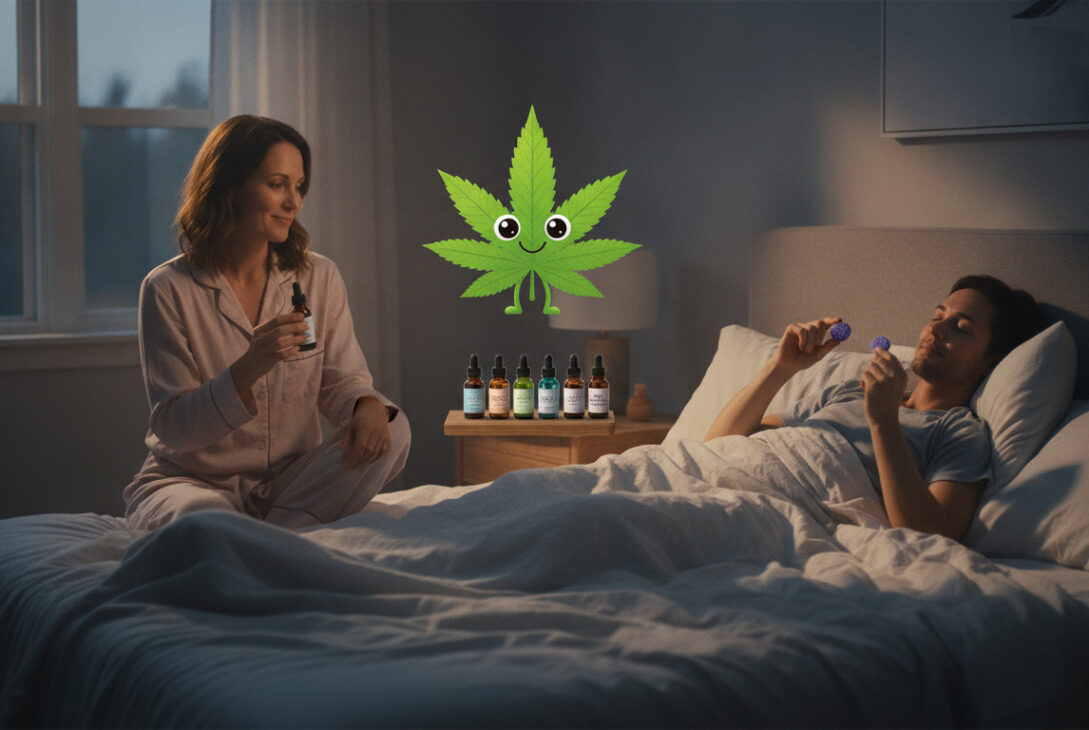
CBN sleep science overview
If you struggle to fall asleep, research informed CBN sleep science protocols can shorten time to sleep. It emphasizes evidence backed cannabinol use, precise dosing, product purity, and pairing with CBD and calming terpenes.
What you will learn
- Dosing strategies and titration
- Delivery options for fast onset or sustained release
- Safety checks and third party lab testing
CBN’s main benefit is reduced sleep latency, helping many people fall asleep faster. Start with a low dose, monitor effects nightly, and consult a clinician before combining CBN with other medicines.
Further reading
What is CBN sleep science and nightly recovery (2026 standard)?
CBN sleep science and nightly recovery (2026 standard) means the latest research and guidance on cannabinol for sleep. It focuses on reducing sleep latency and improving overnight restoration. Therefore it stresses safety-tested dosing, pairing with CBD and soothing terpenes, and choosing delivery methods that offer both fast onset and sustained release for reliable nightly recovery.
CBN Sleep Science Explained
CBN interacts with the endocannabinoid system and can influence sleep and nightly recovery. Effects vary by dose, delivery method, and accompanying cannabinoids or terpenes CBN sleep mechanisms review.
Endocannabinoid modulation
Practical takeaway: CBN often shortens sleep latency for many users. It appears to modulate endocannabinoid signaling in ways that favor nonrapid eye movement sleep CBN sleep mechanisms review.
- Shorten time to fall asleep
- Total sleep time may not reliably increase
Receptor activity
Practical takeaway: CBN primarily supports sleep initiation rather than strong intoxication. Studies show modest CB1 affinity and dose dependent influences on neural circuits that trigger sleep CBN sleep mechanisms review.
- Modest CB1 binding
- Sleep architecture changes vary by dose
Entourage interactions
Practical takeaway: Pairing CBN with CBD and sedative terpenes often enhances perceived benefit. Myrcene and linalool commonly amplify relaxation and perceived continuity of sleep in combined formulations CBN sleep mechanisms review.
- Use blended formulations for synergy
- Terpenes may drive sedation more than CBN alone
Pharmacokinetics
Practical takeaway: Match delivery to your timing goals. Sublingual tinctures act within 15 to 20 minutes while edibles offer slower onset and longer coverage due to first pass metabolism cannabinoid pharmacokinetics review.
- Sublingual for quick onset
- Edibles or capsules for overnight maintenance
Expert perspective: Evidence remains limited and more randomized controlled trials are needed CBN evidence review.
How CBN Supports Nightly Recovery
CBN may help nightly recovery because it interacts with the endocannabinoid system. However, direct clinical evidence for muscle repair from CBN alone remains limited. For a review of existing CBN sleep research, see this study.
The endocannabinoid system regulates sleep, inflammation, and tissue repair. CBN’s gentle affinity for CB1 receptors can nudge the brain toward sleep onset. As a result, this faster fall-asleep time may create a better window for restorative processes. For insights on ECS effects in muscle, see this article.
Inflammation control supports recovery, because lower nighttime inflammation helps muscle repair. While most strong evidence focuses on CBD, cannabinoid-driven immunomodulation is well documented. Therefore cannabinoids may reduce oxidative stress and cytokine activity that slow healing. For cannabinoid effects on muscle inflammation, see this study.
Key recovery benefits
- Reduced sleep latency, which increases uninterrupted sleep time.
- Improved subjective sleep quality, supporting perceived recovery.
- Potential reduction in overnight inflammation that can slow repair.
- Enhanced muscle relaxation via terpene and cannabinoid interactions.
- Better sleep architecture that may favor tissue regeneration.
In short, CBN can support nightly recovery indirectly by improving sleep and modulating the ECS. However, evidence for direct muscle-building effects is sparse. Therefore consult a clinician before adding CBN to a recovery plan, especially when you take other medications.

Comparison of CBN Product Types for Nightly Recovery
Choose tinctures for fast onset and gummies or capsules for sustained overnight coverage for most typical users.
Tinctures equal fast onset; gummies equal sustained release; capsules equal steady dosing. Choose a format that matches your desired onset and overnight coverage to optimize nightly recovery. For background on absorption and first pass effects see the cannabinoid pharmacokinetics review and a review covering sublingual absorption and clinical notes at PMC article on sublingual and oral cannabinoids.
| Product Type | Typical Usage | Typical dose range | Onset | Duration | Recovery Benefits | Best for |
|---|---|---|---|---|---|---|
| Sublingual tinctures (CBN tinctures) | Place drops under tongue for quick dosing and easy titration | 2.5 to 10 mg CBN per dose | Onset: 15 to 20 minutes | Duration: 4 to 8 hours | Fast reduction in sleep latency; supports sleep onset; pairs well with CBD for entourage effect | Fast sleep onset |
| Capsules (CBN capsules) | Swallow for convenient, measured dose | 5 to 20 mg CBN per capsule | Onset: 30 to 60 minutes | Duration: 6 to 12 hours | Steady overnight support; consistent dosing; aids sustained recovery | Overnight maintenance |
| Gummies (CBN gummies) | Chew for palatable, slower release dosing | 5 to 15 mg CBN per gummy | Onset: 45 to 90 minutes | Duration: 6 to 10 hours | Extended release for overnight maintenance; helps perceived sleep quality | Overnight maintenance |
| Topicals (CBN topicals) | Apply directly to sore muscles or joints for localized relief | Variable; labeled mg per container | Onset: 15 to 60 minutes | Duration: 2 to 6 hours | Local muscle relaxation and inflammation relief; complements systemic sleep aids | Localized relief |
How to choose a product
- Check third party lab reports for cannabinoid potency and contaminants and confirm the certificate of analysis matches the product label and batch number.
- Choose products with clear dosing labels showing mg CBN per serving so you can titrate to the minimal effective amount.
Actionable dosing tip
Start low and titrate slowly. For example begin with 2.5 mg CBN each night and increase by 2.5 mg every three nights until you reach the desired effect or the maximum recommended dose. Monitor sleep latency and daytime function while adjusting.
Conclusion
CBN sleep science and nightly recovery (2026 standard) shows promising, practical benefits for sleep. Recent trials find CBN shortens sleep latency and improves subjective sleep quality. Because CBN acts on the endocannabinoid system, it supports natural sleep onset.
Practical users can gain faster sleep onset with tinctures and longer maintenance with gummies. However total sleep time may not increase significantly, so combine CBN with good sleep hygiene. Therefore choose products with third party lab testing and clear dosing.
Start with a low dose and monitor effects nightly. Speak with your healthcare provider before starting CBN, especially if you take other medicines. As a result, you can safely consider CBN for nightly wellness and recovery routines. Learn more at here.
Frequently Asked Questions (FAQs)
CBN sleep science for recovery
Quick answer: A 2026 evidence informed approach using cannabinol to shorten sleep latency and support overnight restoration. This method emphasizes precise dosing, product purity, and pairing with CBD and calming terpenes to improve perceived recovery. For a broader clinical overview see the CBN sleep review.
How quickly does CBN help you fall asleep
Quick answer: Onset depends on format; sublingual tinctures act fastest while edibles take longer due to first pass metabolism. Typical starting dose for onset is 2.5 to 5 mg CBN; effective ranges commonly fall between 2.5 to 15 mg depending on formulation. Action step: take a 2.5 to 5 mg sublingual dose about 15 to 20 minutes before bed and adjust upward slowly, and consult the cannabinoid pharmacokinetics review for absorption details.
CBN dosing for sleep and nightly recovery
Quick answer: Start low and titrate to effect; common starting doses are 2.5 to 5 mg CBN with many users finding benefit at 5 to 15 mg. For steady overnight coverage consider formats with longer duration such as capsules or gummies in the 5 to 20 mg range depending on product. Action step: begin with 2.5 to 5 mg for three nights, record effects, then increase by 2.5 mg increments as needed while checking product lab data.
Will CBN interact with my medication and is it safe
Quick answer: Generally well tolerated but potential interactions exist, especially with drugs metabolized by liver CYP enzymes. Dose guidance mirrors other FAQs: start 2.5 to 5 mg and use caution above 10 to 20 mg until you know your response. Action step: consult your prescriber or pharmacist if you take CYP3A4 or CYP2C9 substrates; see the CYP interaction study for clinical context.
Which CBN product types are best for recovery
Quick answer: Choose formats by onset and duration goals; sublingual tinctures for fast sleep onset, gummies or capsules for sustained overnight support, and topicals for localized muscle relief. Match dose and timing to your sleep schedule to maximize uninterrupted restorative sleep. Combining a small sublingual dose with a slow release edible can be effective for some users.
How do I verify third party lab testing 3-step checklist
Verify certificate of analysis with these steps:
- Match batch and potency Check that the COA lists the product lot number and shows cannabinoid potency that matches the label.
- Confirm contaminant screens Look for tests covering pesticides, heavy metals, and residual solvents and verify results are within safe limits.
- Verify lab accreditation and contact info Ensure the COA lists an accredited third party lab and includes contact details so you can confirm authenticity; see the COA guide and buying tips for safety for more detail.
Will CBN make you feel high or impaired
Quick answer: Unlikely at common doses; cannabinol alone has low intoxicating potential. Full spectrum products may contain trace THC so always review COAs and avoid higher THC results if you must remain unimpaired. If avoiding any risk, choose broad spectrum or THC free formulas and confirm lab results before use.
Related on CBD Advisor
- CBD vs CBN for sleep: Which works best
- Which CBD vs CBN for sleep works best
- CBD vs. CBN for sleep: Which to choose