Introduction
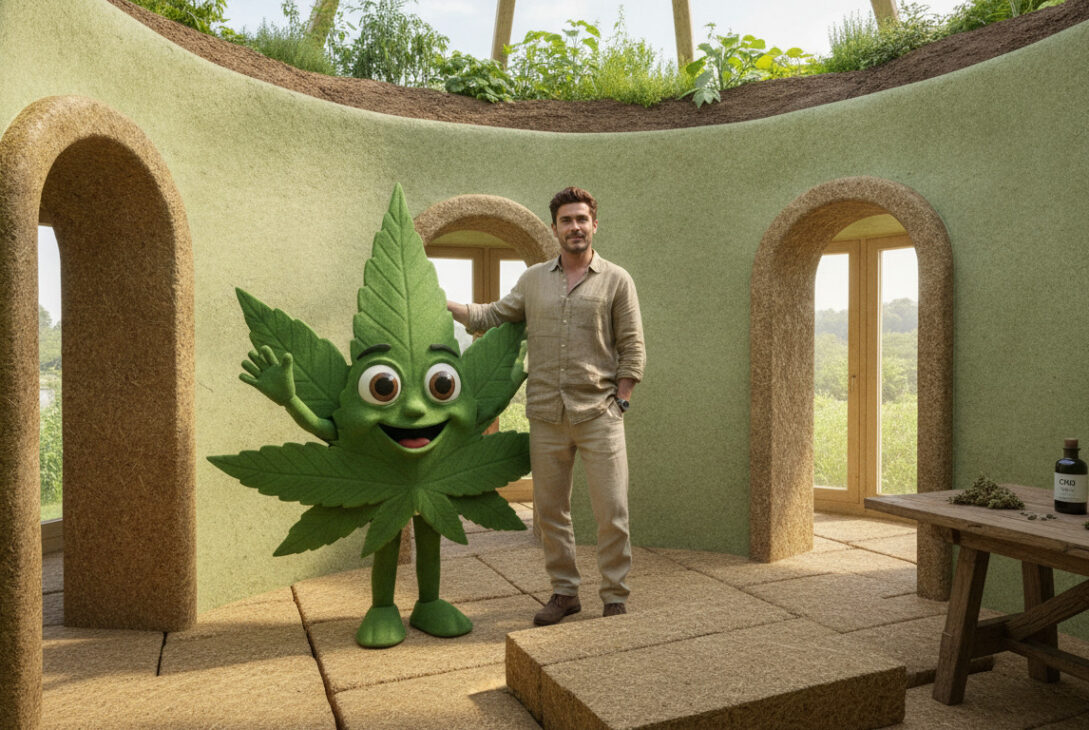
FutureCave is an off-grid hemp home testing scalable, low-carbon building methods. Located on a 128 hectare bushland parcel, it blends celebrity interest with regenerative design.
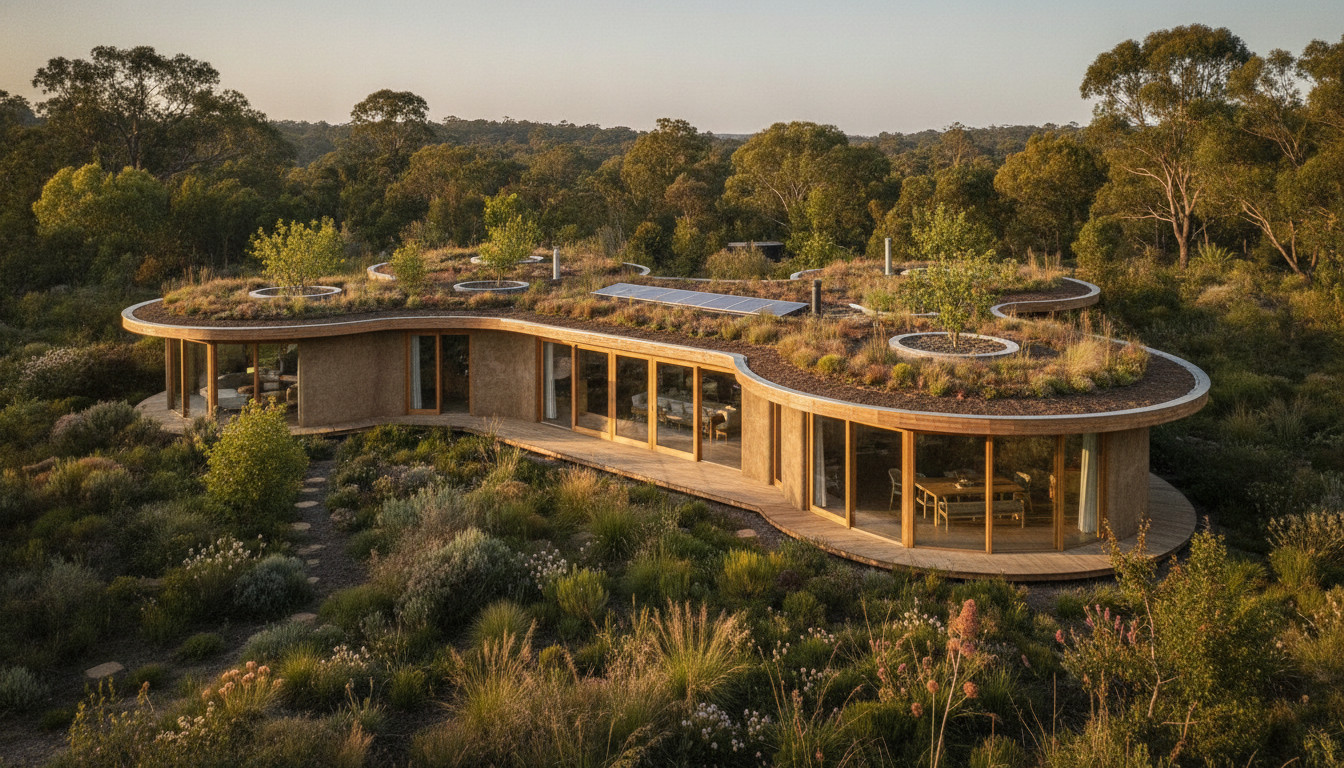
Designed with environmental designer Joost Bakker, the build uses hemp blocks, hempcrete, textiles and plant-based joinery across walls, insulation and interiors. A large green roof is engineered to hold about 100 tons of soil, and the team is testing lime-free binders and plant-based resins.
The project expects roughly 2,200 hemp blocks to demonstrate practical scalability and to inspire suppliers and policy change. While hemp cannot yet replace primary structural elements and faces higher upfront costs, FutureCave shows how hemp materials can reduce embodied energy and improve indoor air quality. For detailed reporting see the detailed FutureCave project report and the coverage of hemp block estimates.
- Location: 128 hectare site near Byron Bay, northern New South Wales
- Designers: Joost Bakker with Zac Efron and architect Frank Burridge
- Headline stat: approximately 2,200 hemp blocks planned
FutureCave summary
FutureCave is an off-grid hemp experiment on a 128-hectare property near Byron Bay that tests hemp blocks, hempcrete and plant-based joinery 128-hectare property report. The project plans to use about 2,200 hemp blocks to demonstrate scalable low-carbon construction hemp materials overview.
Project stats
- 2,200 hemp blocks projected
- 200 Plantbord boards for joinery
- Green roof engineered to hold about 100 tons of soil
- 128 hectare site near the New South Wales Queensland border
Zac Efron hemp home (FutureCave) is an experimental off grid residence that tests hemp as a practical, low carbon building system and explores lime free hemp blocks, plant based joinery and off grid hemp construction methods. The design team includes Joost Bakker. FutureCave applies hemp blocks, hempcrete, textiles and plant based joinery to reduce embodied energy and improve indoor air quality. For detailed reporting on the site and scope see RealEstate.com.au article.
Technical details
The build will use about 2,200 hemp blocks and 200 Plantbord boards for kitchen and bathroom joinery, with blocks formulated to test lime free binders and recycled oyster shell aggregates. Off grid systems include passive strategies and a green roof designed to retain about 100 tons of soil for rooftop gardens. For construction figures and materials analysis see construction figures and materials.
Hemp performs well for breathability and thermal mass while plant based joinery and circular resins aim to lower embodied carbon and support reuse. However hemp is not used as the primary structural element and requires hybrid framing, trained trades and reliable supply chains to scale. FutureCave intends to generate proof points that could accelerate supplier development and policy shifts for wider adoption.
Zac Efron’s vision for sustainable hemp homes
Zac Efron hemp home (FutureCave) reflects a personal and practical push toward regenerative living. He teamed with Joost Bakker to test hemp at scale, and the project aims to show how plant based materials can create low carbon, healthy houses. The build is off grid and uses hemp for walls, insulation, textiles and non structural joinery to lower embodied energy.
Efron’s goals focus on measurable sustainability and real world proof points. Therefore FutureCave will test lime free binders, plant based resins and large green roofs to measure performance. The project also seeks to grow supplier networks and training to reduce cost and barriers.
Key environmental benefits and sustainable practices
- Store and cut carbon because hemp stores biogenic carbon and hempcrete can lower life cycle emissions.
- Improve indoor air quality because hemp materials are breathable and regulate moisture naturally.
- Reduce embodied energy by replacing fossil based materials with plant based alternatives.
- Support circularity through plant based resins and reusable Plantbord joinery.
Research supports hemp as a low carbon building material, while noting formulation and supply chains matter. For technical evidence see the Journal of Cleaner Production review on hemp concrete properties here and a life cycle analysis of hempcrete carbon dynamics here. Together, these sources show promise, while also highlighting the need for standards and local supply development.
Hemp Homes vs Conventional Homes
| Criteria | Hemp Homes (FutureCave style) | Conventional Homes |
|---|---|---|
| Environmental impact |
|
|
| Cost |
|
|
| Durability |
|
|
| Insulation and thermal performance |
|
|
| Construction time |
|
|
| Maintenance and repairs |
|
|
| Structural limitations |
|
|
| Supply chain and labor |
|
|
| Indoor air quality |
|
|
| End of life and circularity |
|
|
Environmental and social impact of FutureCave
FutureCave aims to reduce the environmental footprint through hemp materials and regenerative design. Because the build uses hemp blocks, hempcrete, plant-based joinery and a large green roof, it lowers life-cycle emissions and supports biodiversity.
Environmental contributions
- Stores biogenic carbon in biomass and hempcrete, therefore lowering embodied carbon.
- Cuts energy demand because hemp provides good insulation and moisture regulation.
- Improves stormwater control and habitat with a green roof holding 100 tons of soil.
- Reduces toxic off-gassing since hemp materials emit few VOCs.
- Encourages circular materials through plant-based resins and reusable Plantbord joinery.
Social benefits
FutureCave also tests models for affordable, healthy housing and local jobs. As a result, scaling hemp supply chains could cut housing energy bills and create new trades.
- Demonstrates low-waste building methods that communities can learn from.
- Trains local labor, therefore building regional capacity and resilience.
- Offers a blueprint for affordable off-grid dwellings using low-cost materials.
For context, the building sector drives a large share of emissions. The UN Environment Programme details these sector trends and the need for low-carbon materials here. The EPA also notes green-roof benefits for stormwater and energy performance here. Together these innovations can inform policy and lower barriers to green housing.
CONCLUSION
Zac Efron hemp home (FutureCave) shows how high profile projects can move sustainable building from theory to practice. The build pairs Joost Bakker’s regenerative design with hemp blocks, plant based joinery and a large green roof to cut embodied carbon and improve indoor air quality. As a result, the project highlights hemp’s strengths in breathability, thermal stability and circularity.
The FutureCave experiment also points to real challenges, such as higher upfront costs, supply limits and the need for trained trades. However, it creates valuable proof points that can lower barriers when scaled. Therefore FutureCave could influence policy, boost supplier networks and inspire affordable, low energy housing models.
For readers who want to explore sustainable building resources and guidance on plant based materials, see sustainable hemp living resources at sustainable hemp living resources.
Frequently Asked Questions (FAQs)
What is Zac Efron hemp home (FutureCave)?
Zac Efron hemp home (FutureCave) is an off grid experimental residence led by Zac Efron and Joost Bakker that tests hemp blocks, hempcrete and plant based joinery at scale. See What is Zac Efron hemp home (FutureCave) for the project scope and site details.
What are the benefits of hemp homes?
Hemp homes offer improved indoor air quality, natural moisture regulation and reduced operational energy through breathable assemblies; they also showcase specific hempcrete benefits when used in wall systems. Refer to Zac Efron’s vision for sustainable hemp homes to understand the project goals and material choices.
How do hemp homes compare to traditional homes?
Hemp builds typically lower lifecycle carbon intensity and improve humidity control, while conventional homes benefit from established trades and faster construction timelines. See Hemp Homes vs Conventional Homes for a direct feature comparison.
Are hemp homes more expensive?
Upfront costs are usually higher because materials and skilled labor are less common, though lifetime savings from energy and lower maintenance can offset that premium. See CONCLUSION for notes on scaling, training and cost reduction pathways.
What is the environmental impact of hemp builds?
Hemp materials can reduce embodied carbon through biogenic carbon storage and low fossil inputs, but outcomes depend on binder choice, transport and end of life; lifecycle studies illustrate these sensitivities. See Environmental and social impact of FutureCave and a comparative LCA study for more detail here.
How does the cost of a hemp home compare to a conventional build?
Compared with conventional builds, hemp homes often incur higher upfront material and labor costs but can deliver lower lifecycle costs when operational energy, maintenance and end of life are included; these differences depend heavily on local supply chain and processing costs. See Hemp Homes vs Conventional Homes and a lifecycle methods comparison for empirical context here.
Related on CBD Advisor
- What is hempcrete performance in bushfire-resilient builds
- Why Italian hemp sector shifts toward food and fiber
- Why Carmanecta hemp variety EU approval matters now